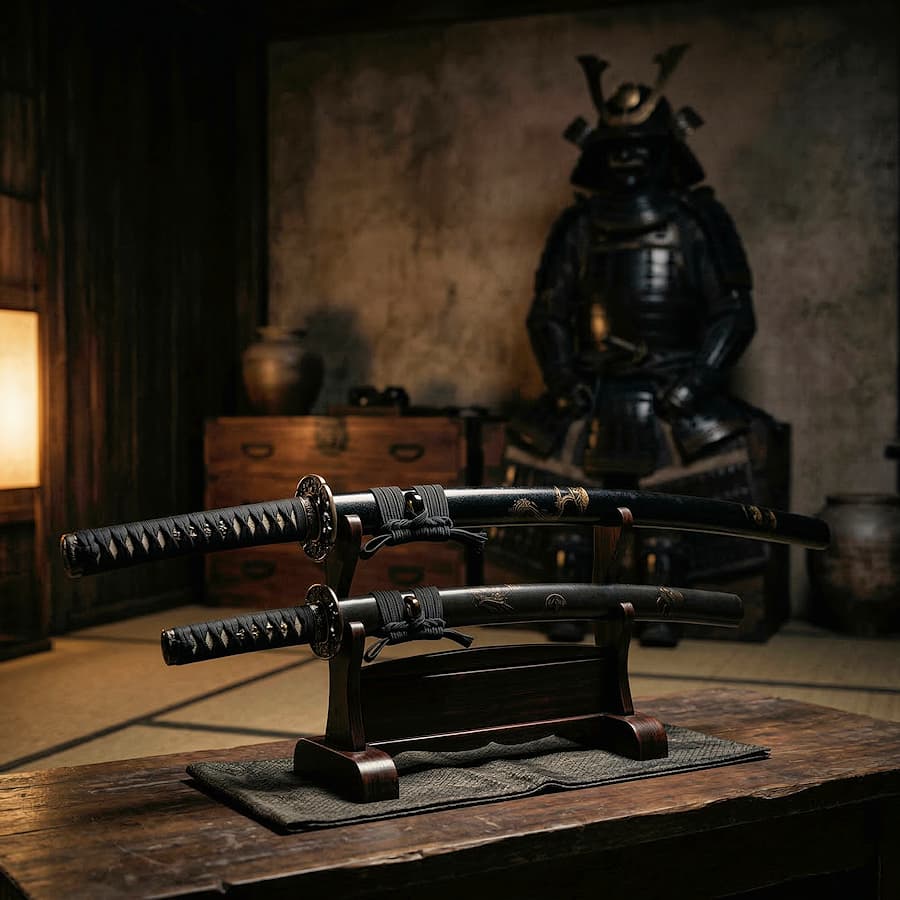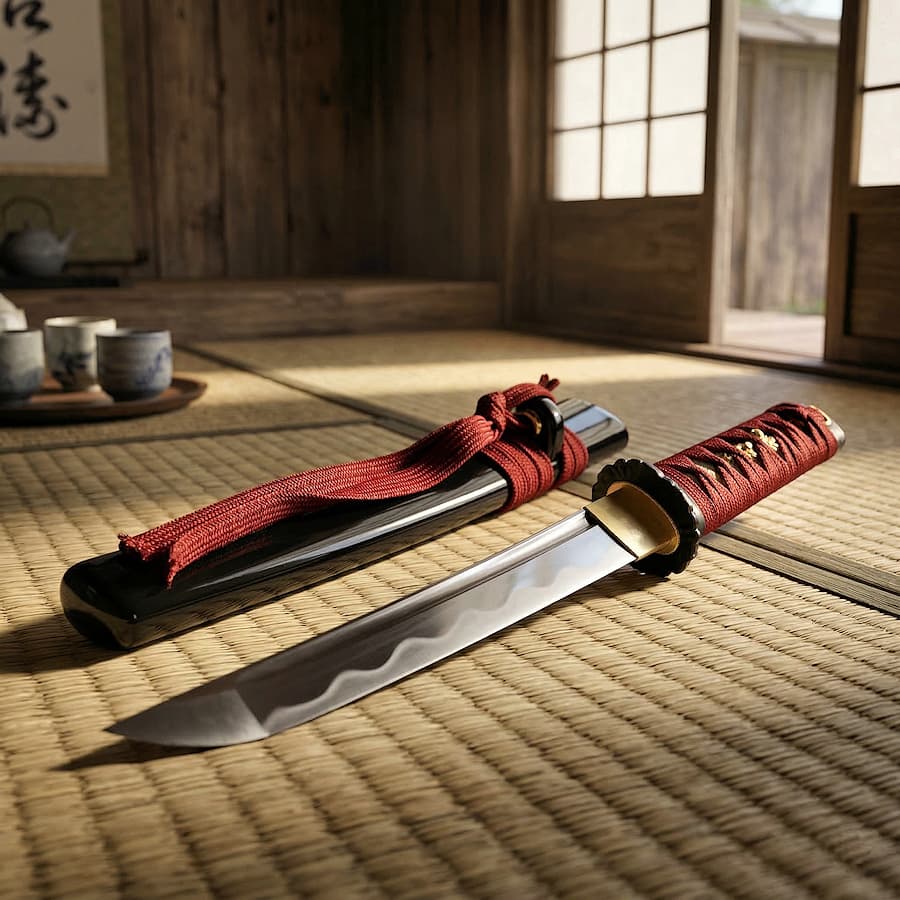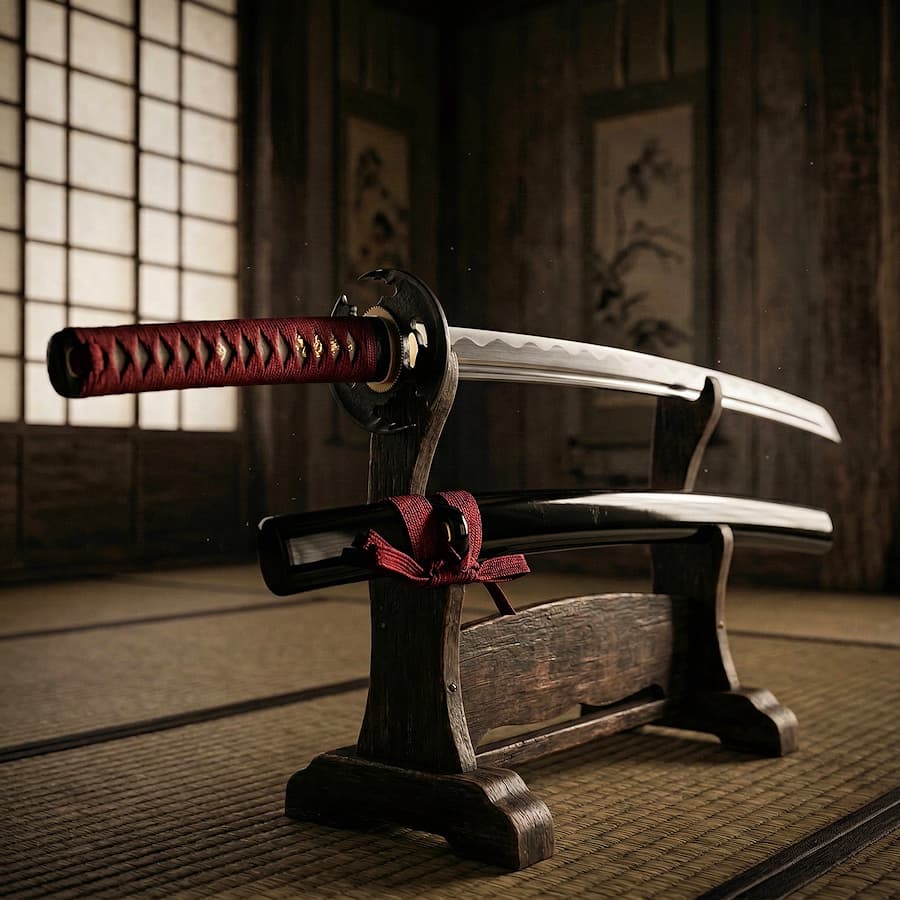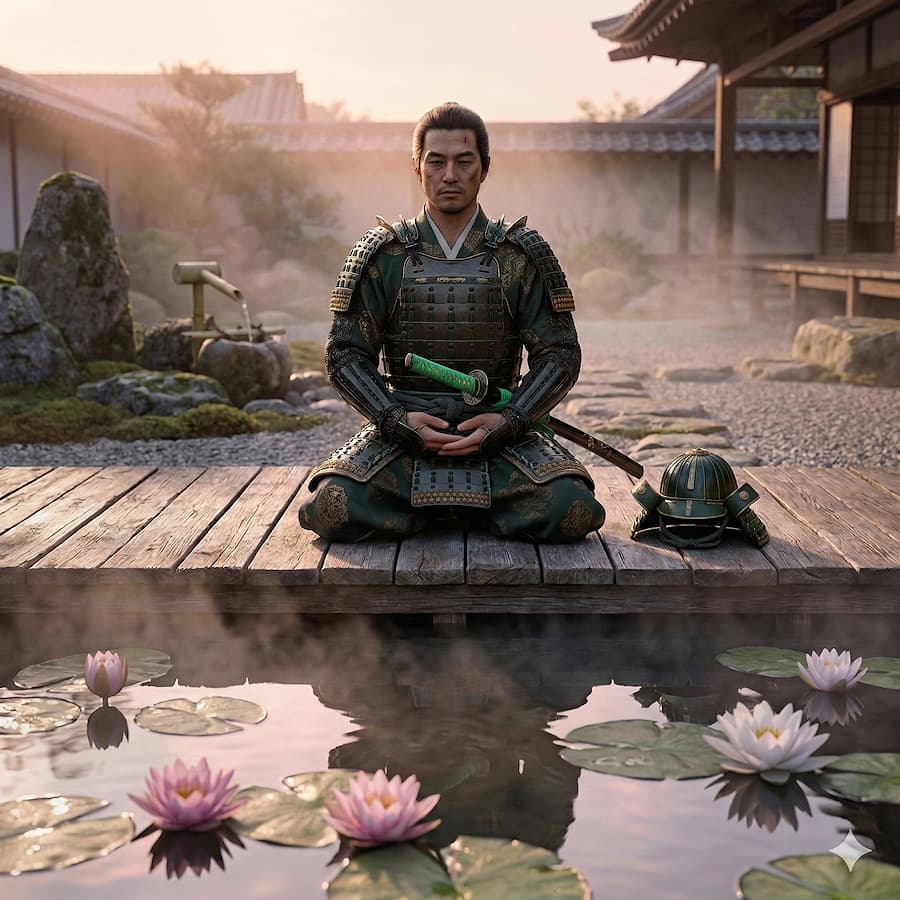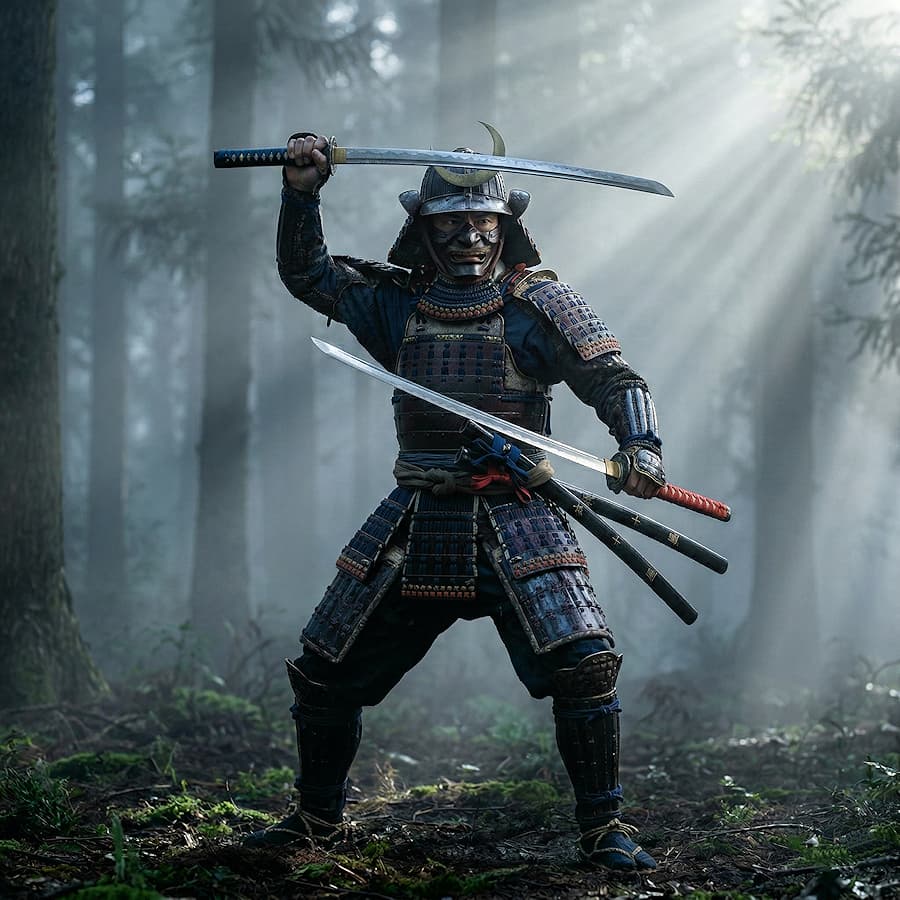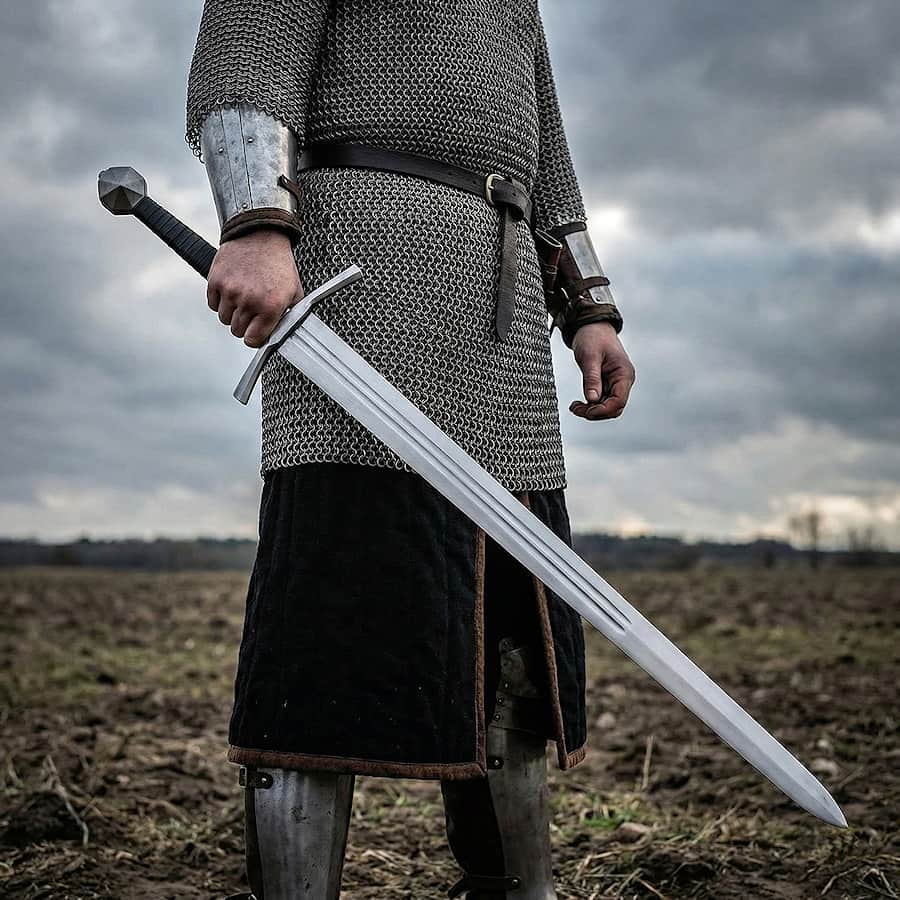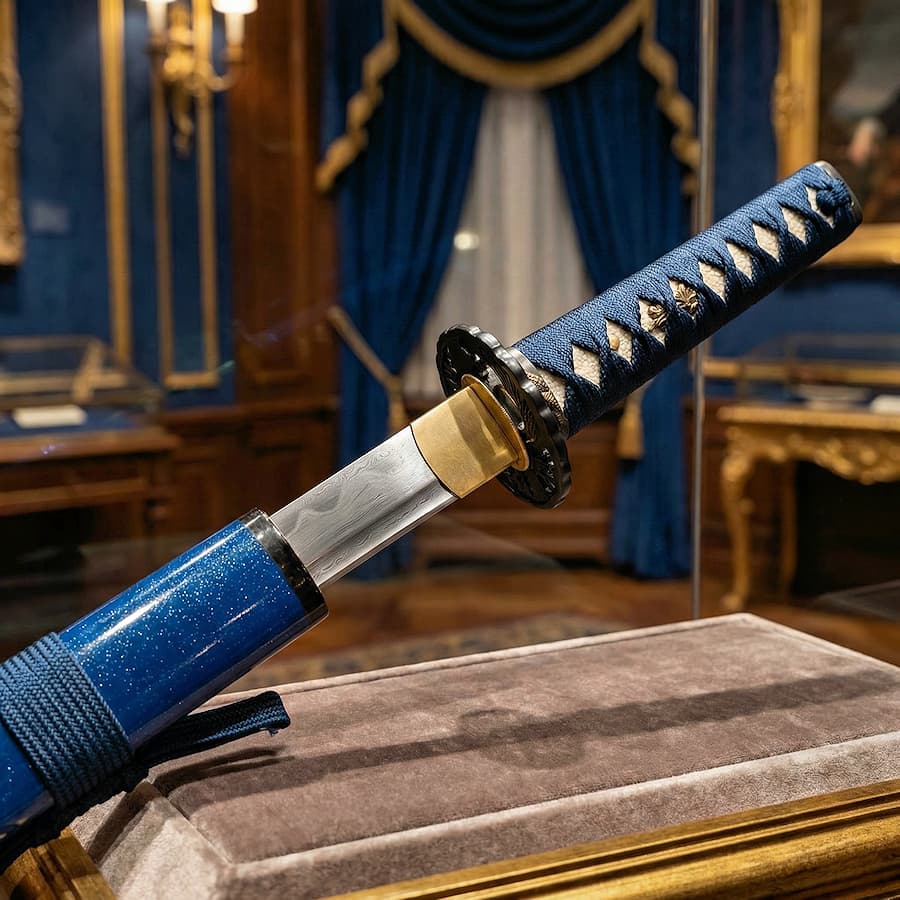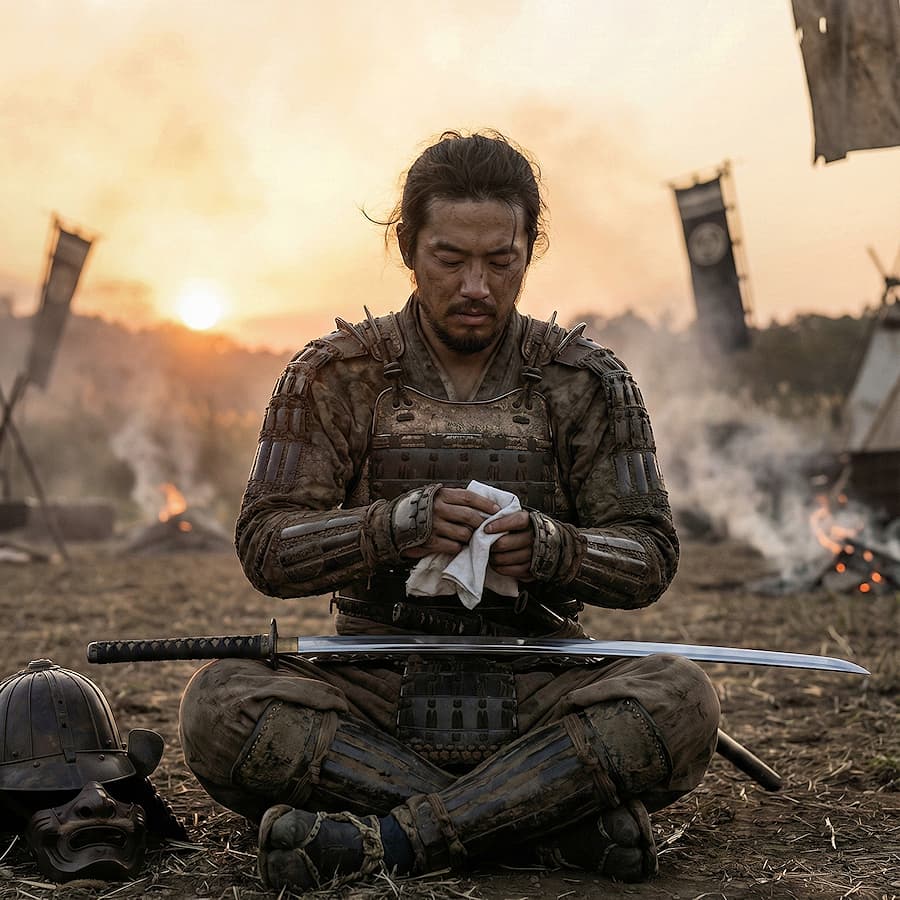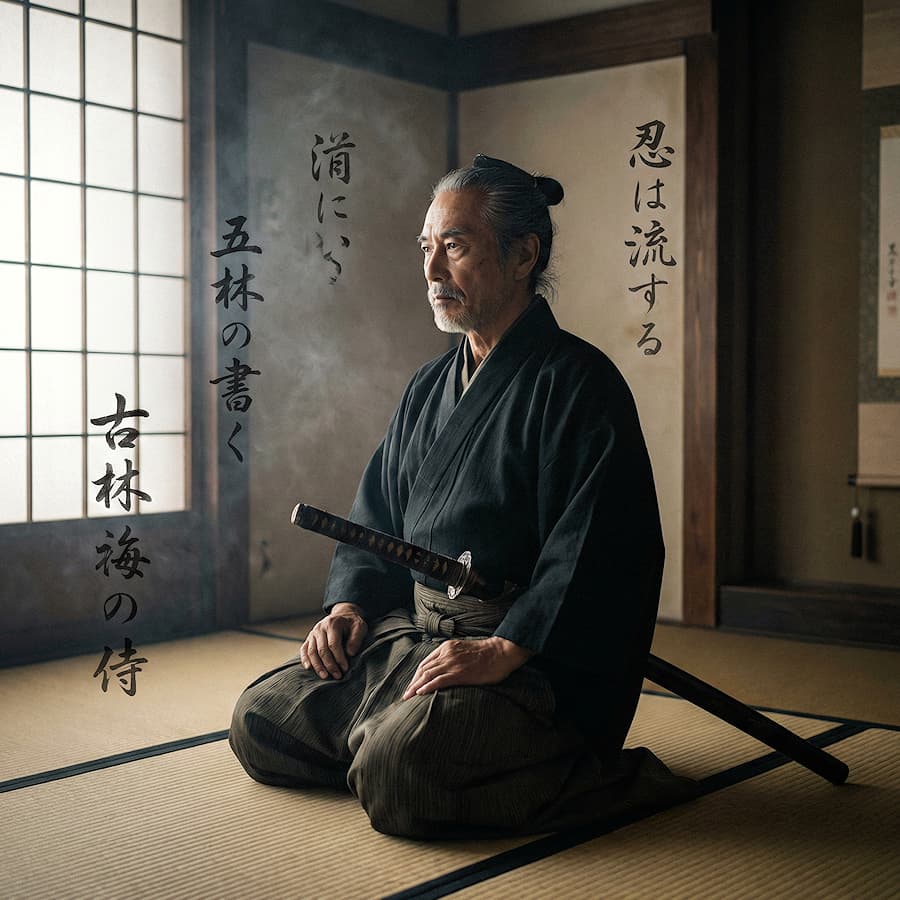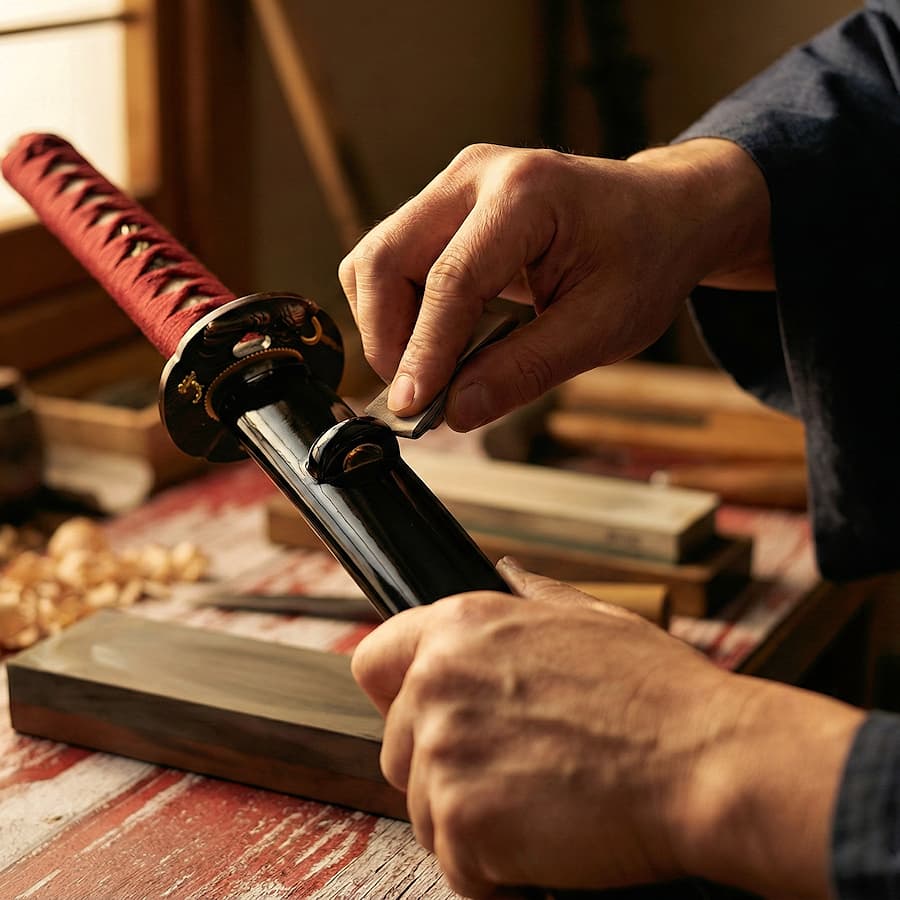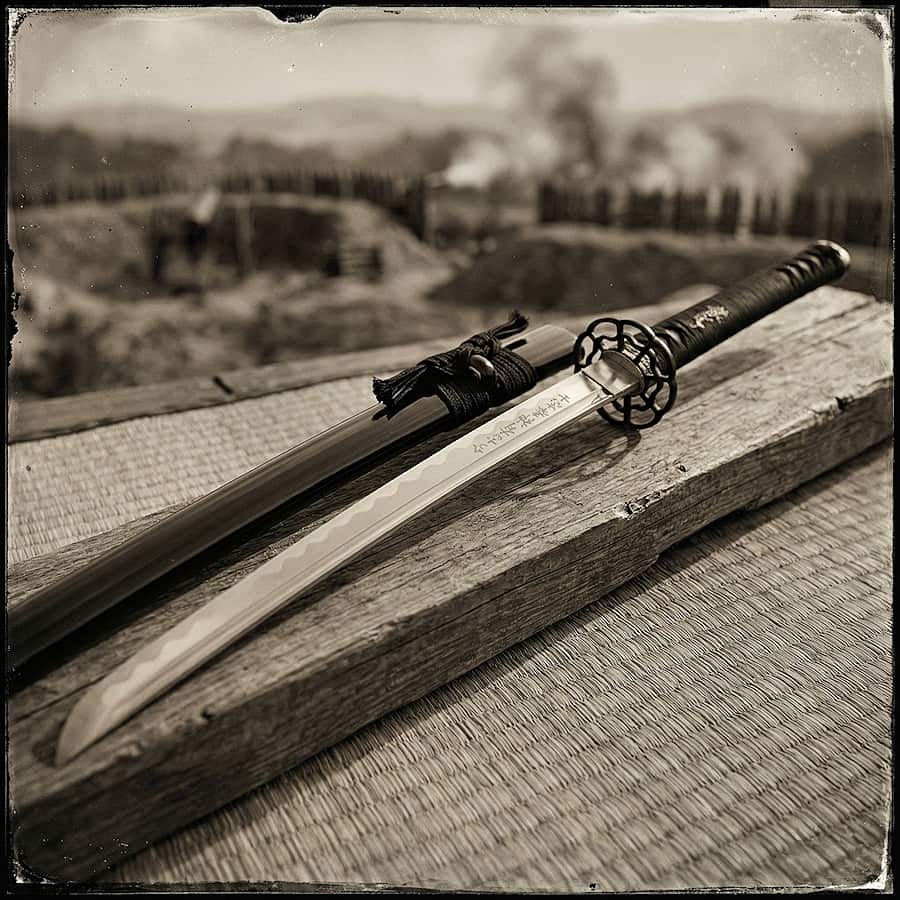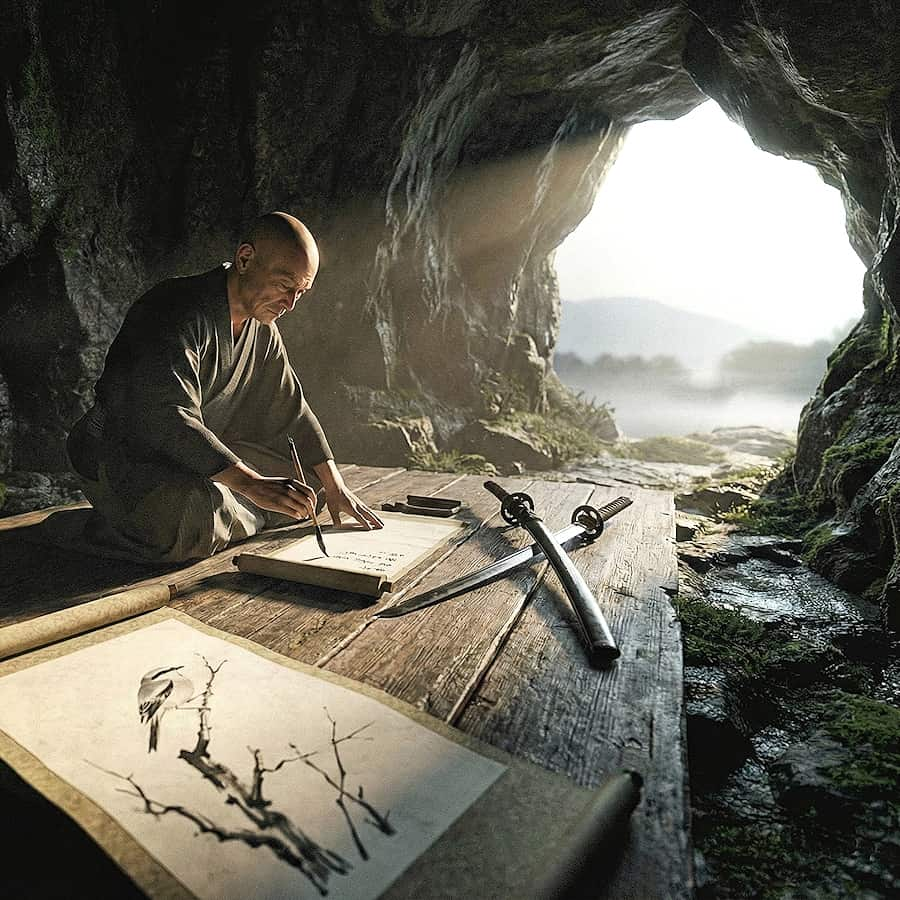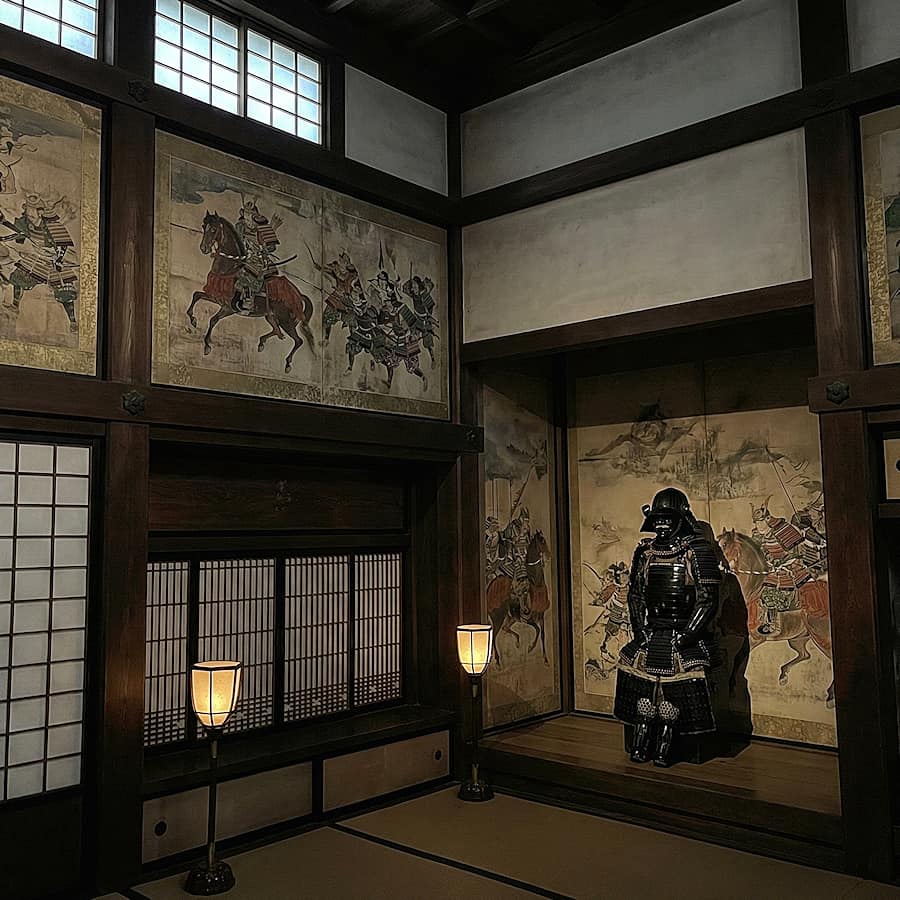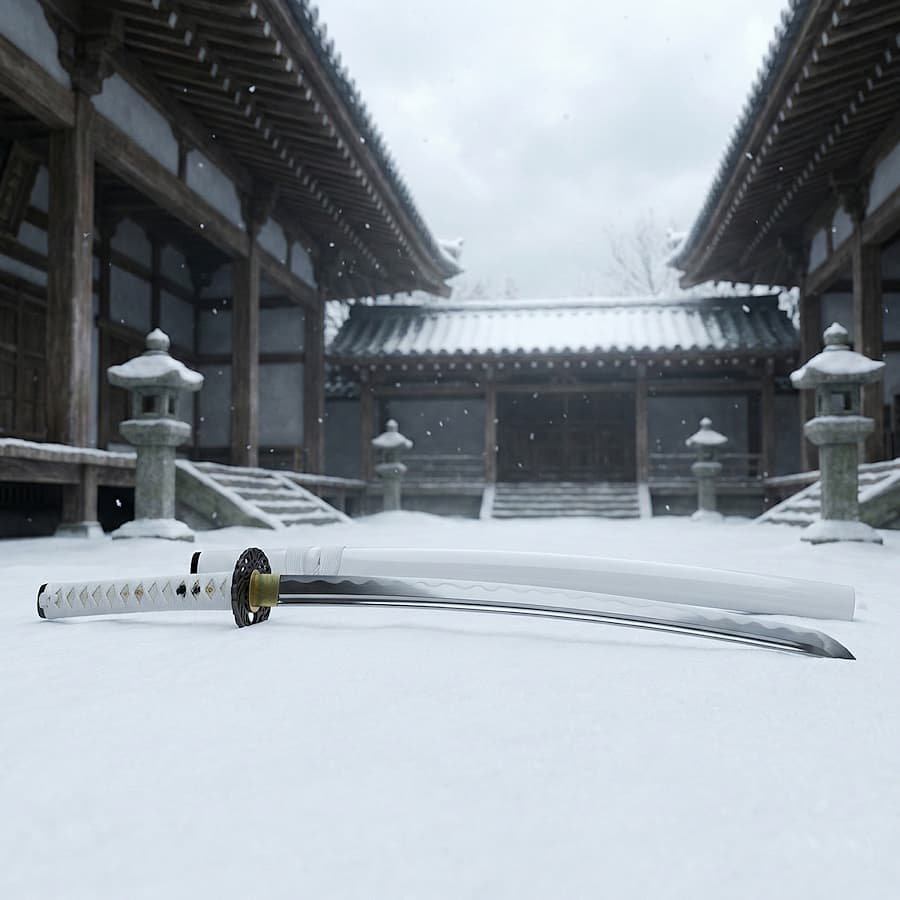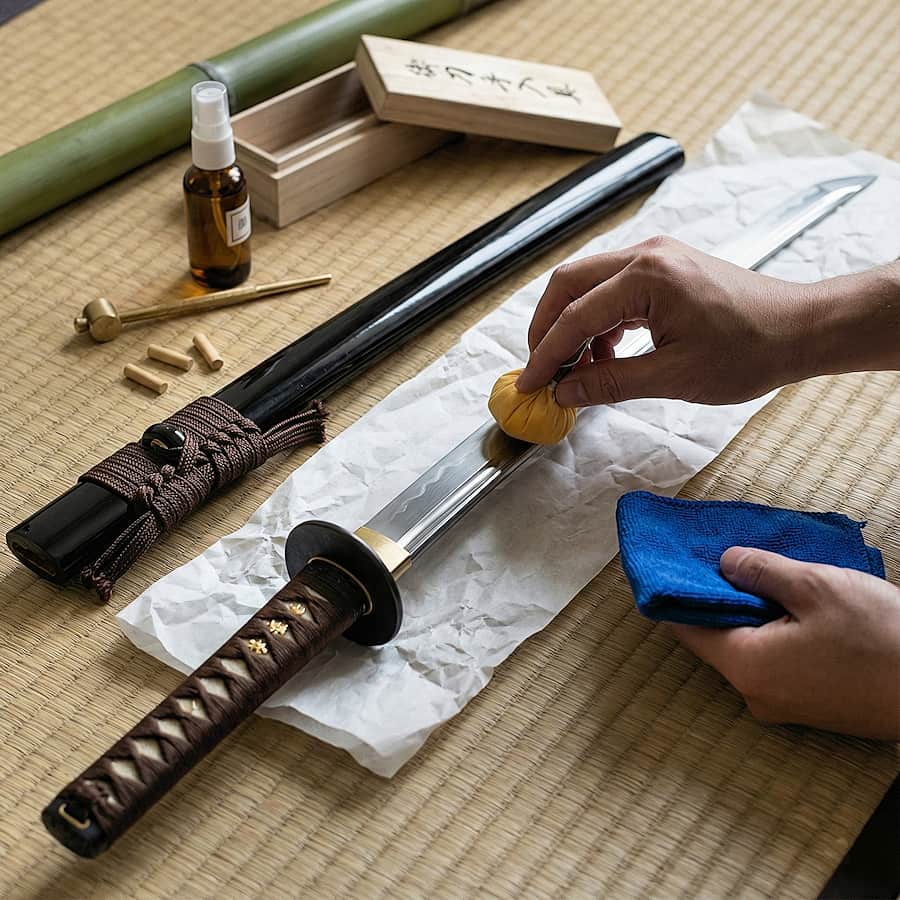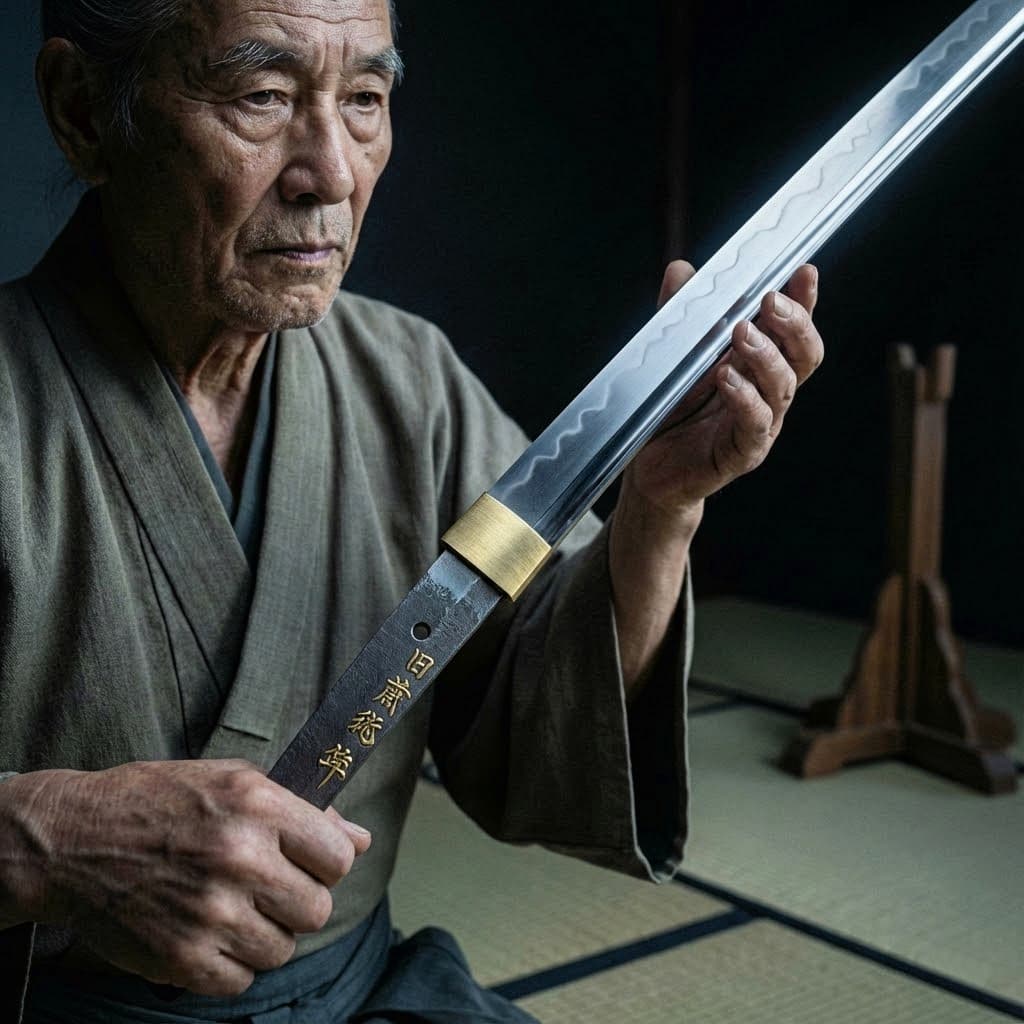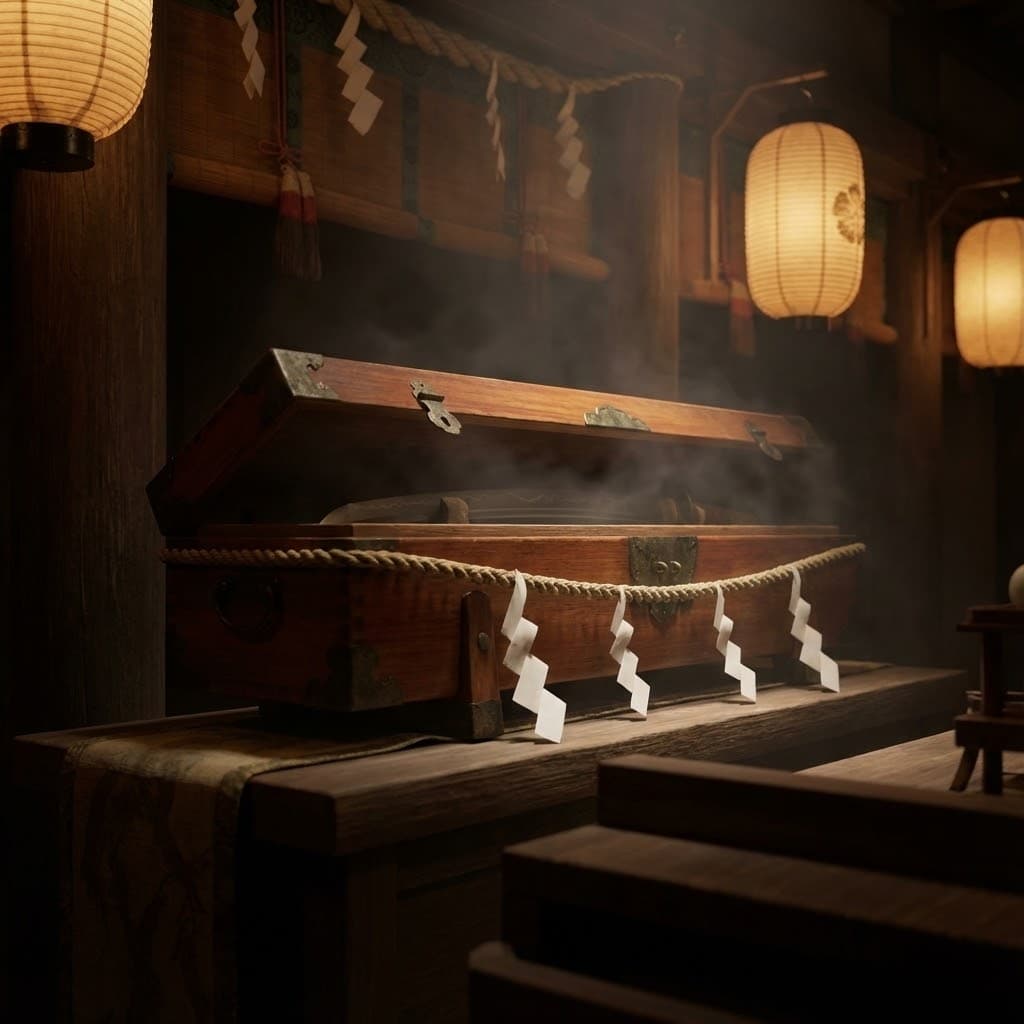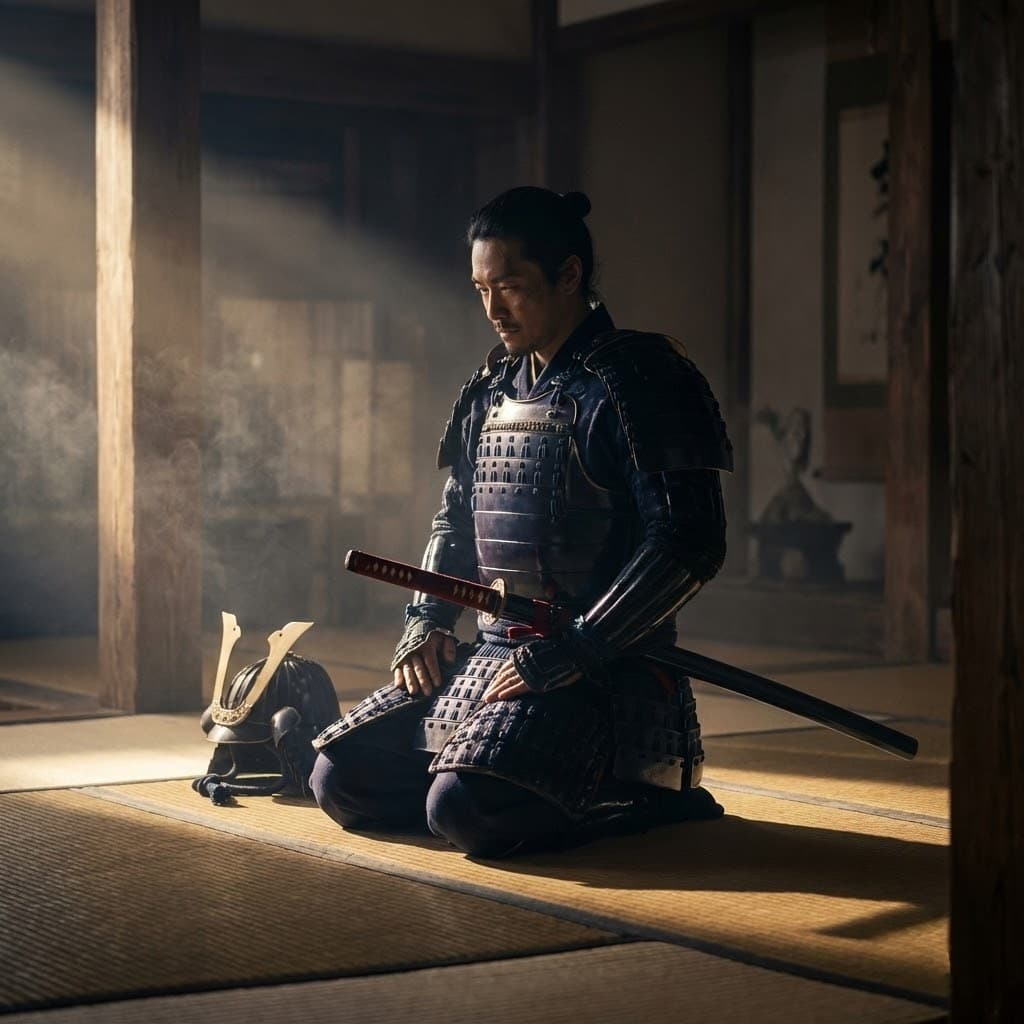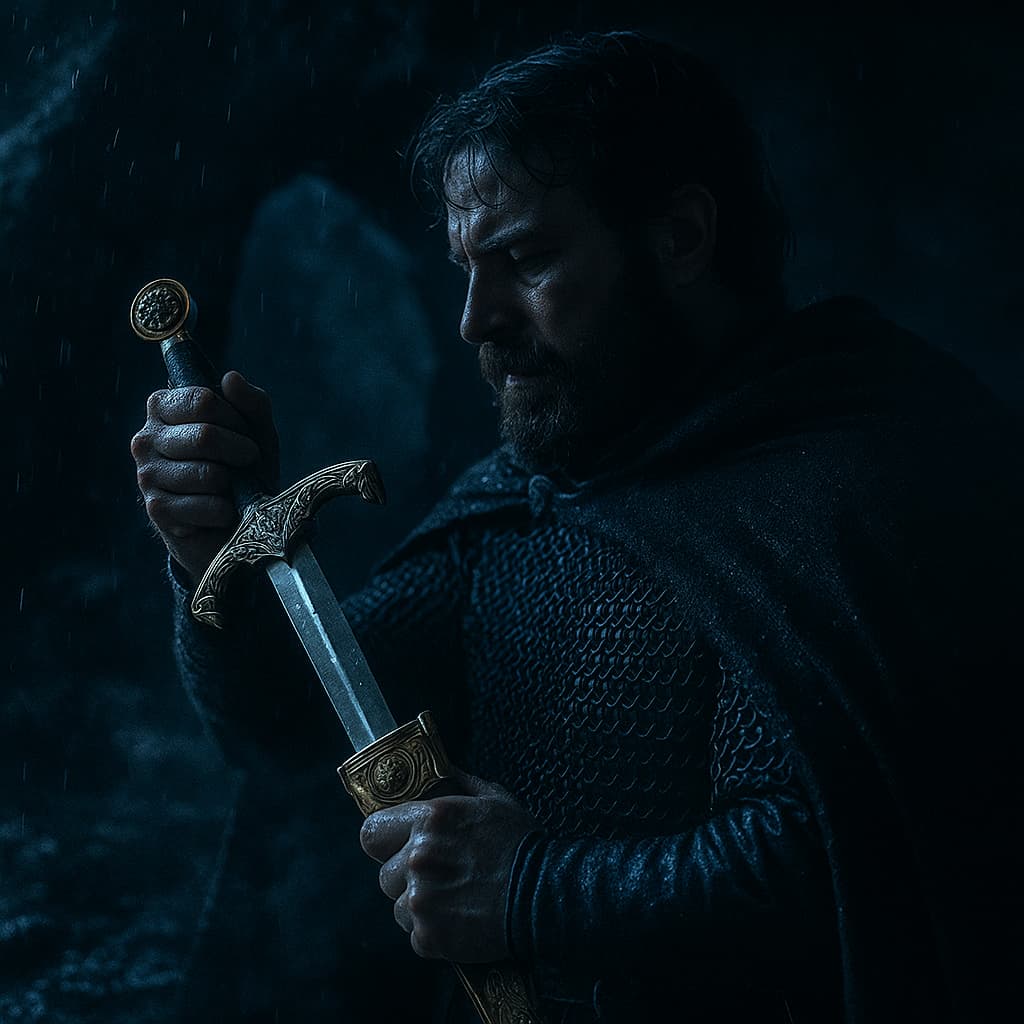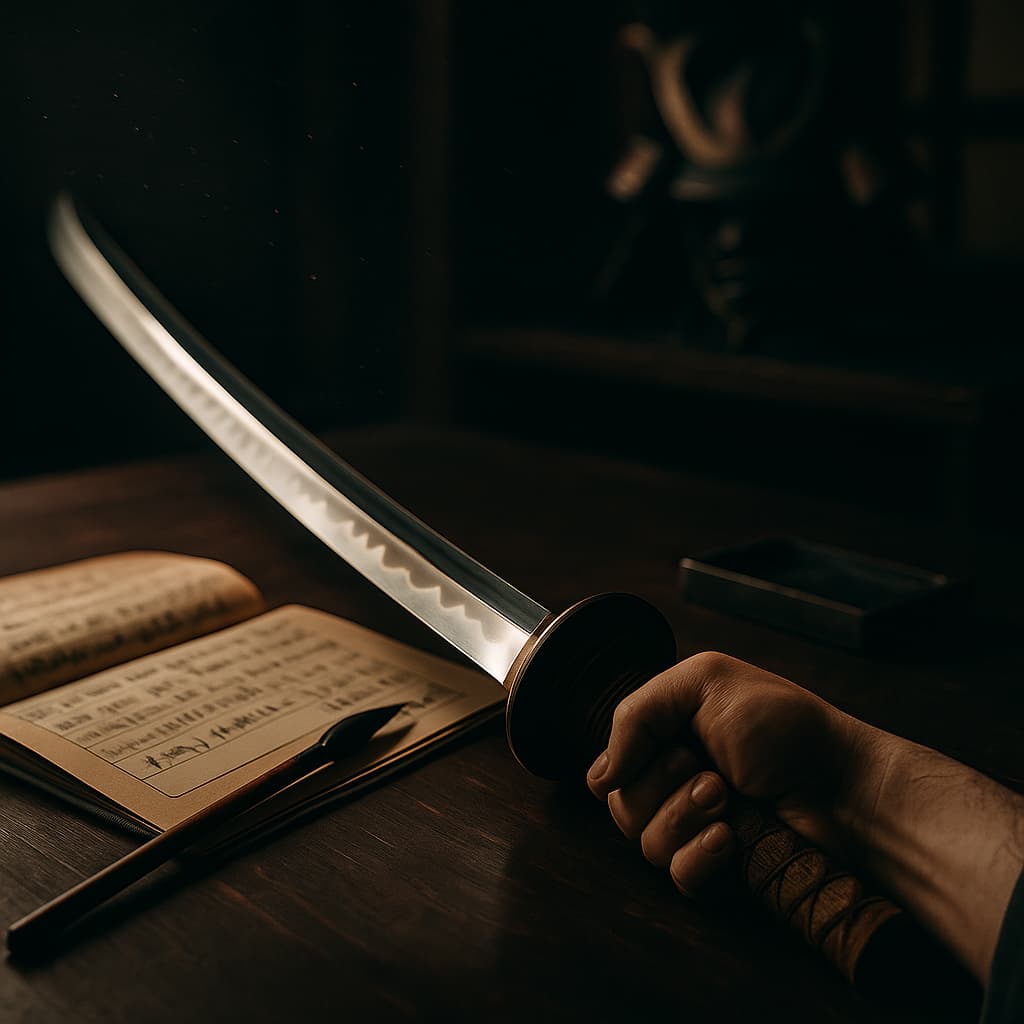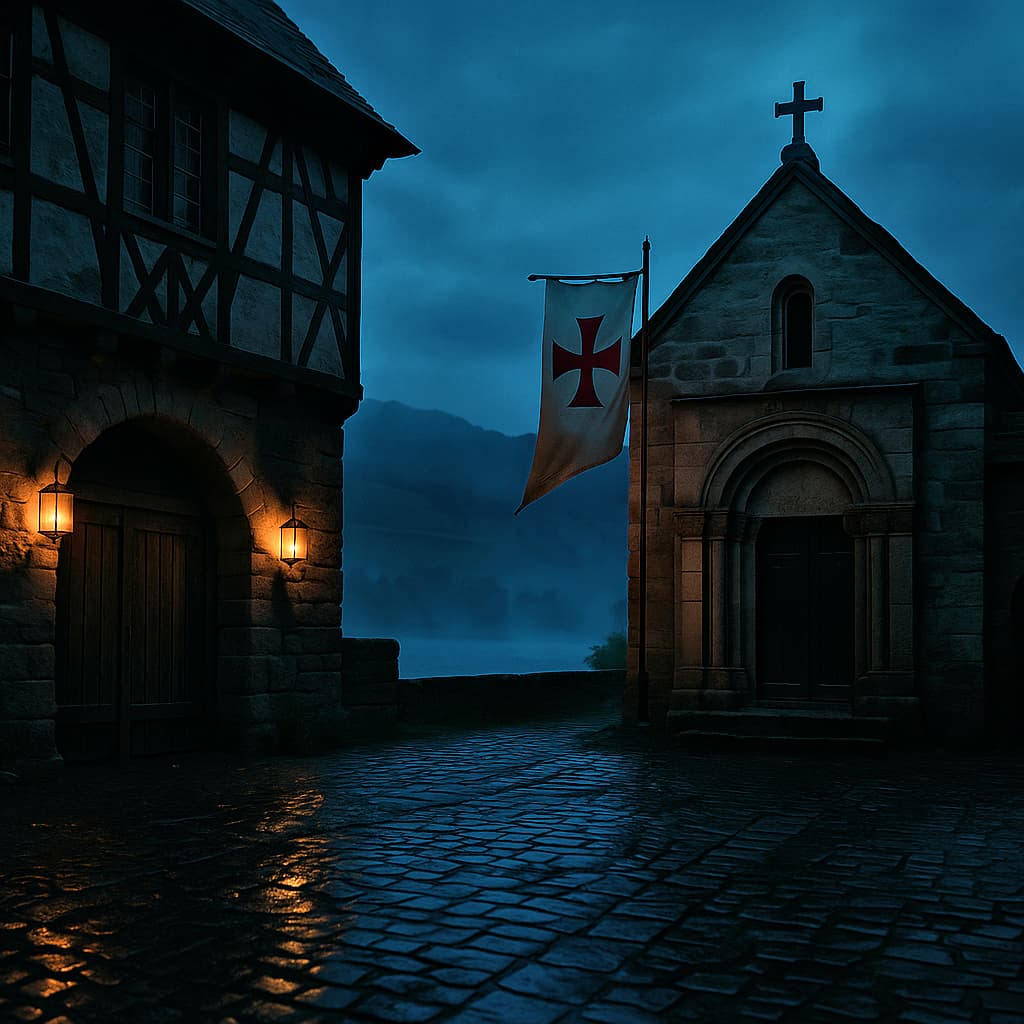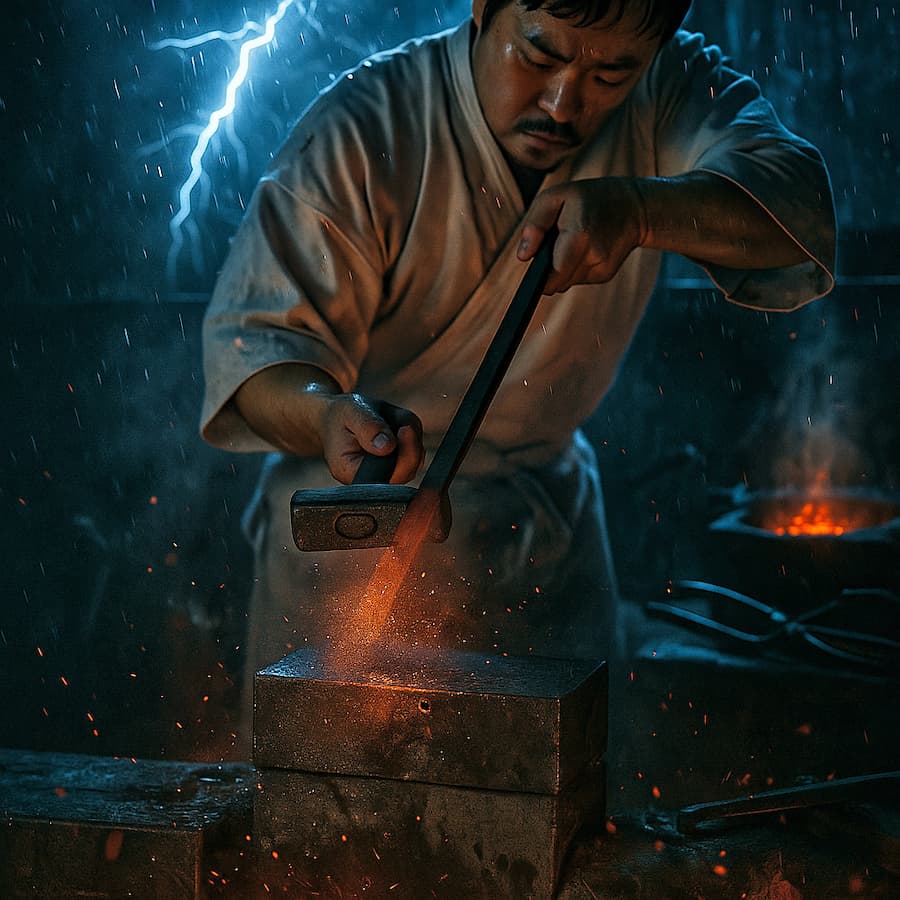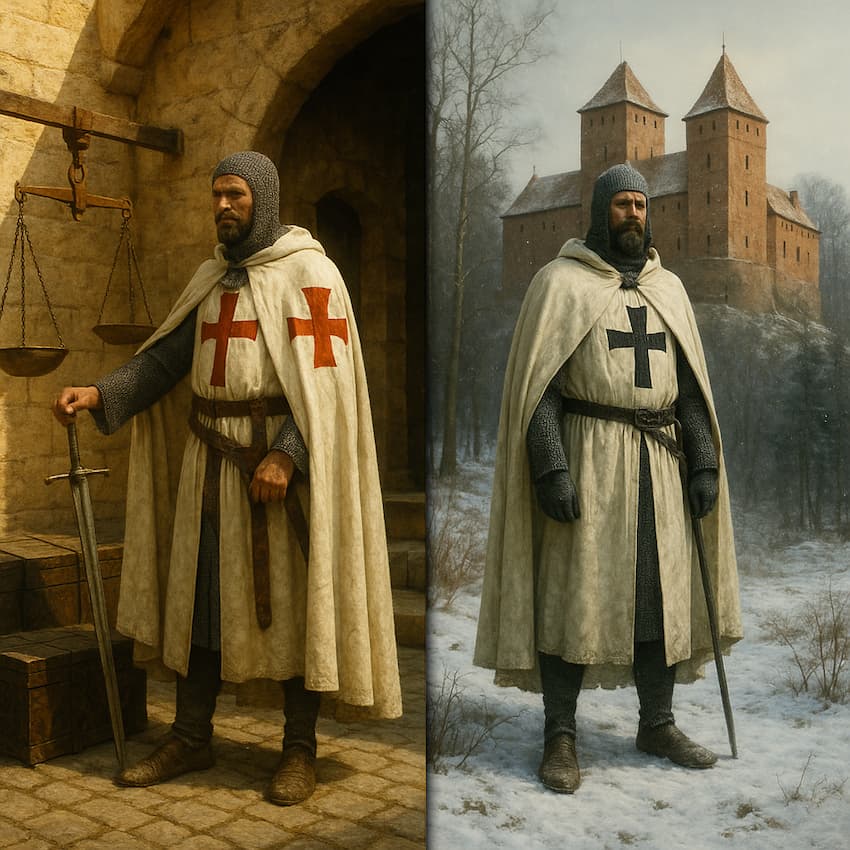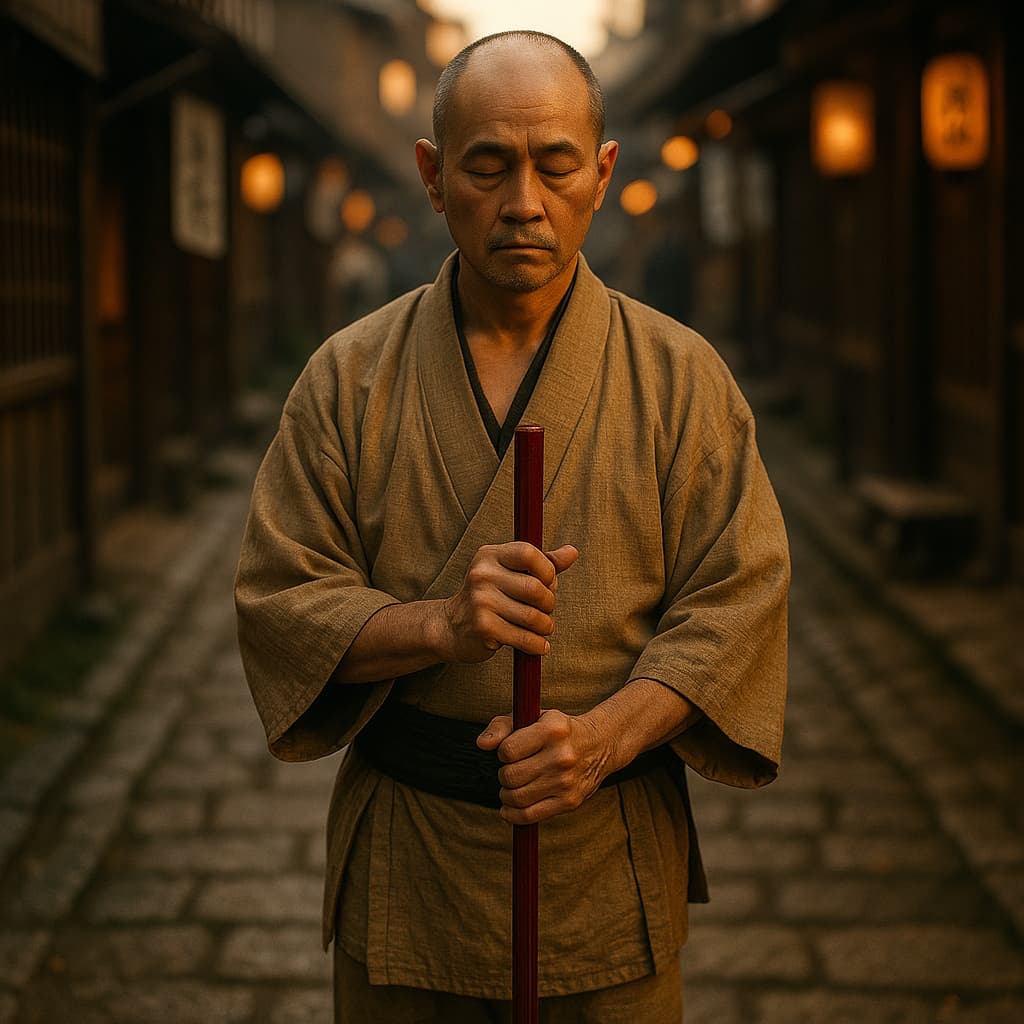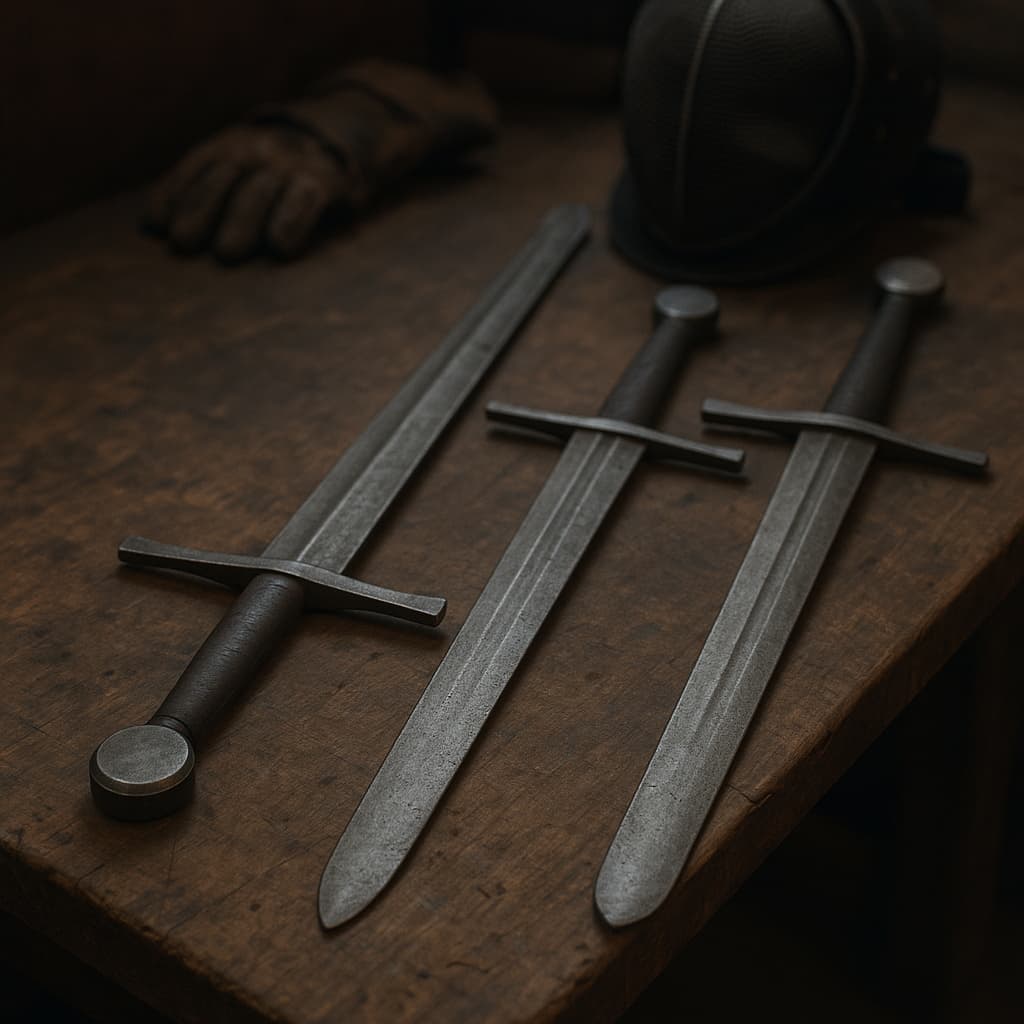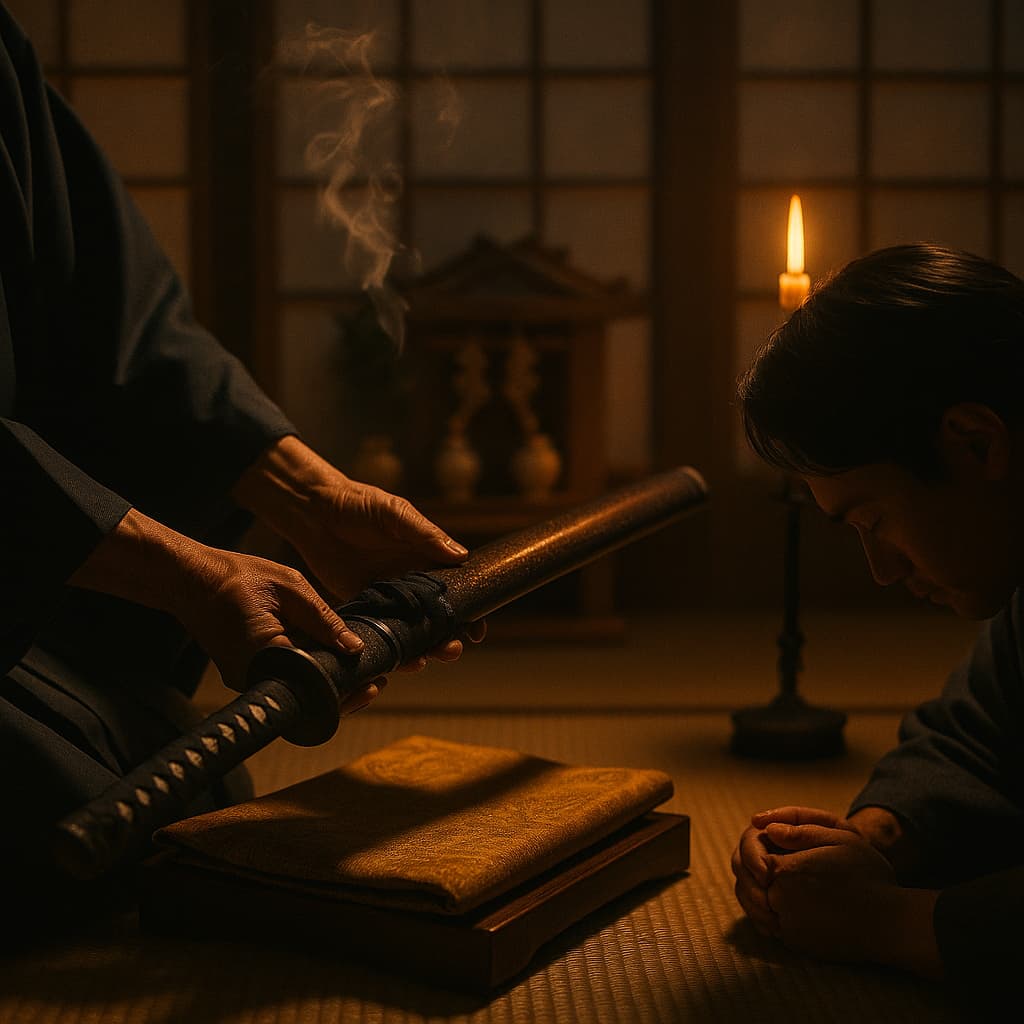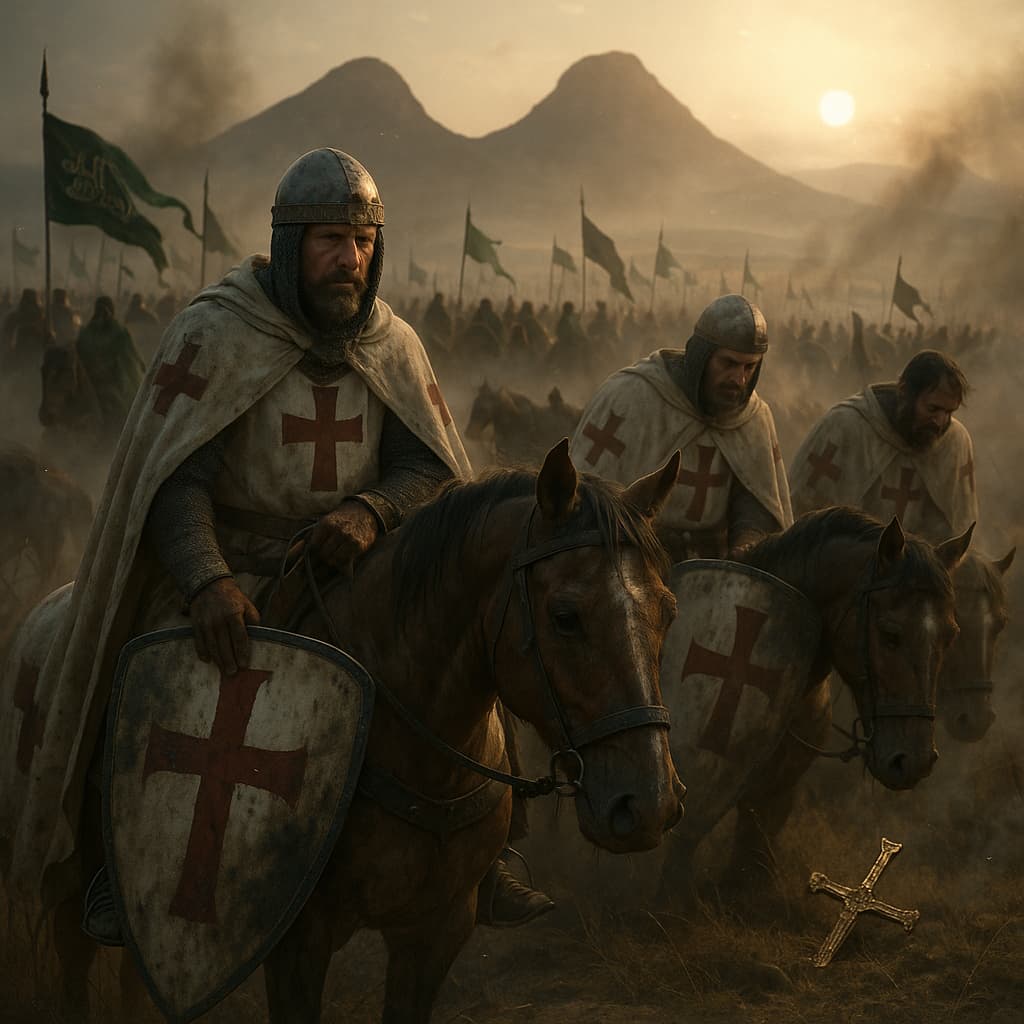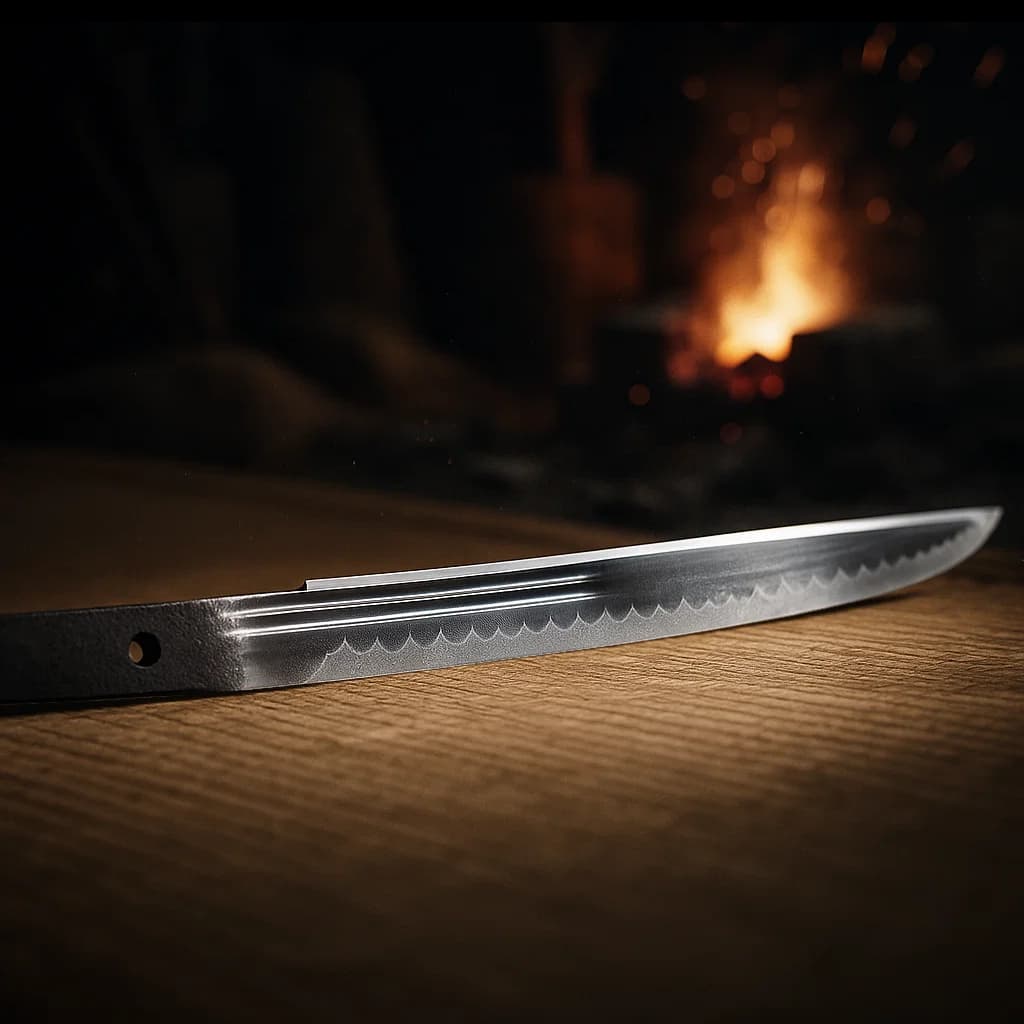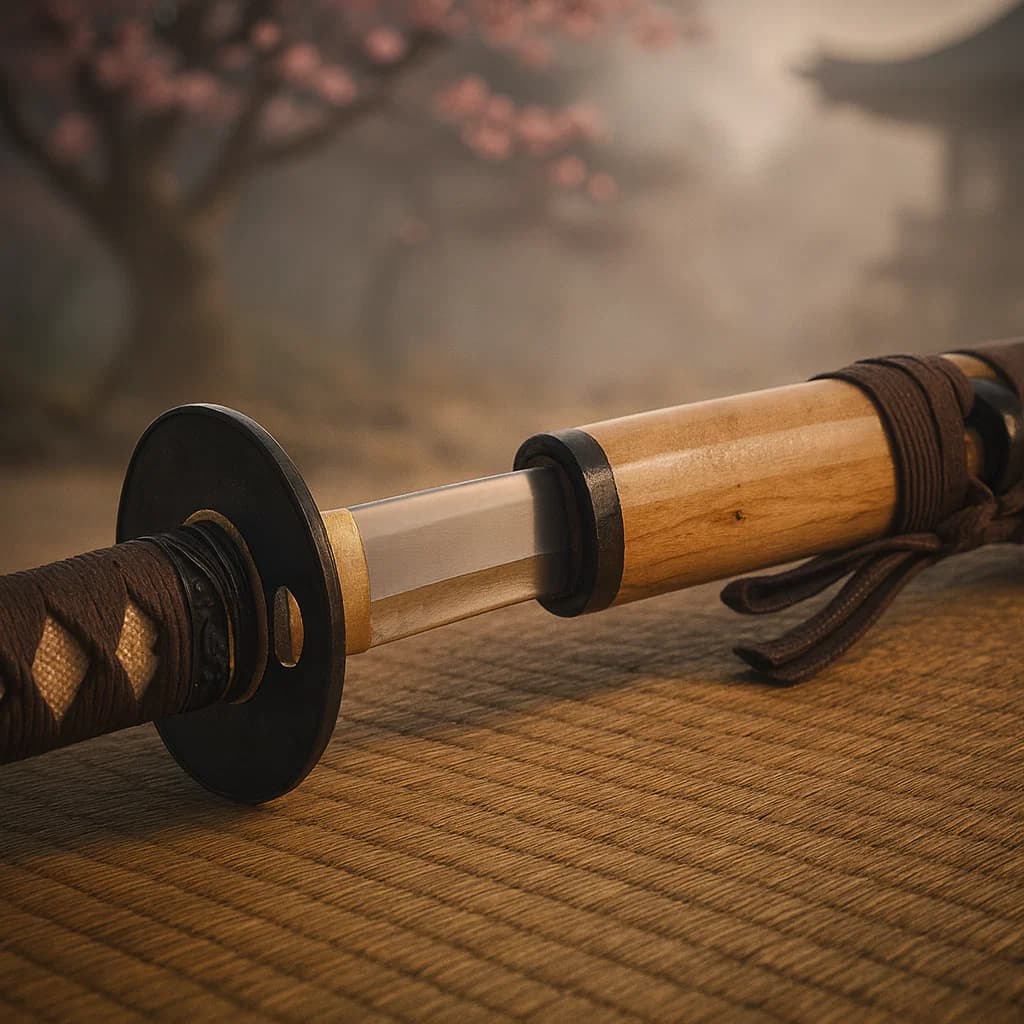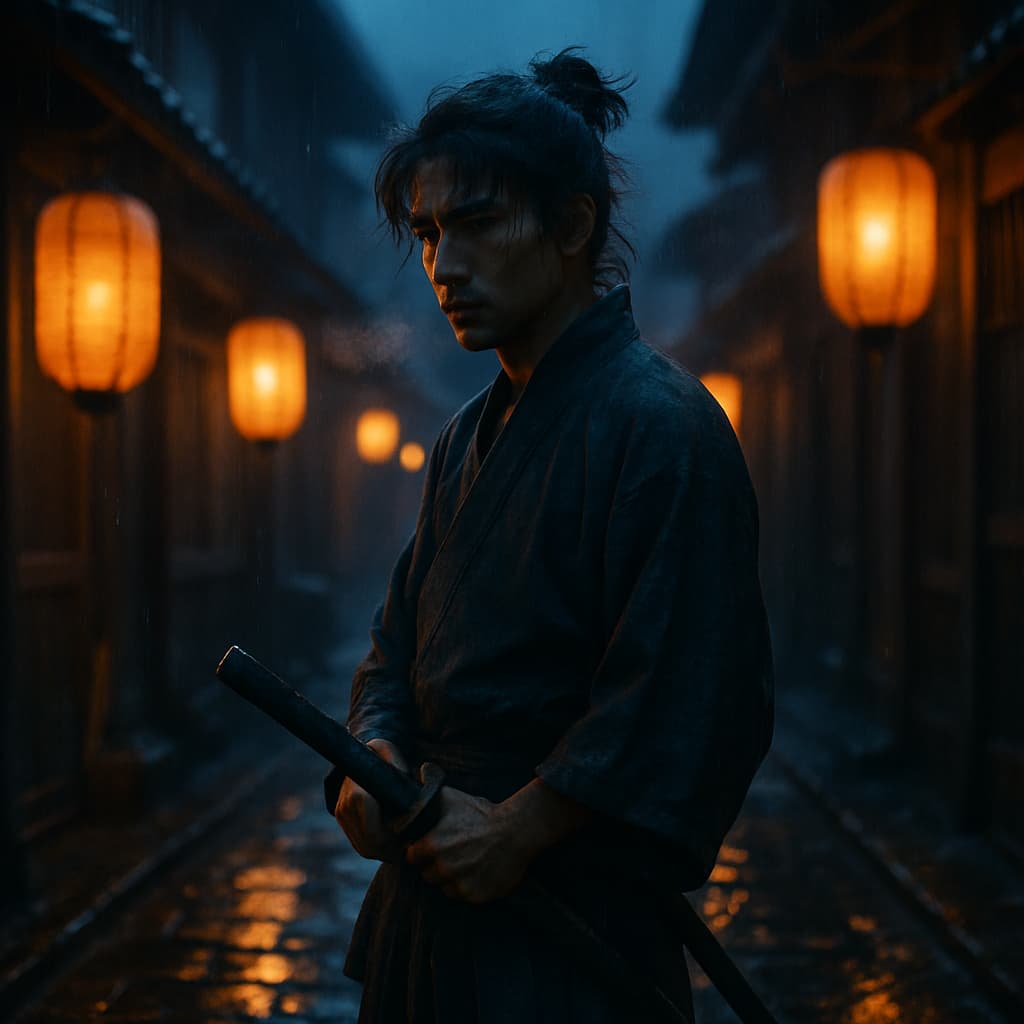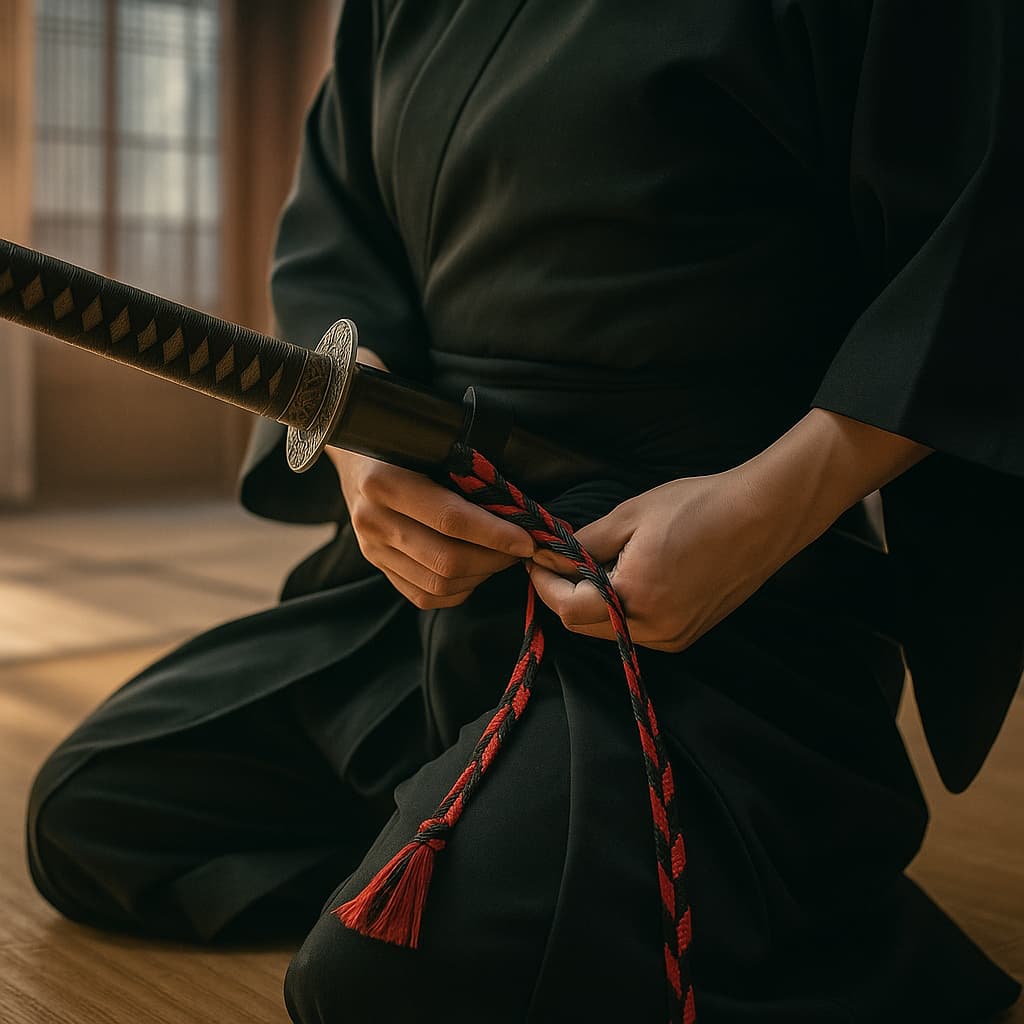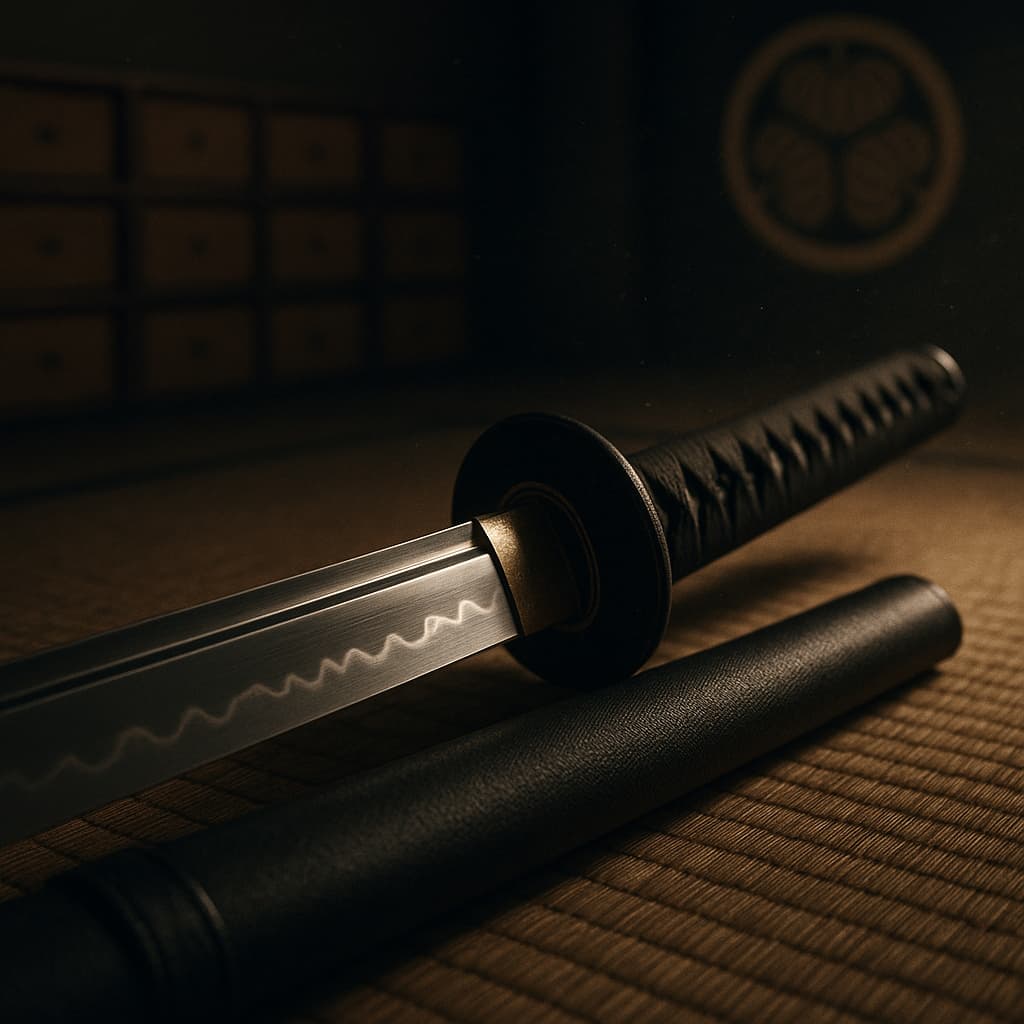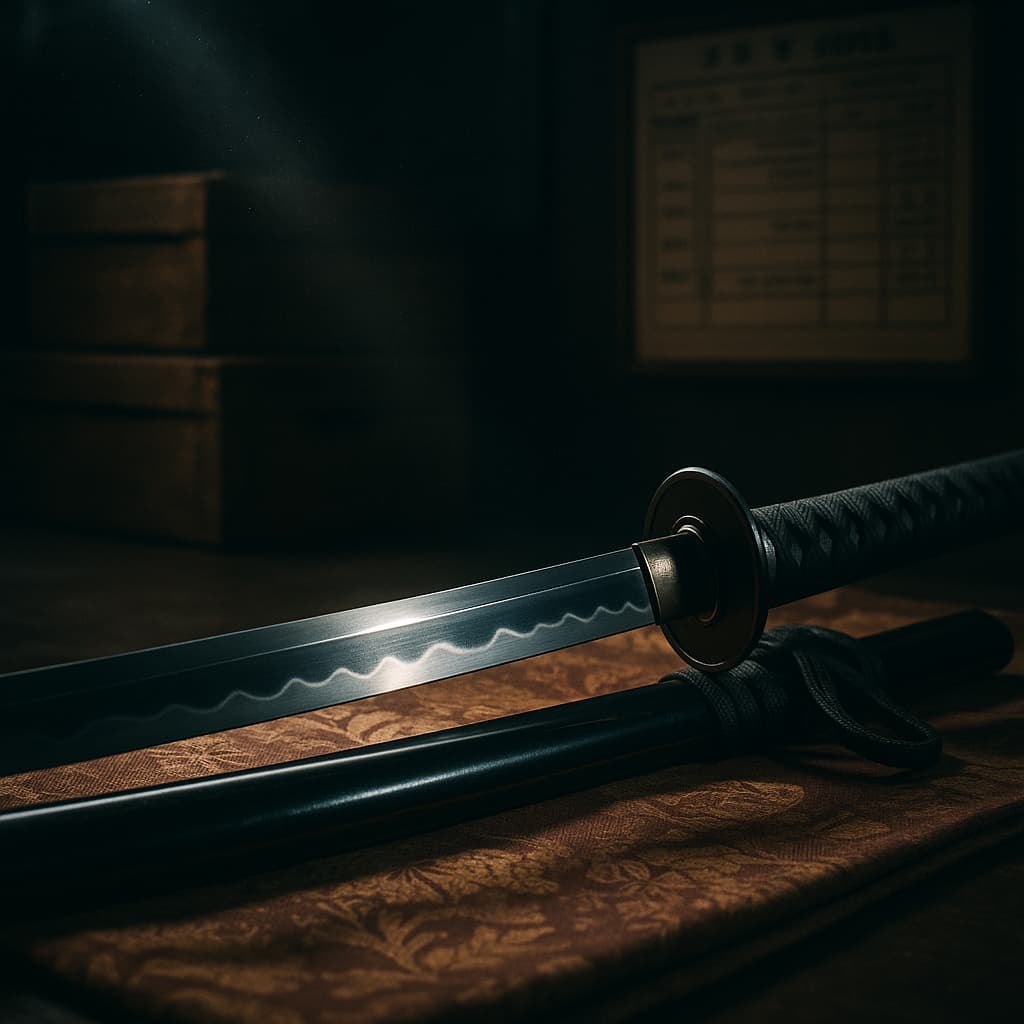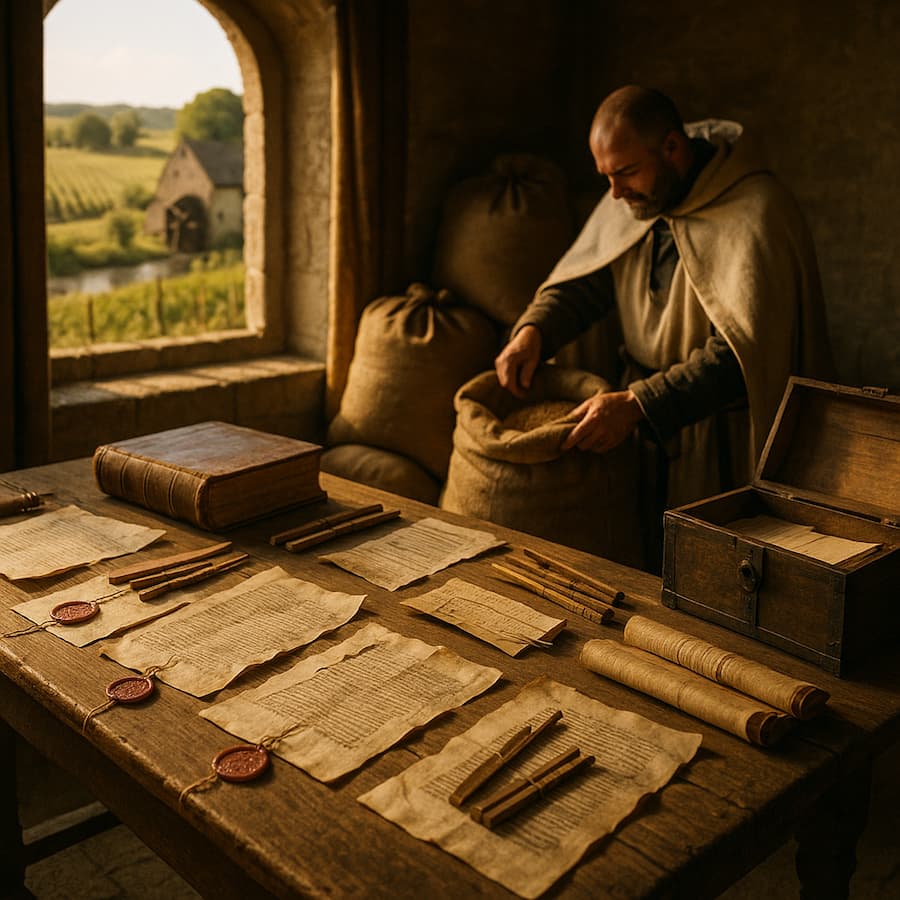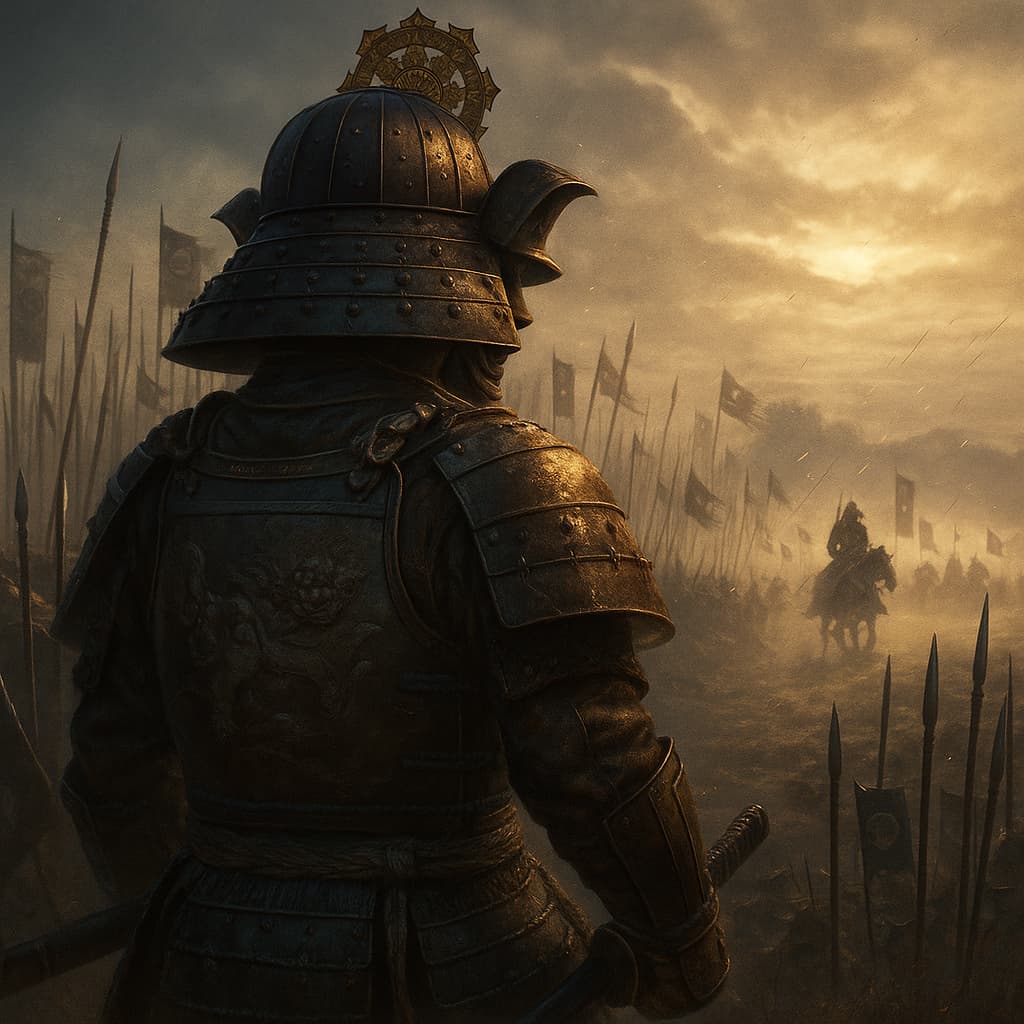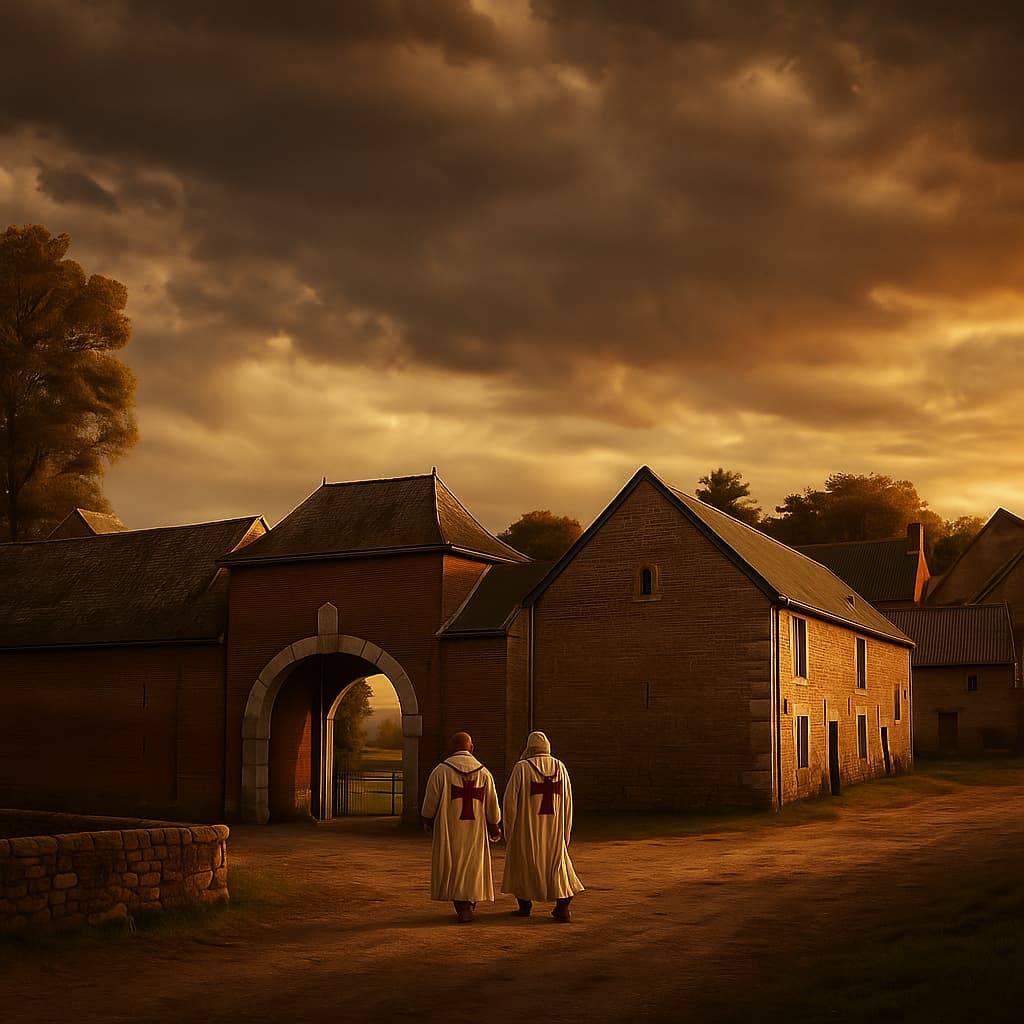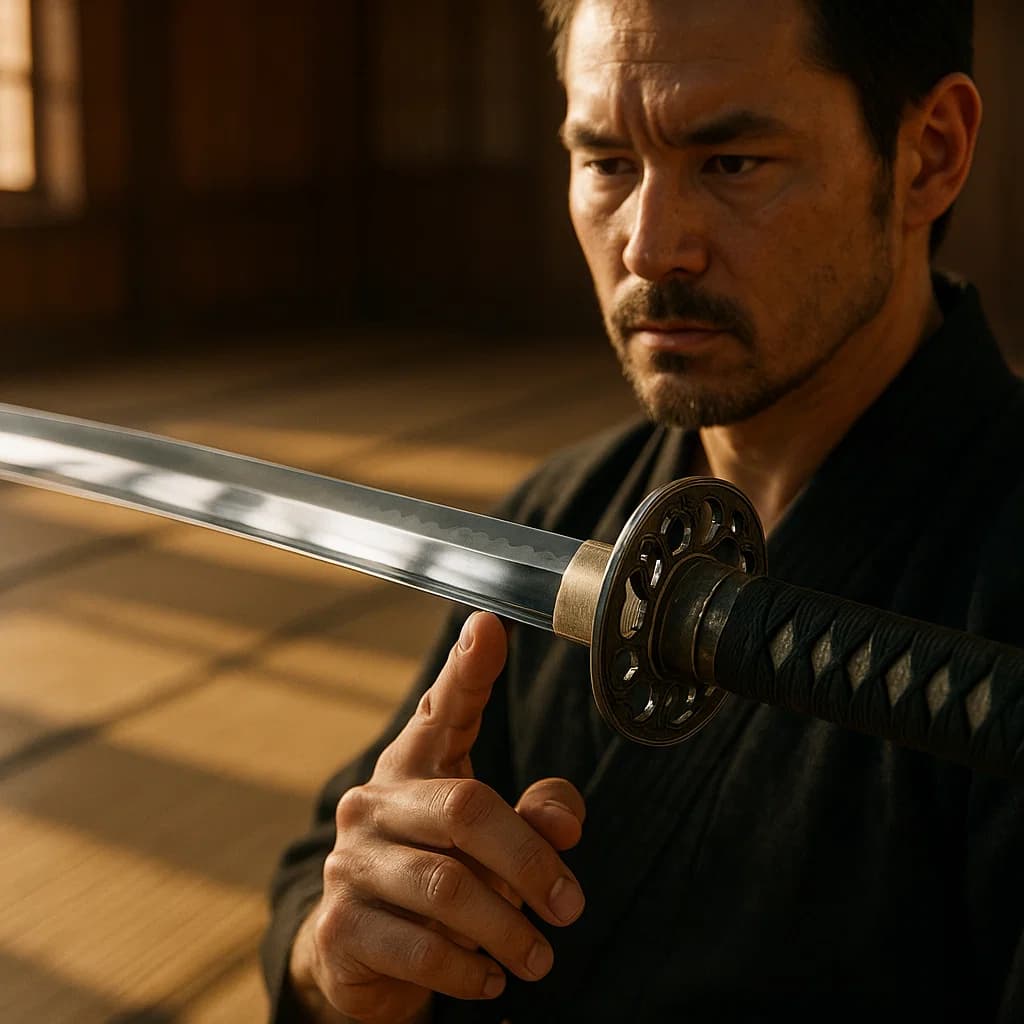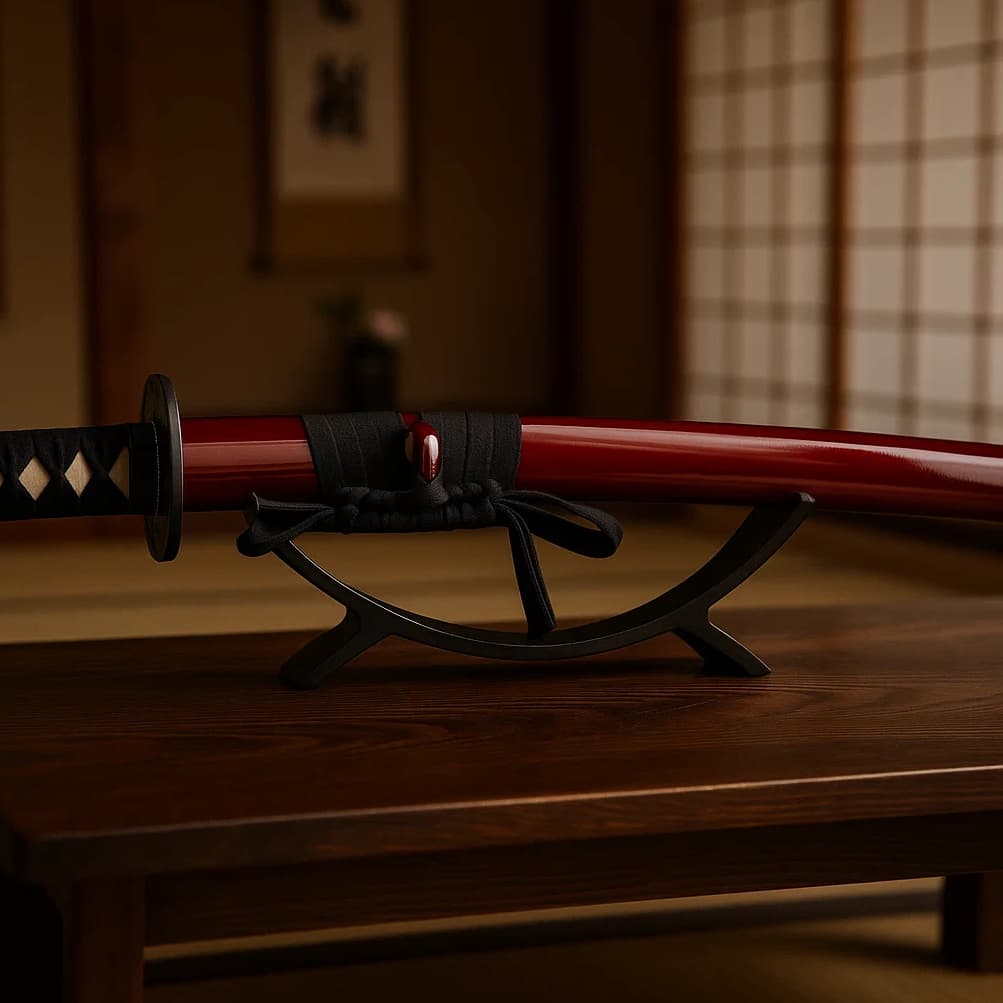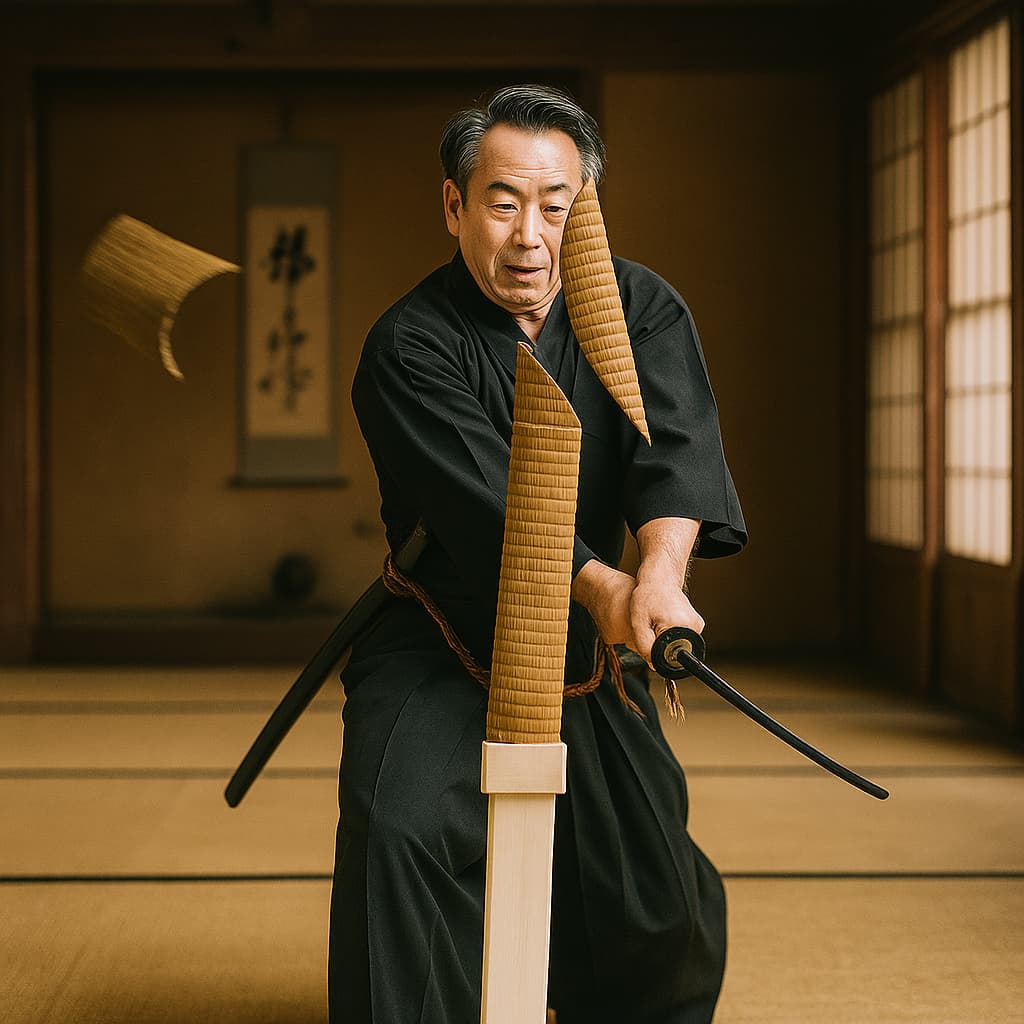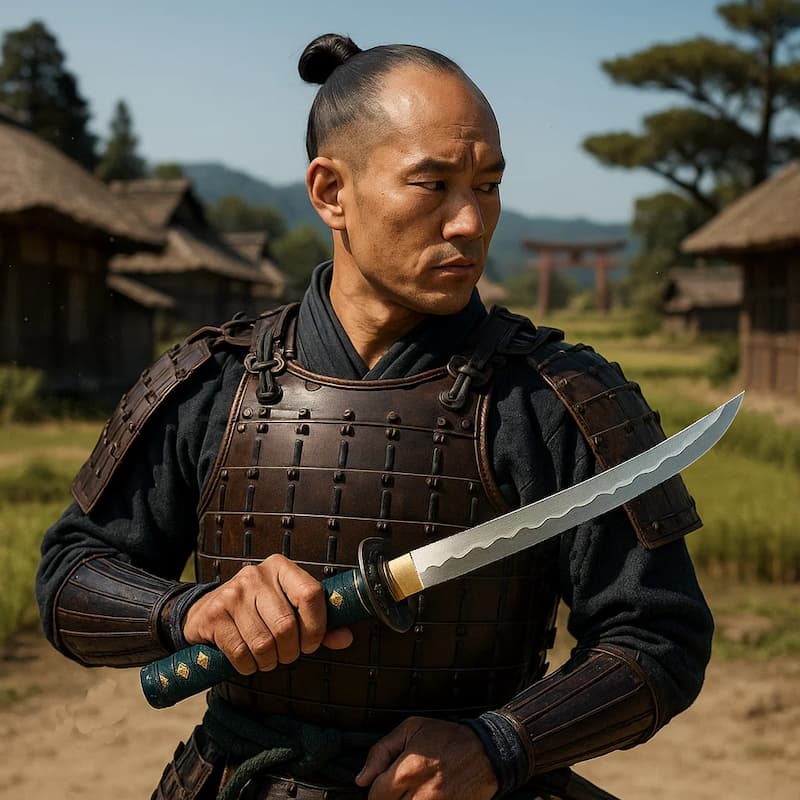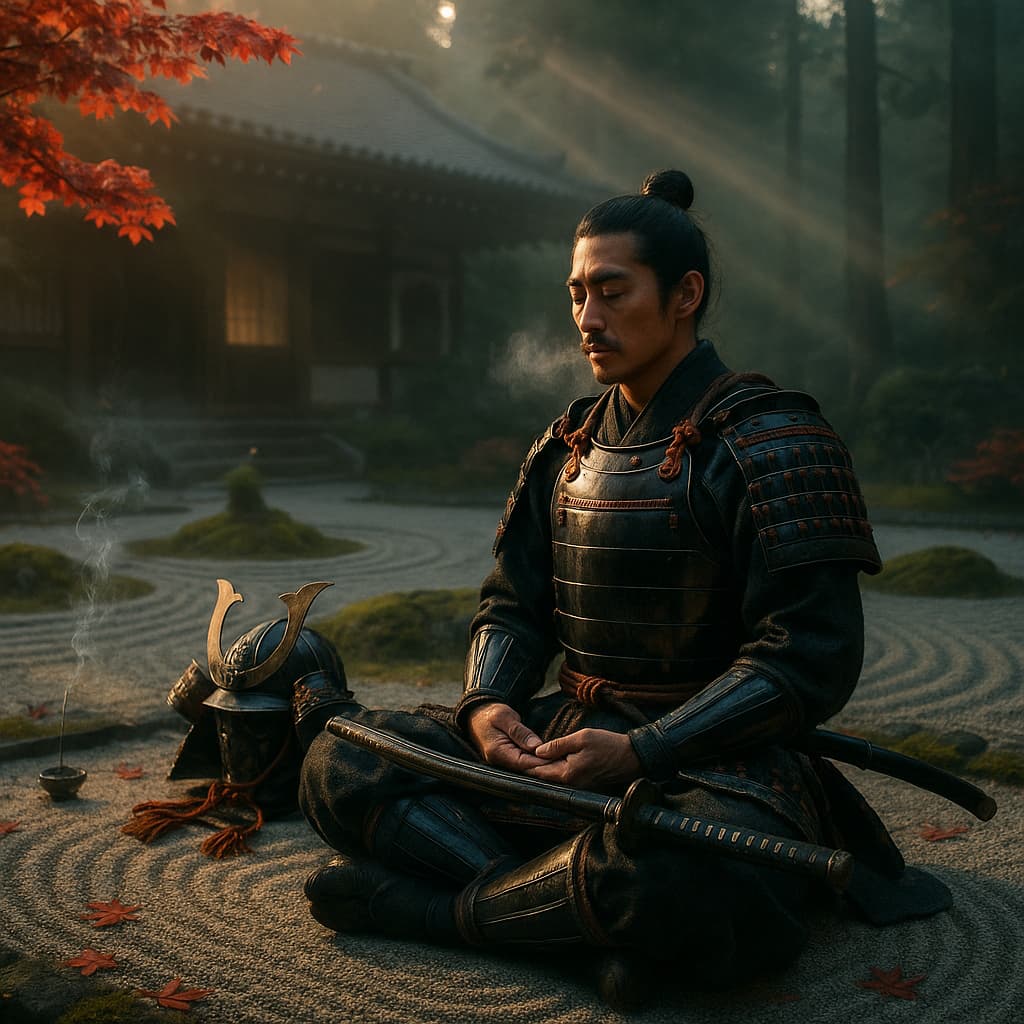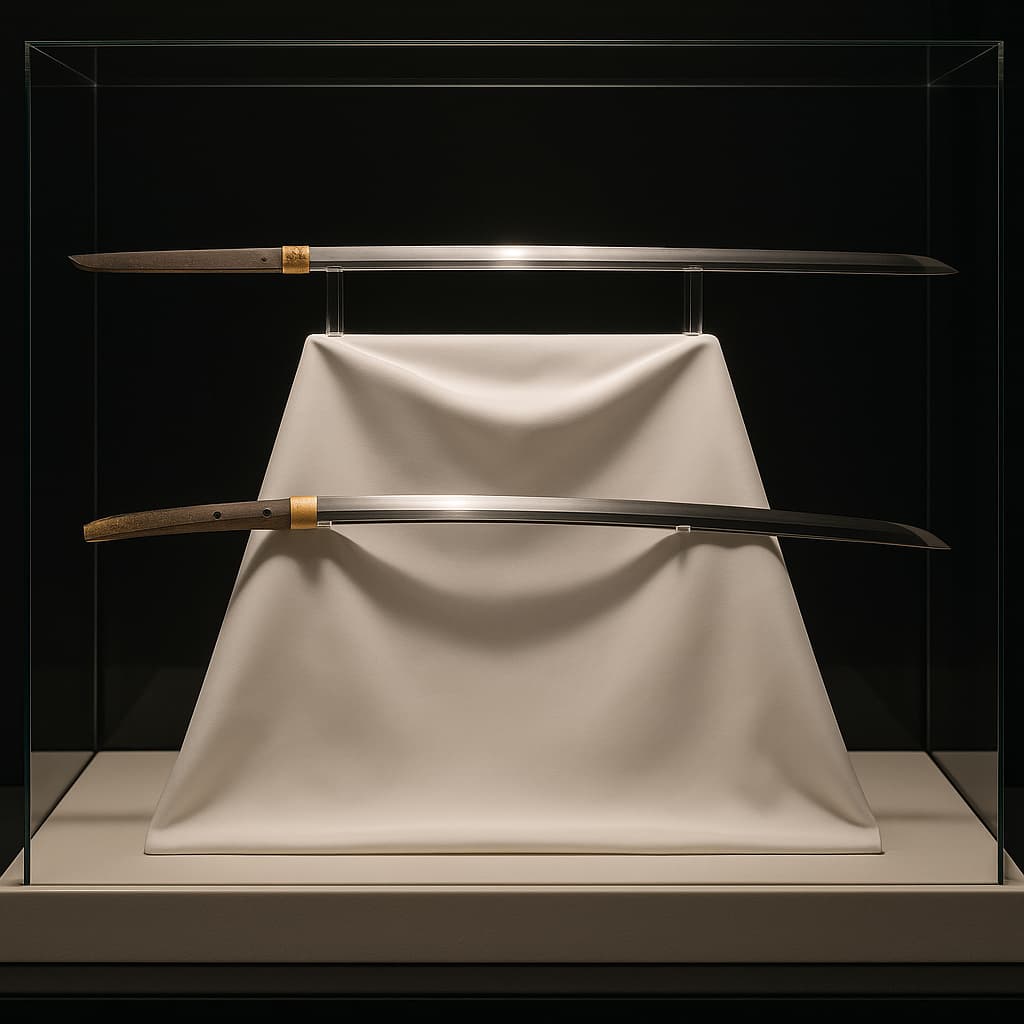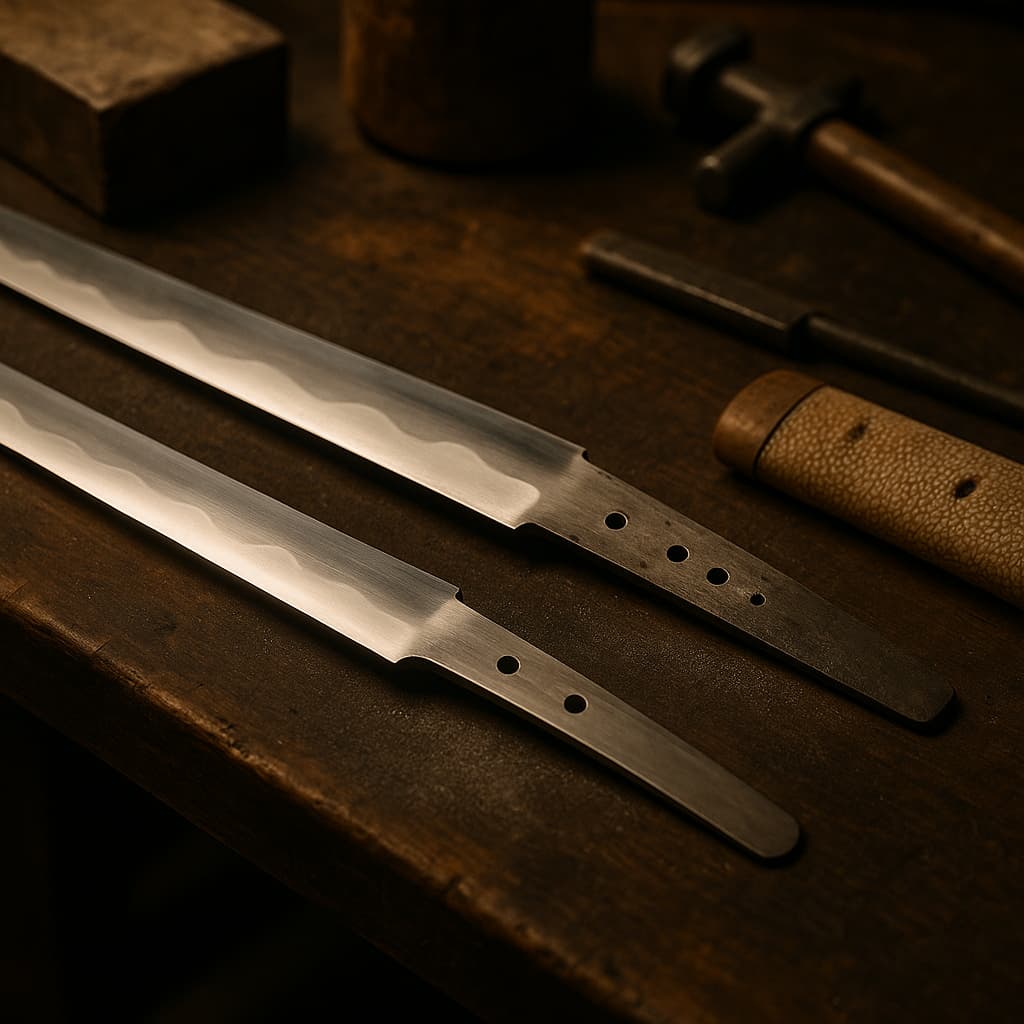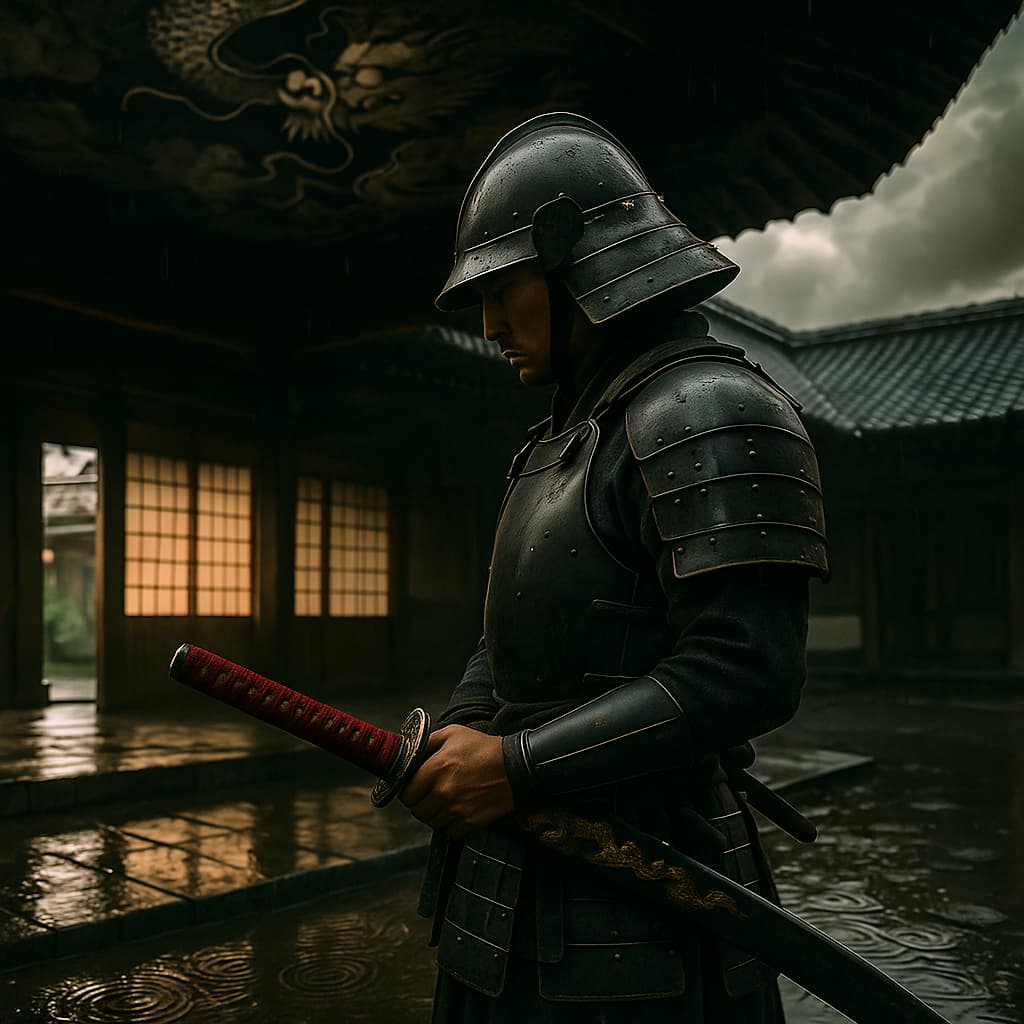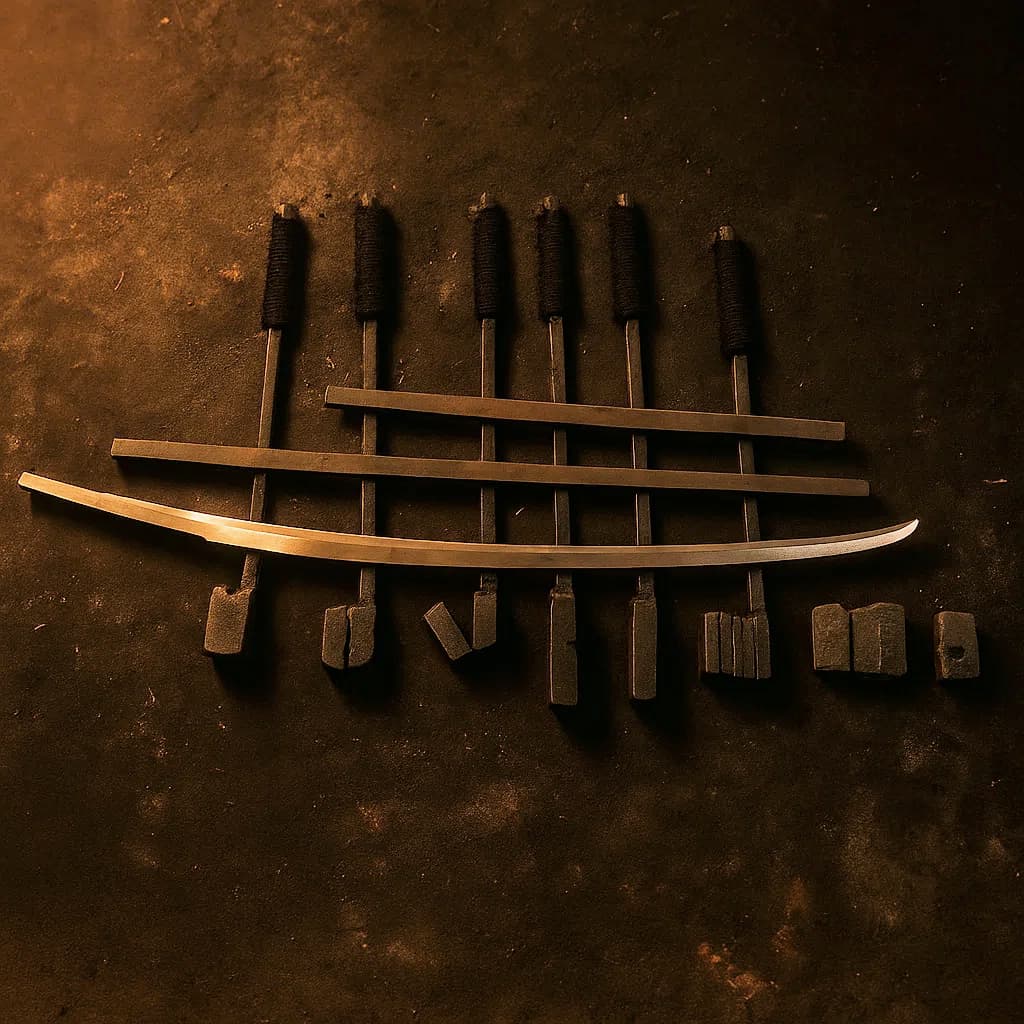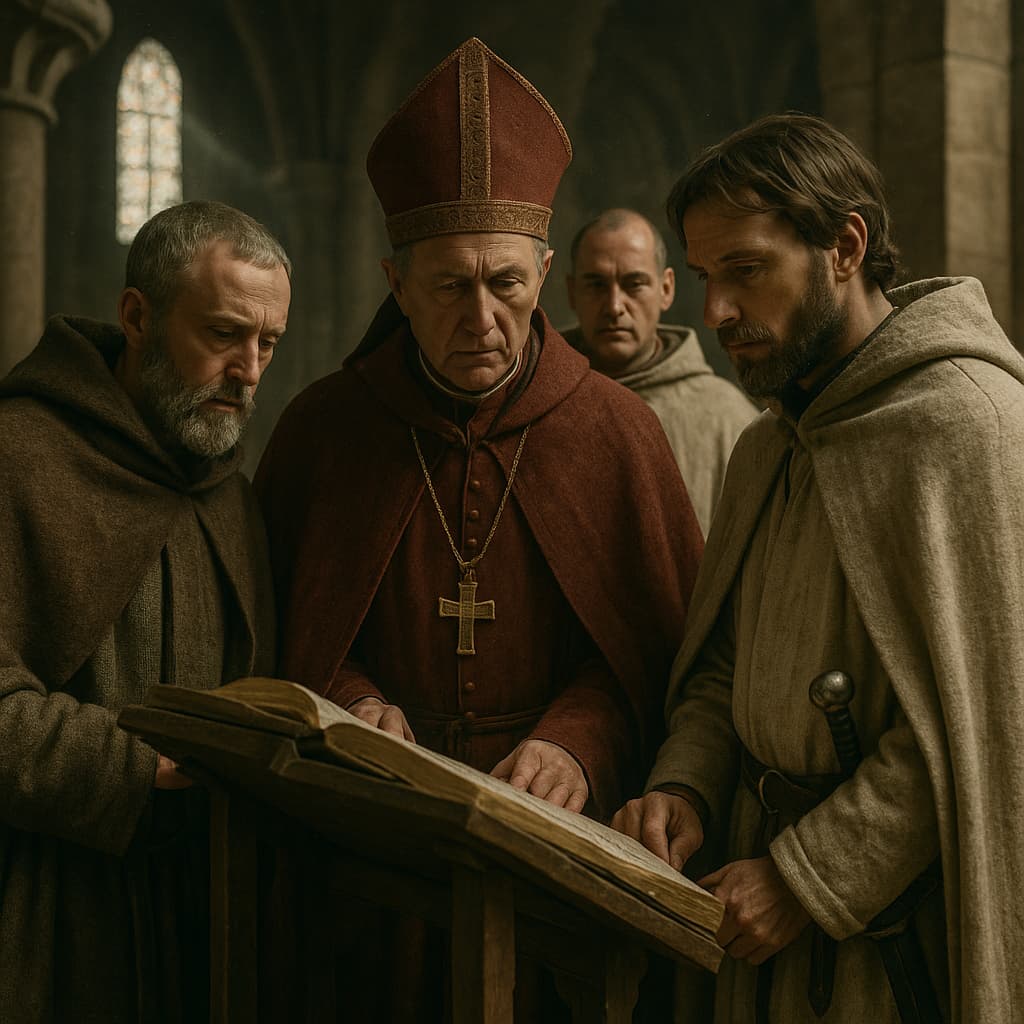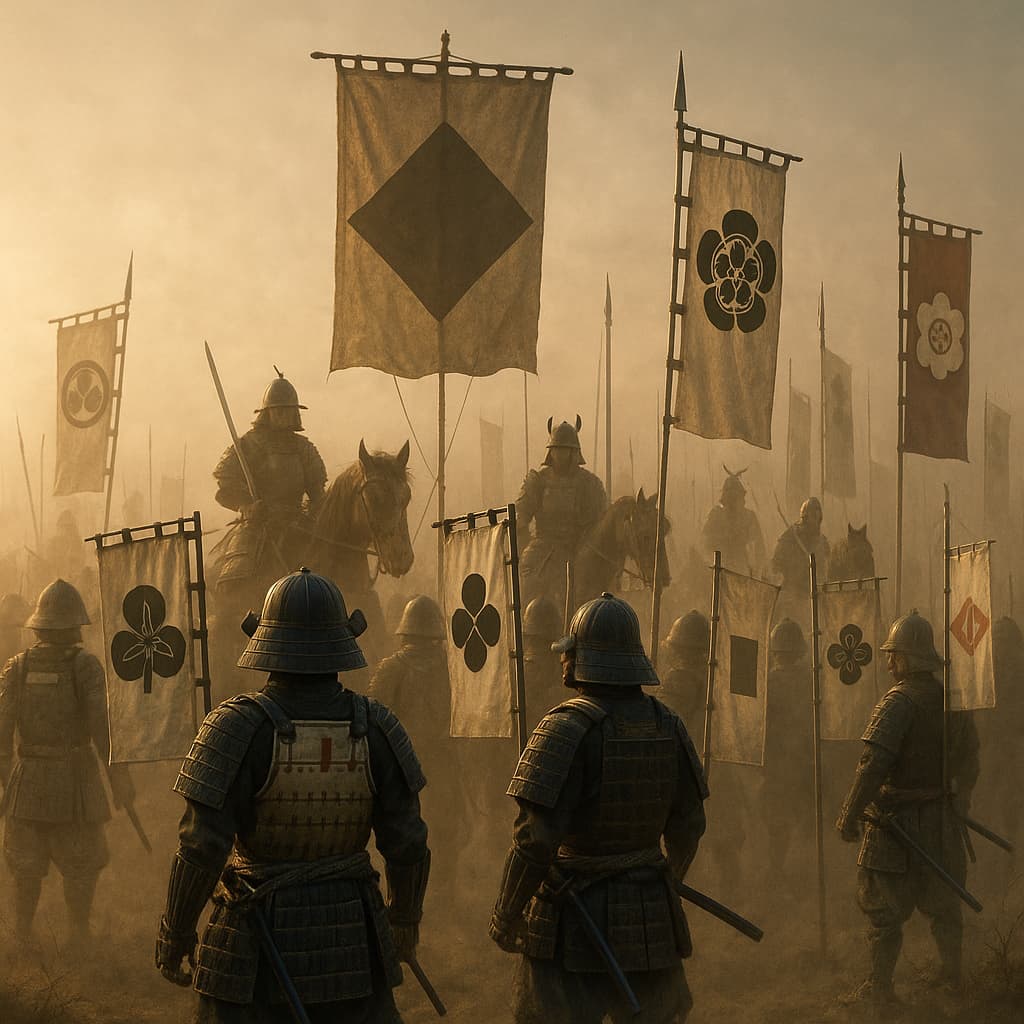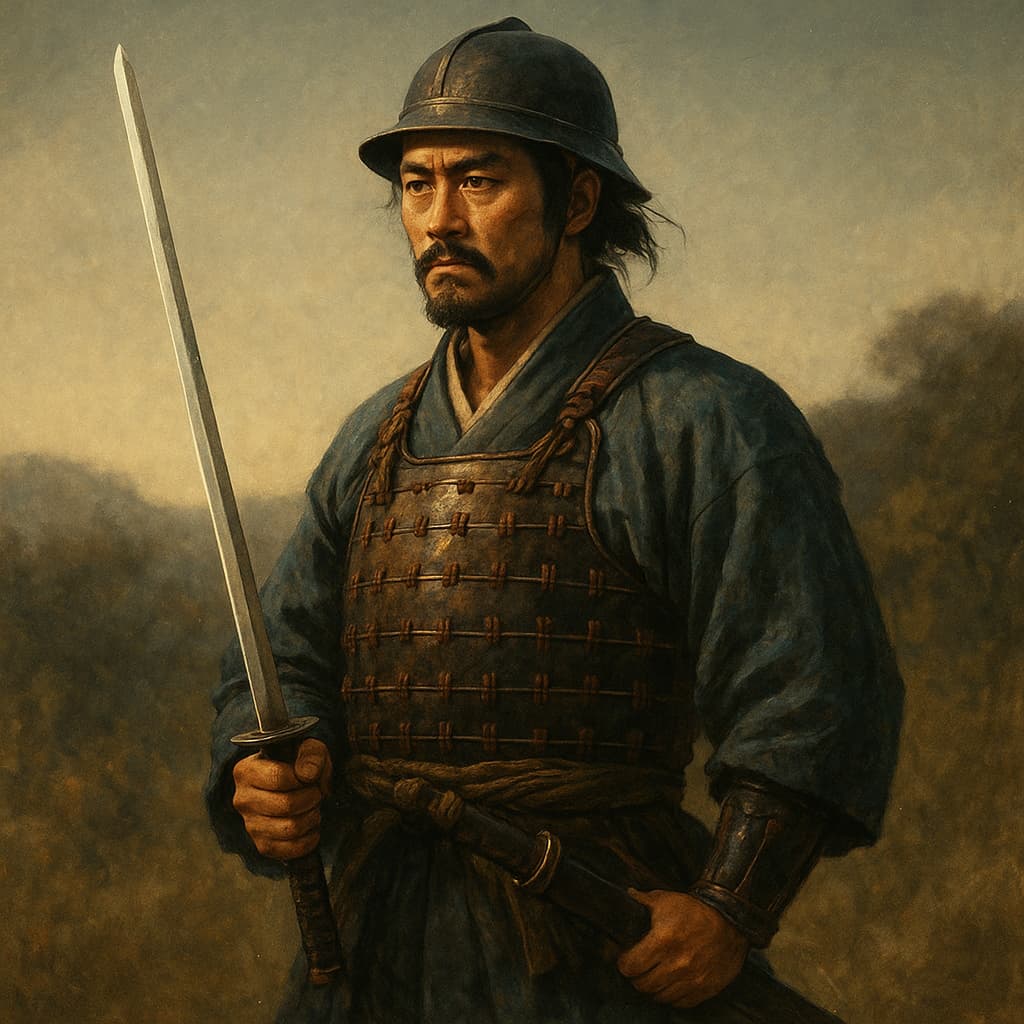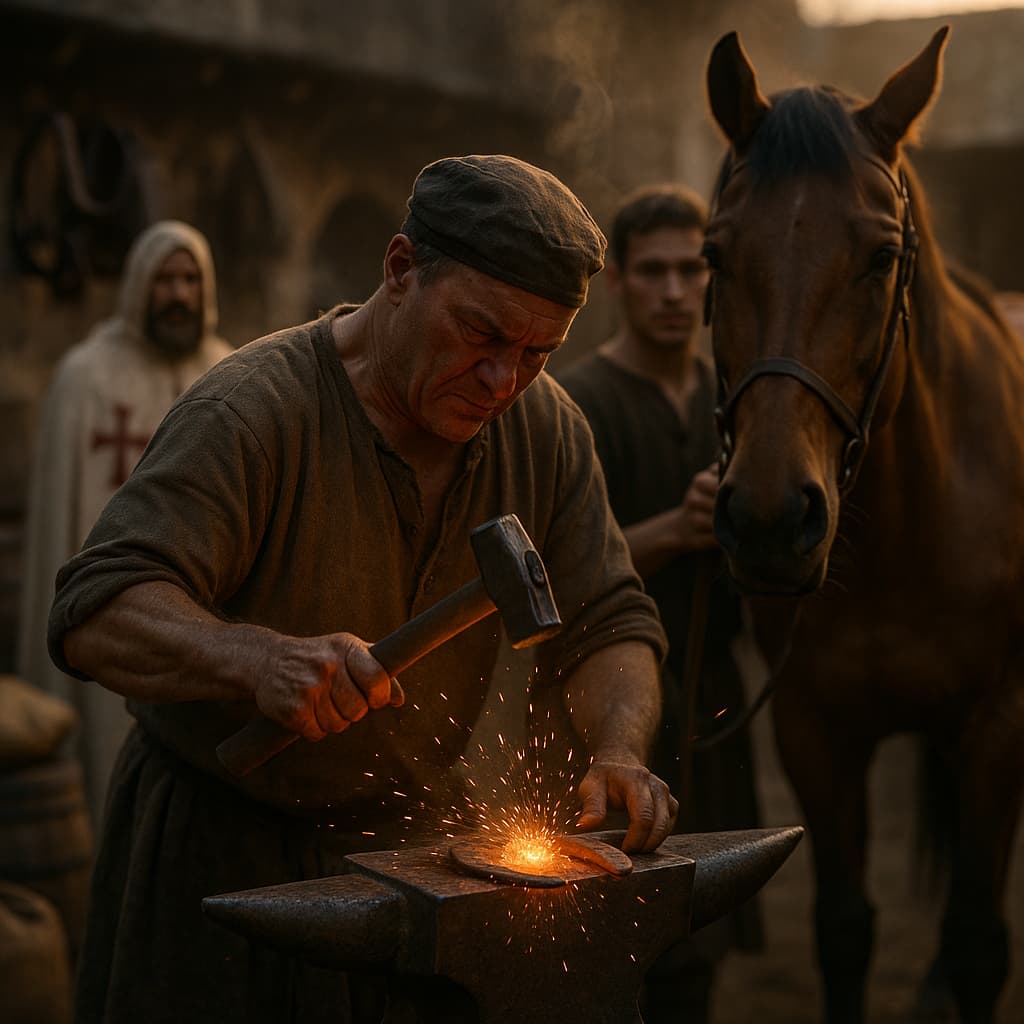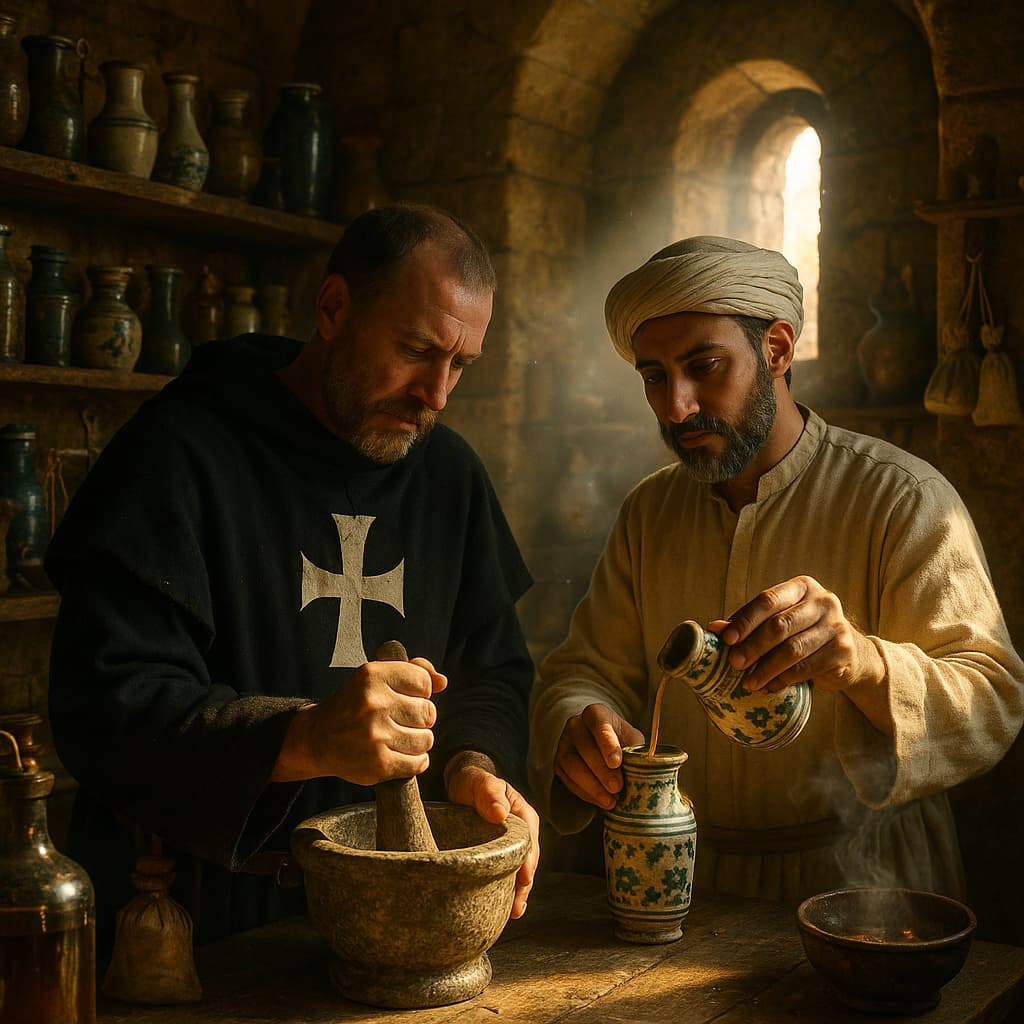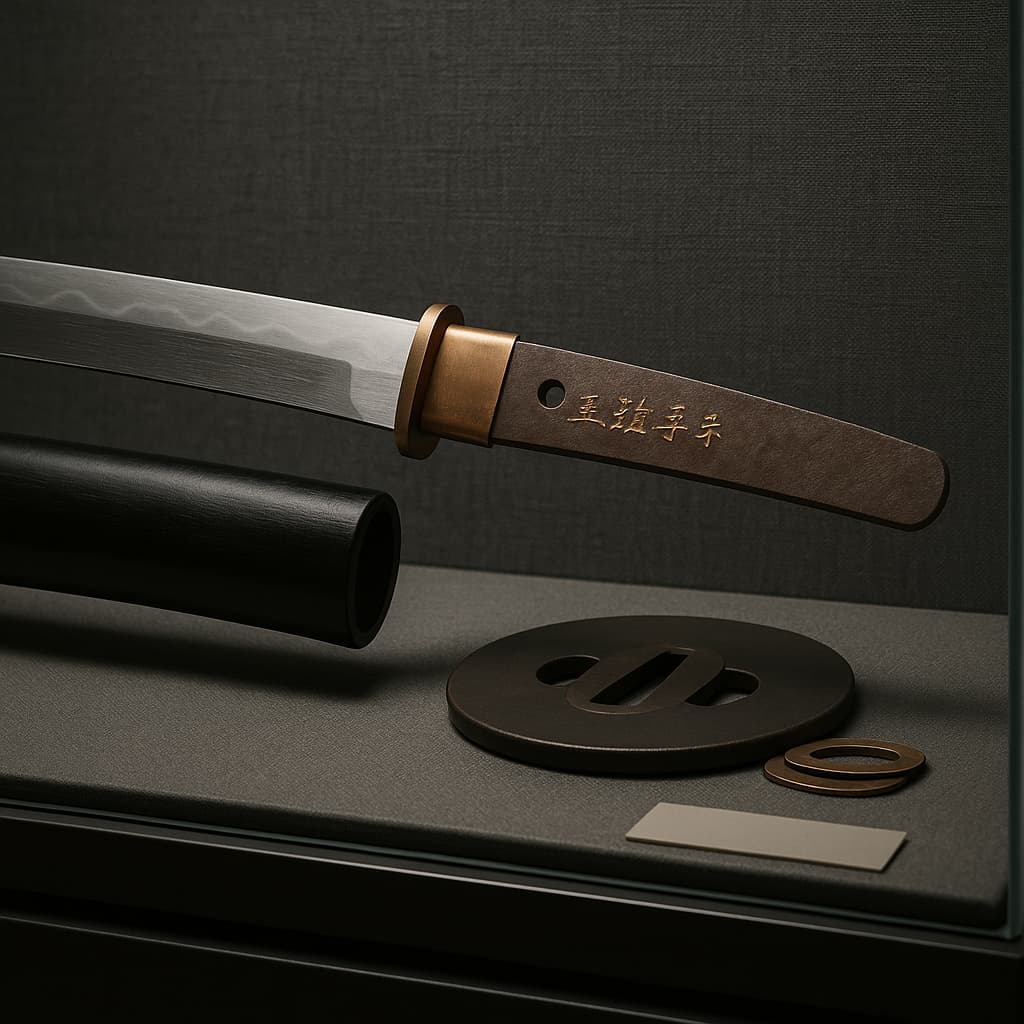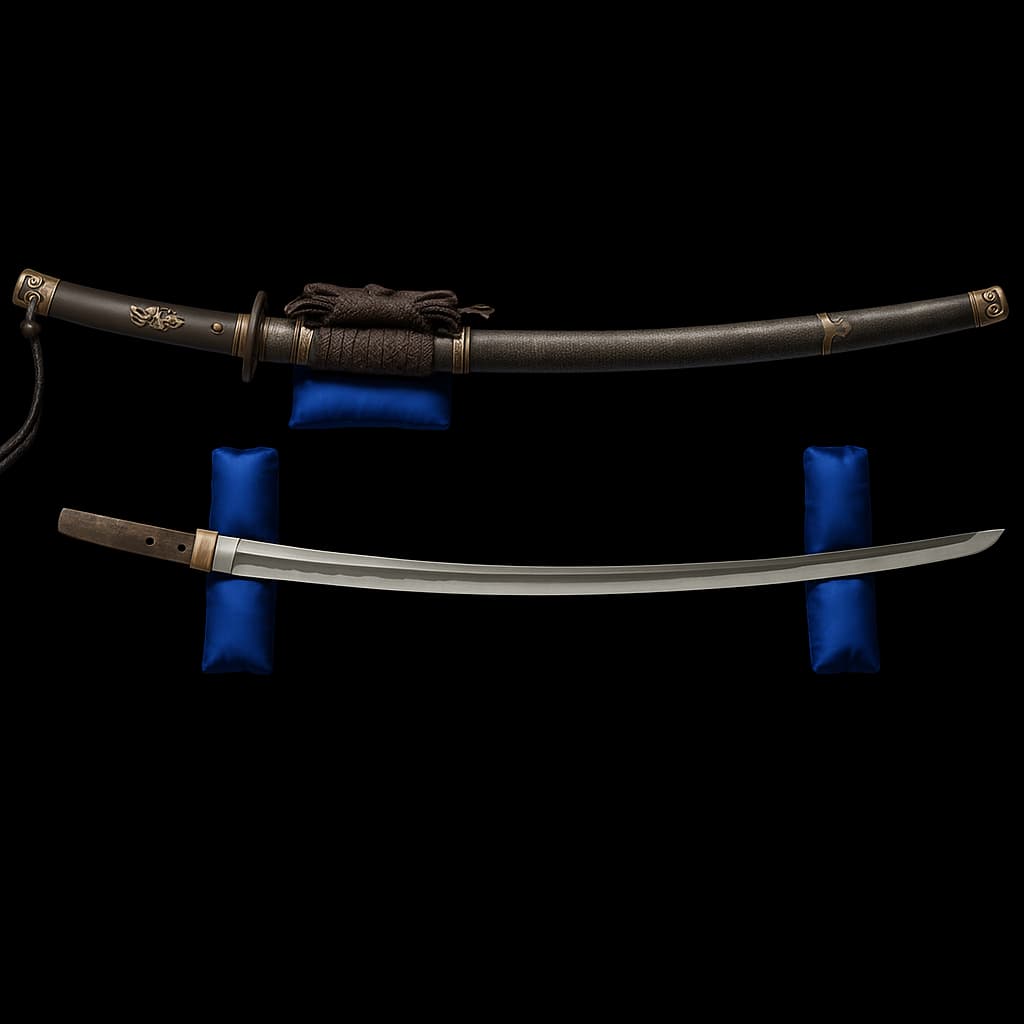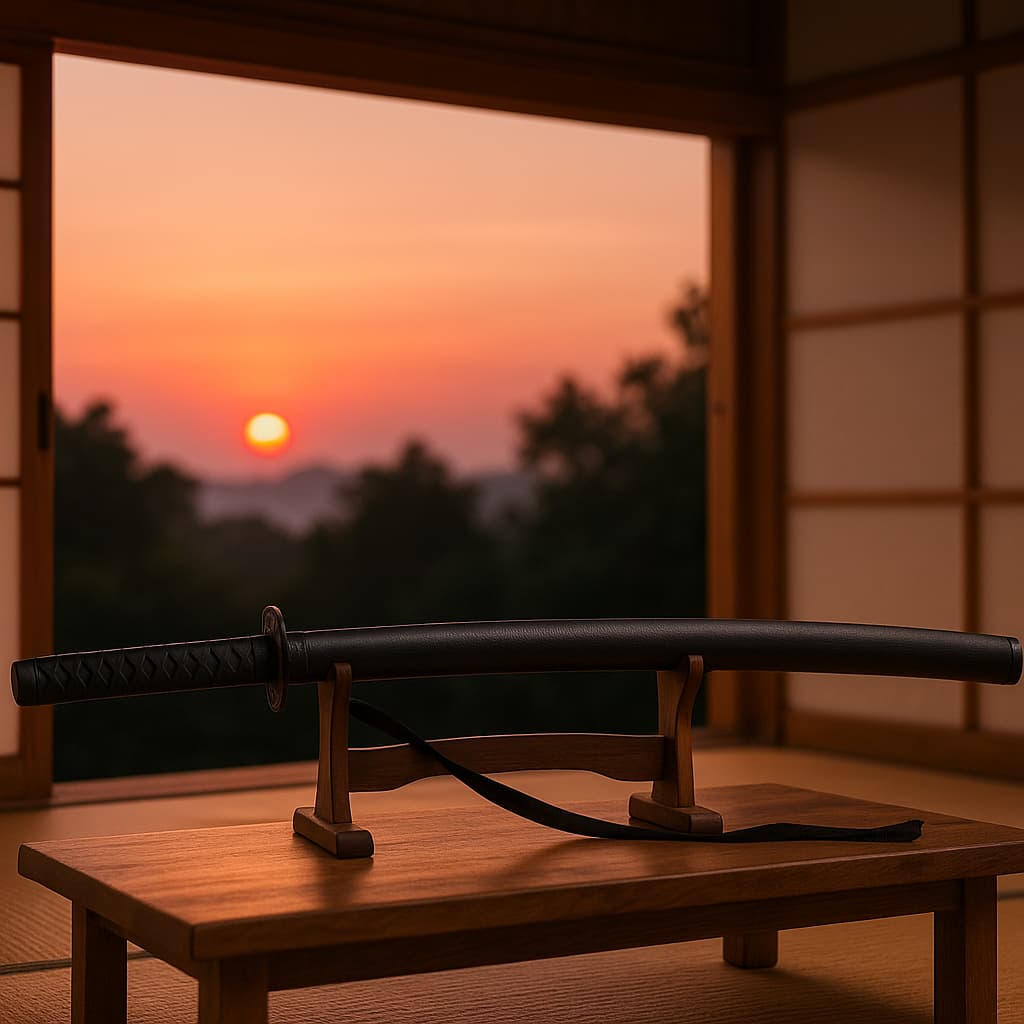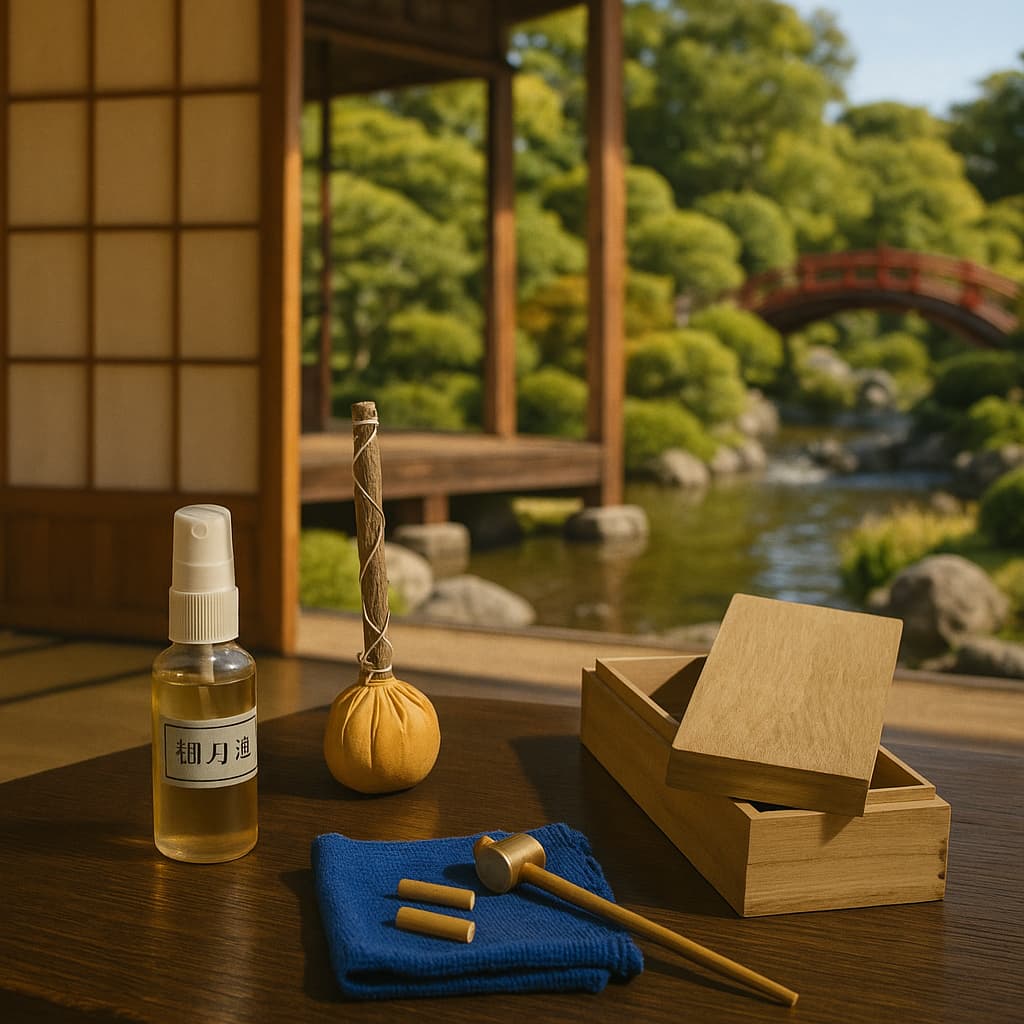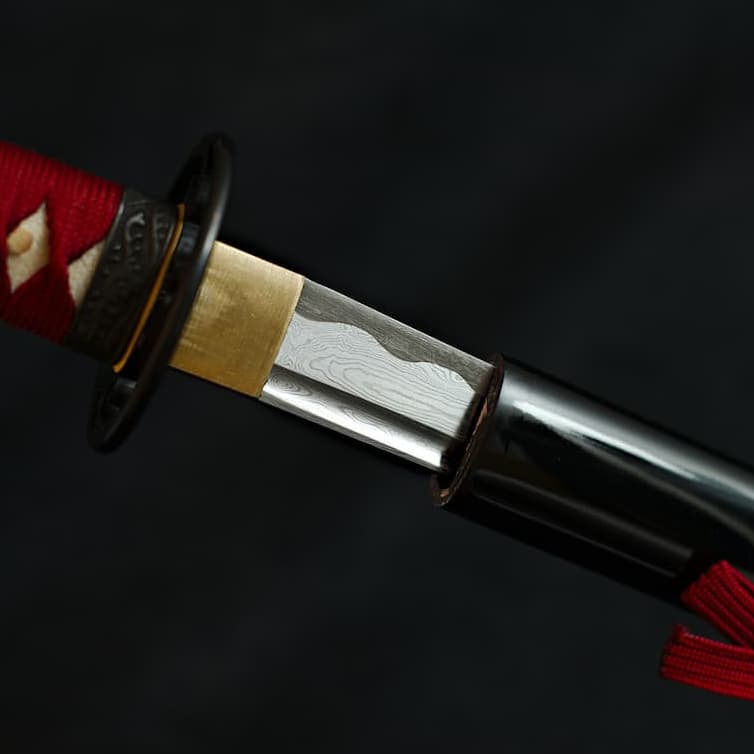





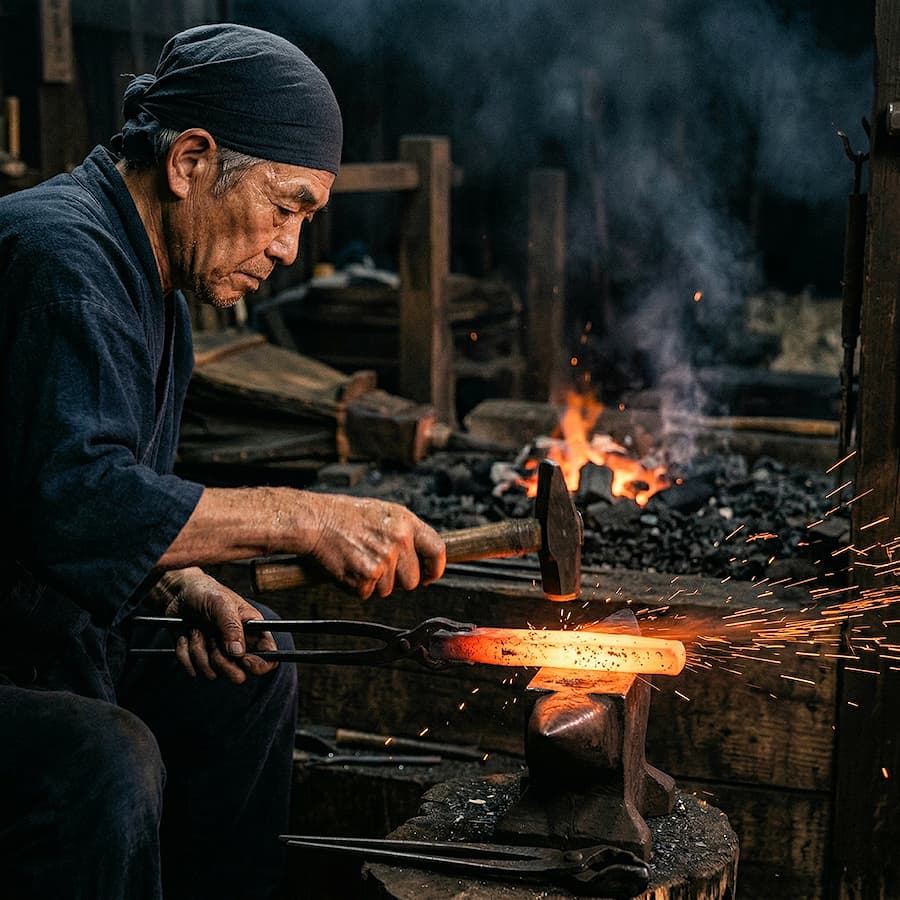
When maintaining a katana, consistency is more important than force. Three simple and safe steps will protect the steel. 1/ Remove oil sparingly: lightly tap the uchiko to remove old oil, then...
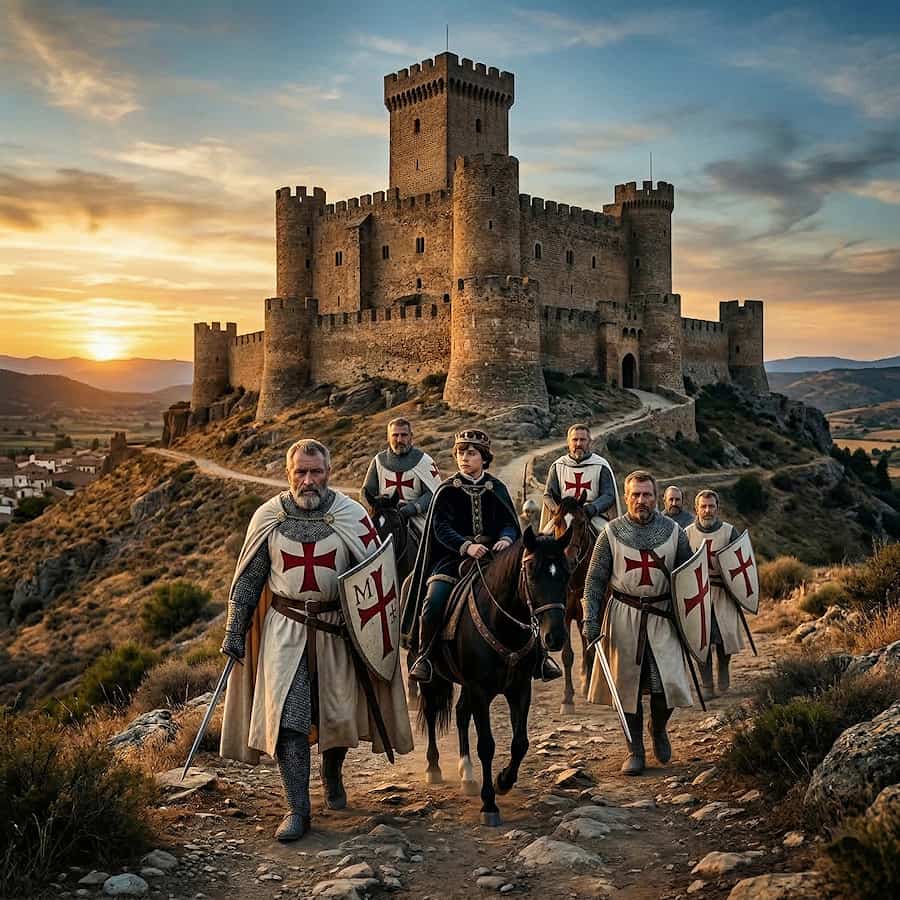
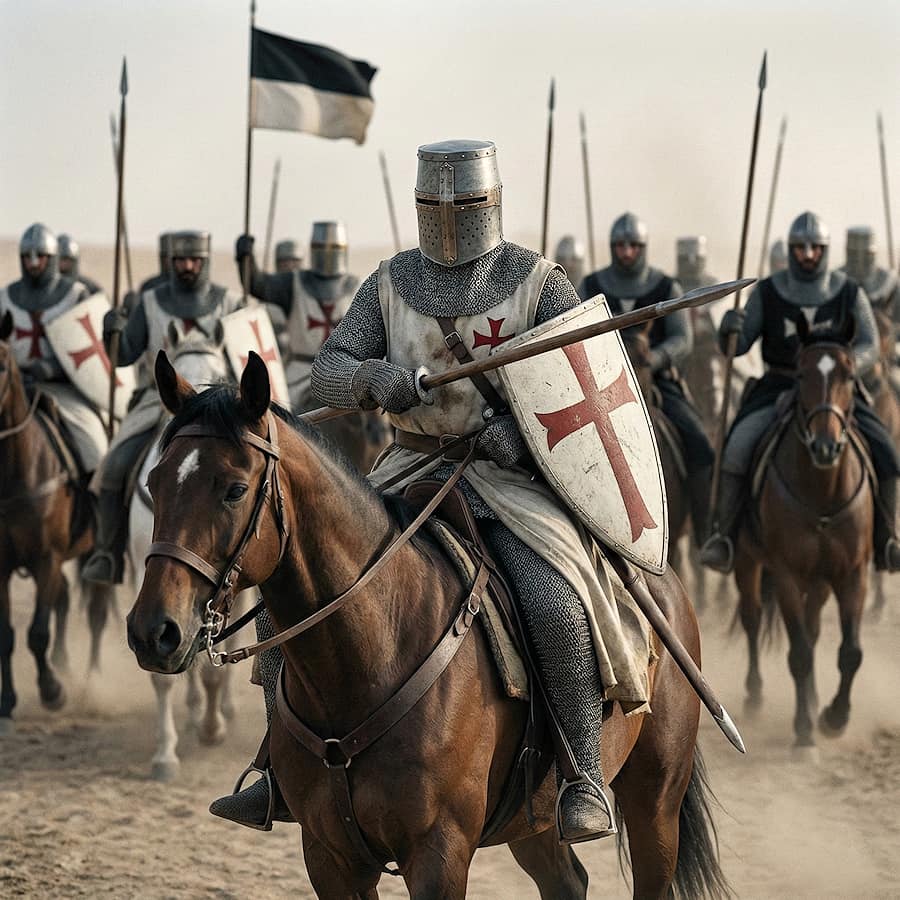
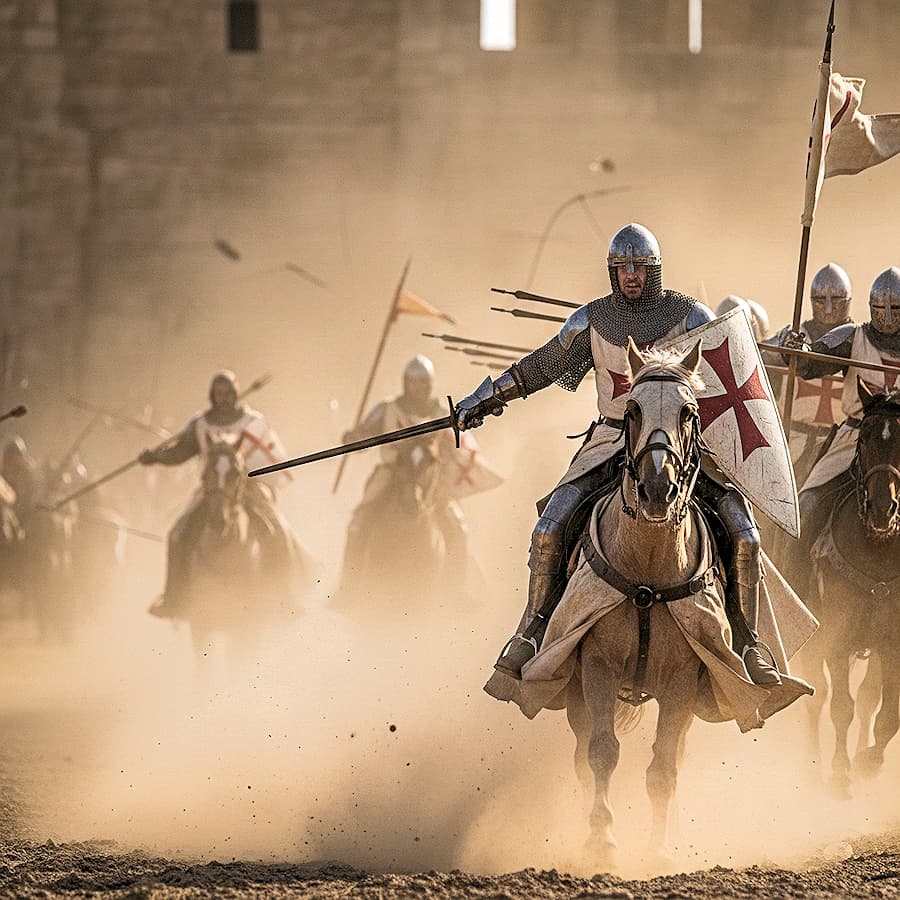
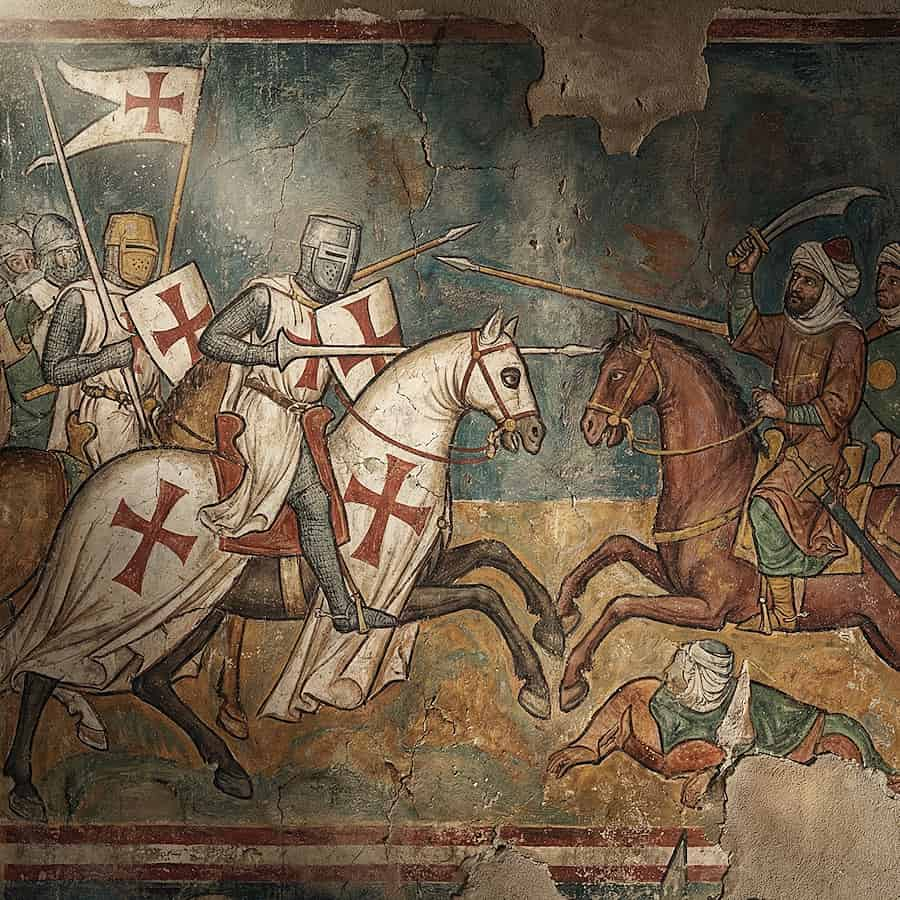
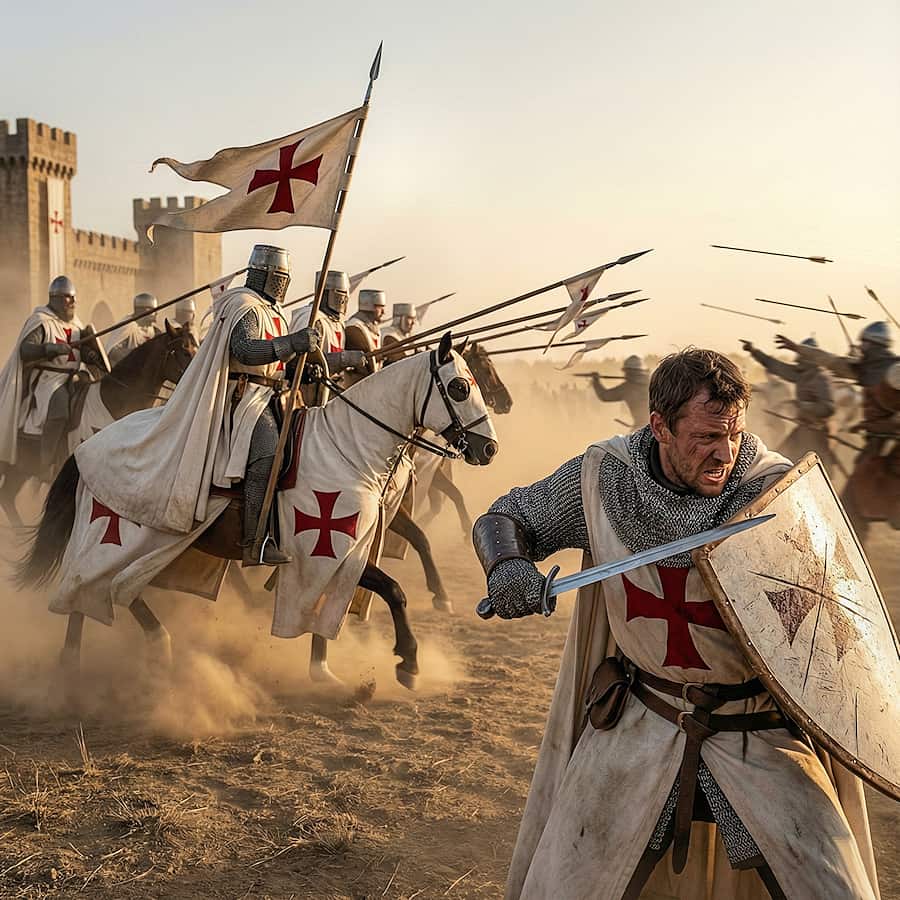
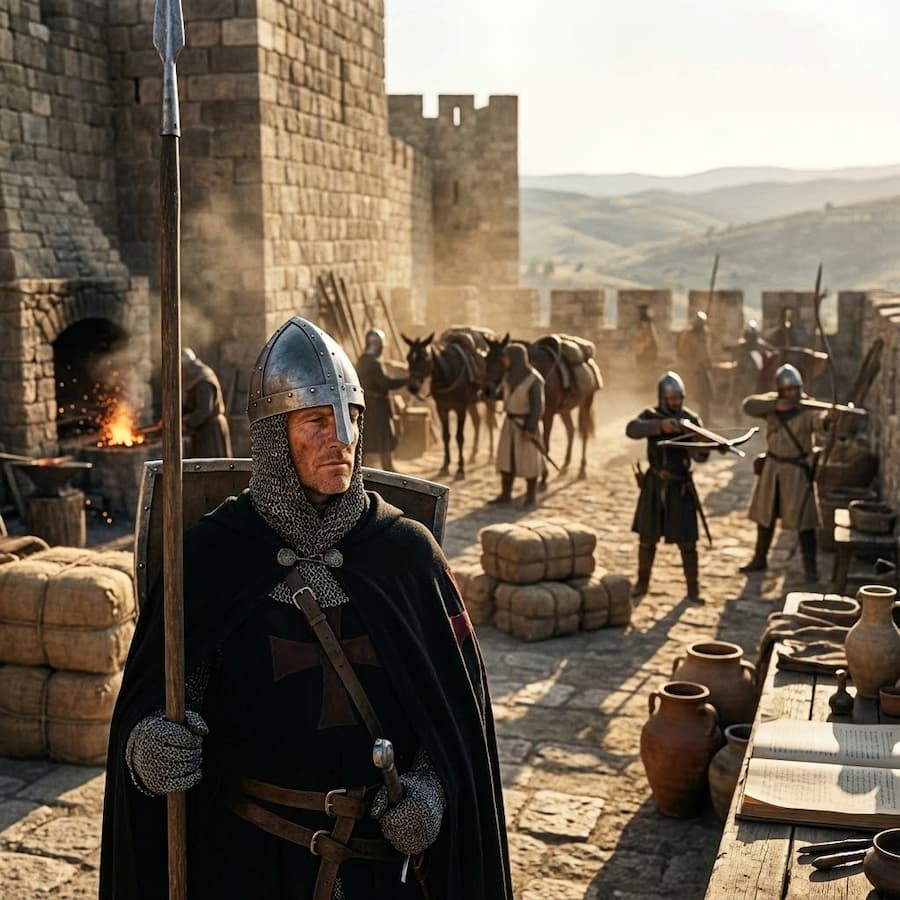
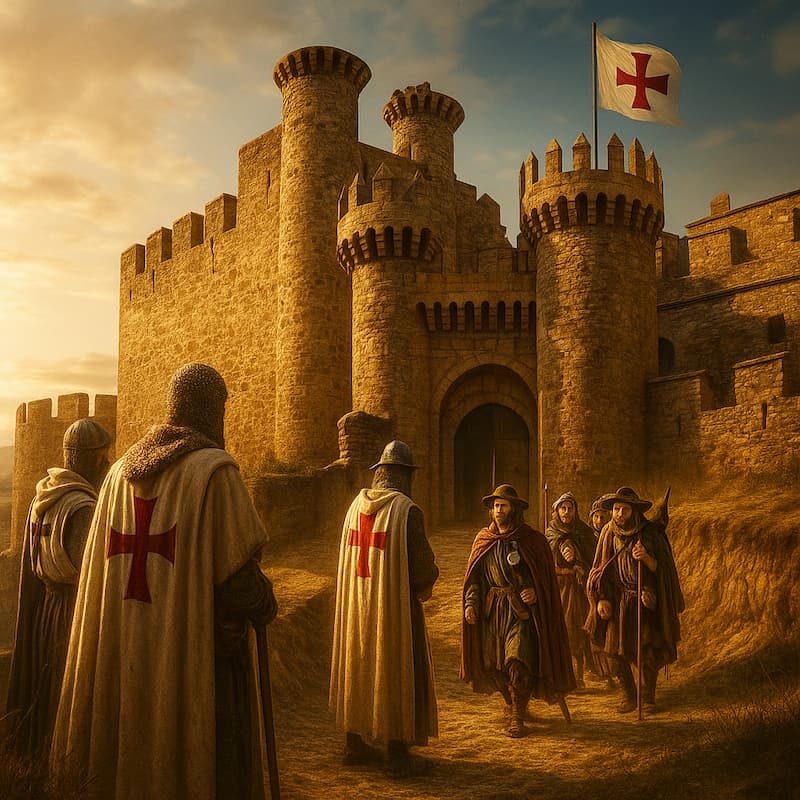
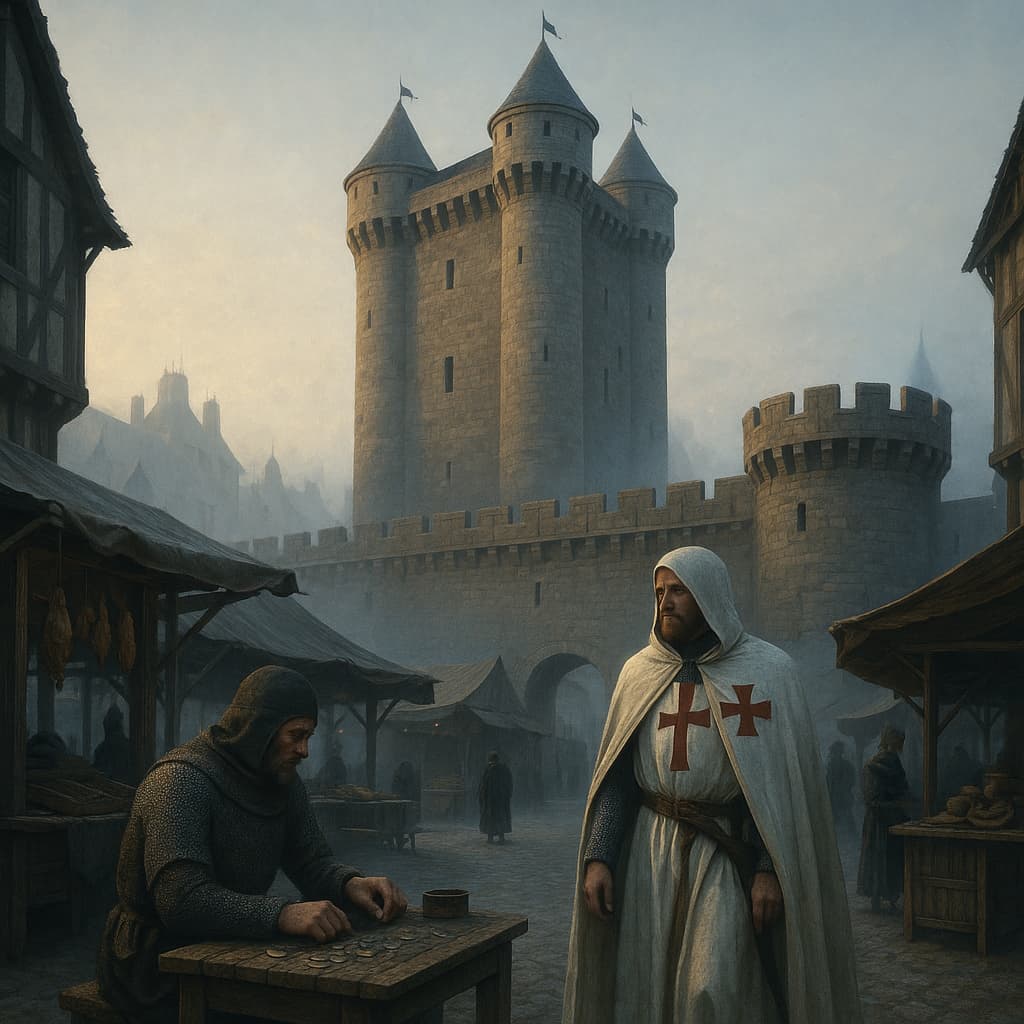
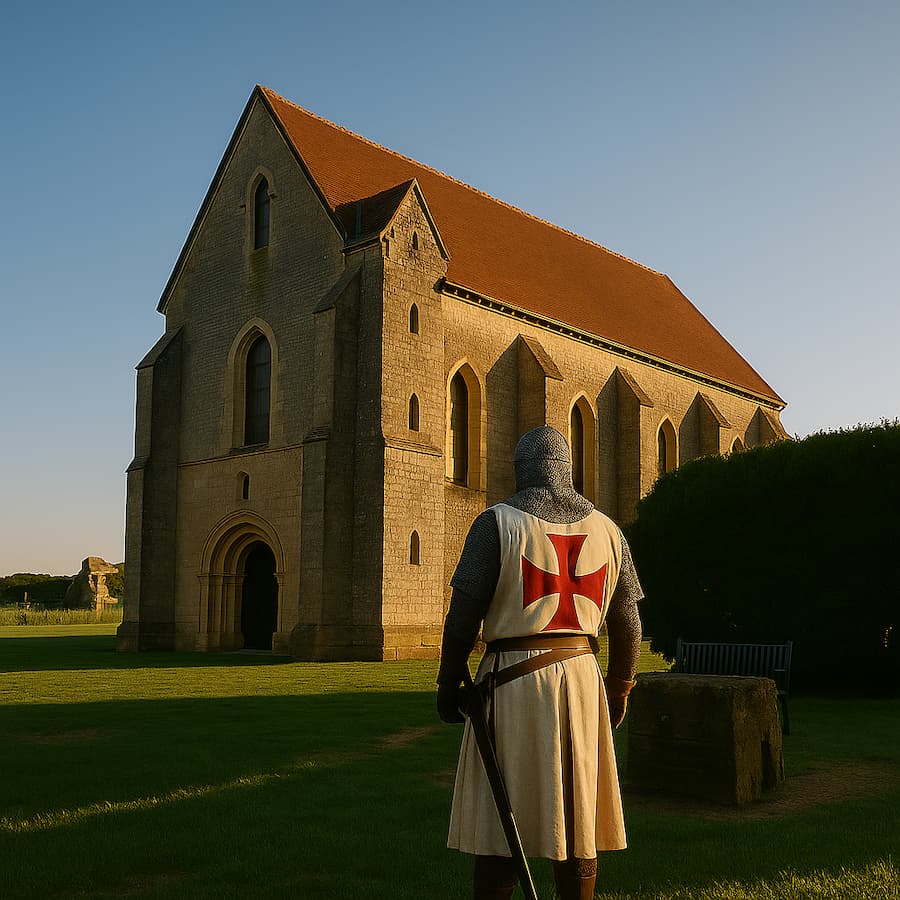
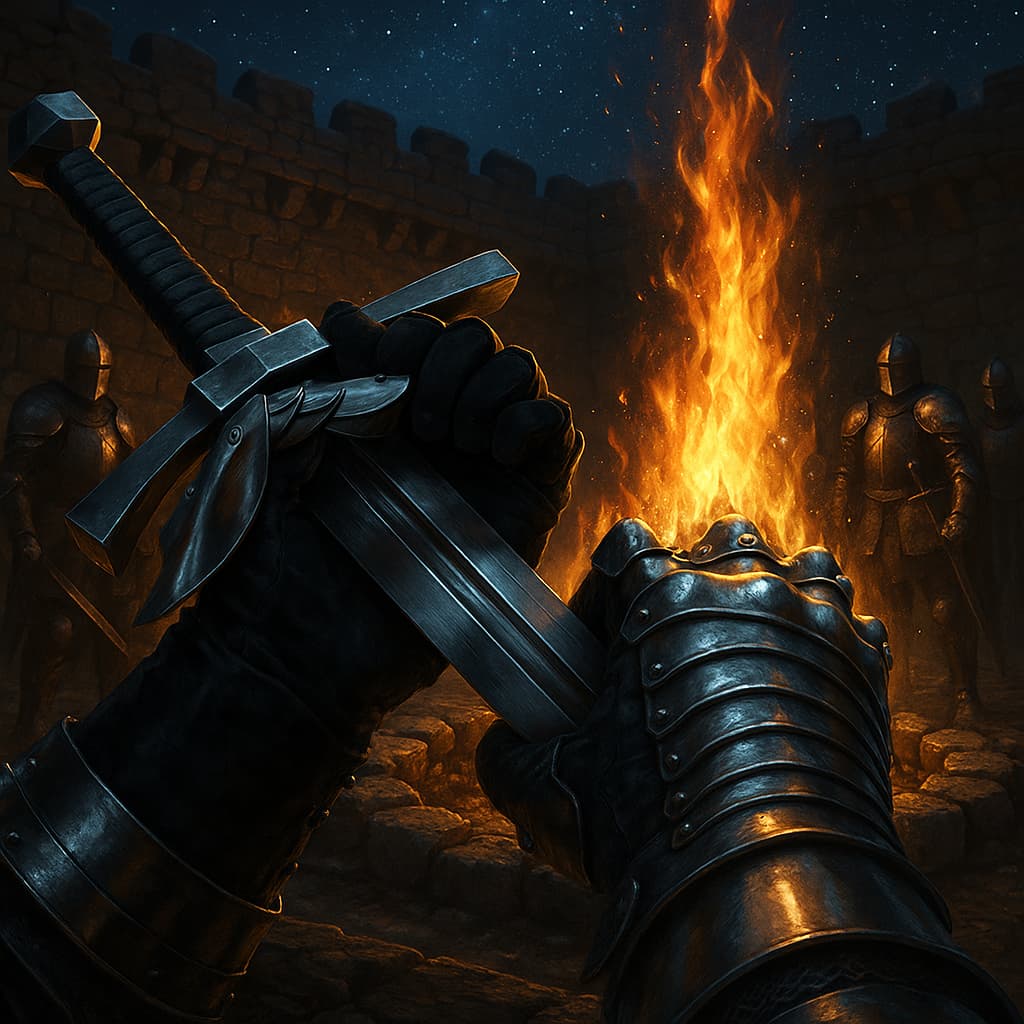
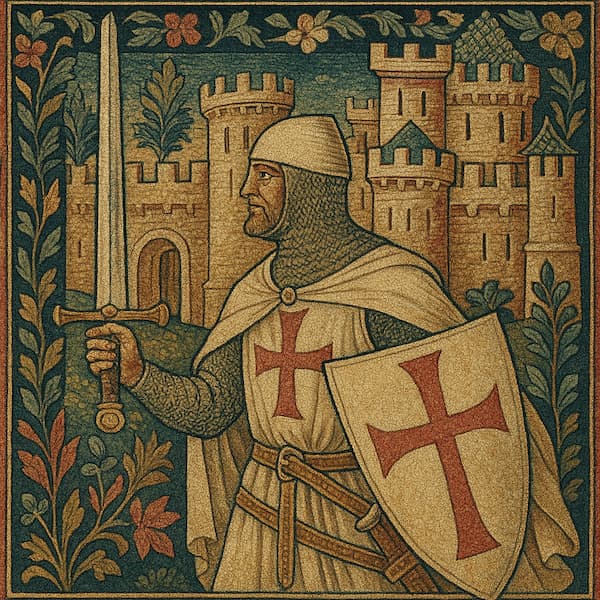
In the 13th century, the Templar's weapon of choice was not the sword but the spear. In tight formation, the standard bearer led a wedge-shaped charge that combined mass, speed, and morale... The Rule emphasized strict obedience...
At the heart of the founding chronicles, the Kojiki (712) and the Nihon Shoki (720) recount how Izanagi and Izanami gave birth to Ōyashima, "the land of Eight Islands"... an expression that actually refers to all the islands of...
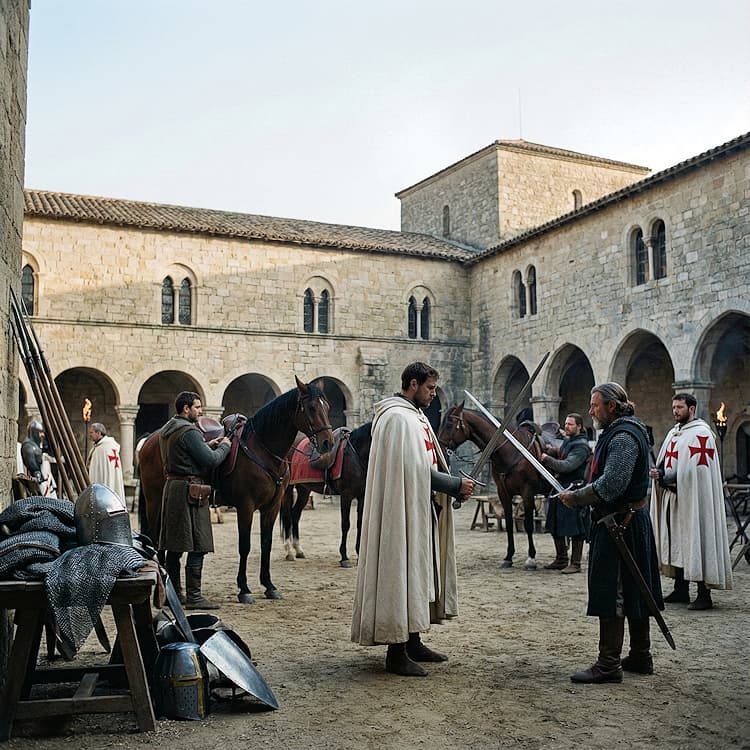
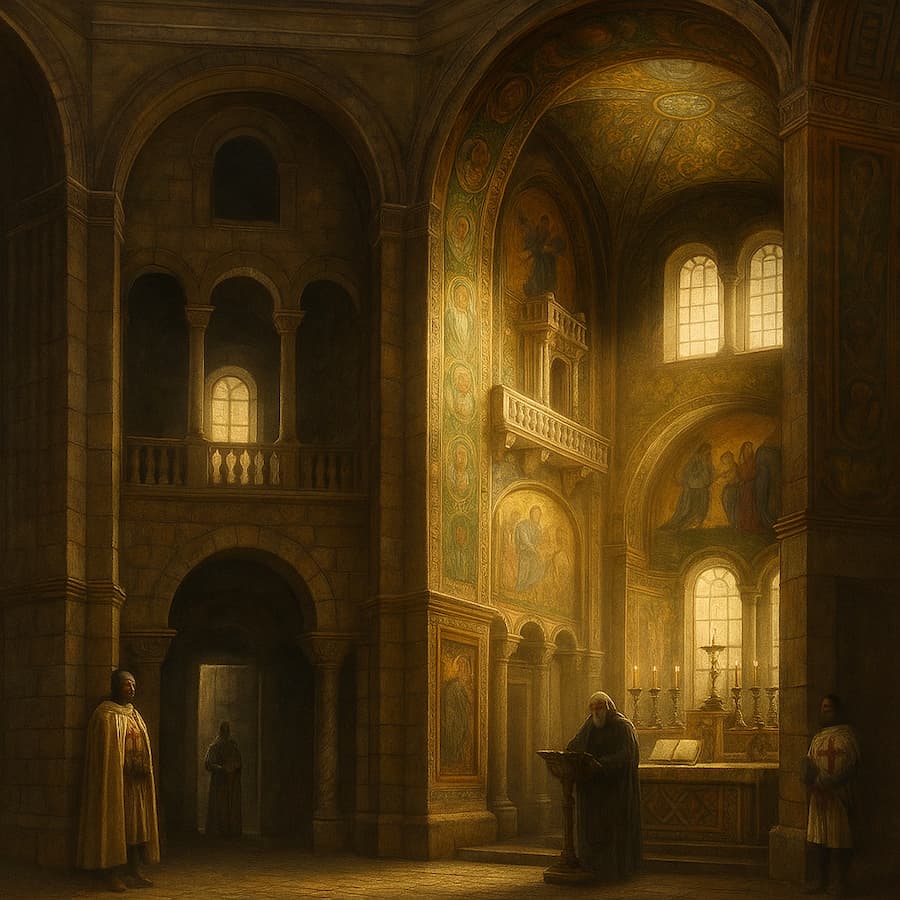
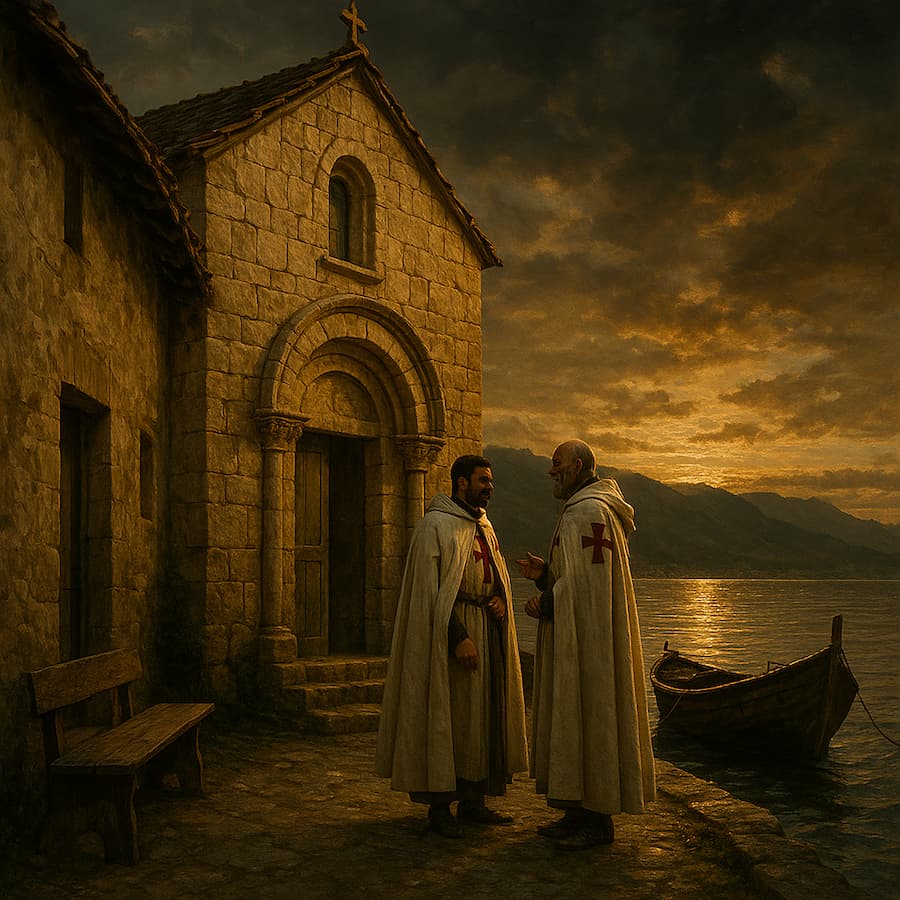
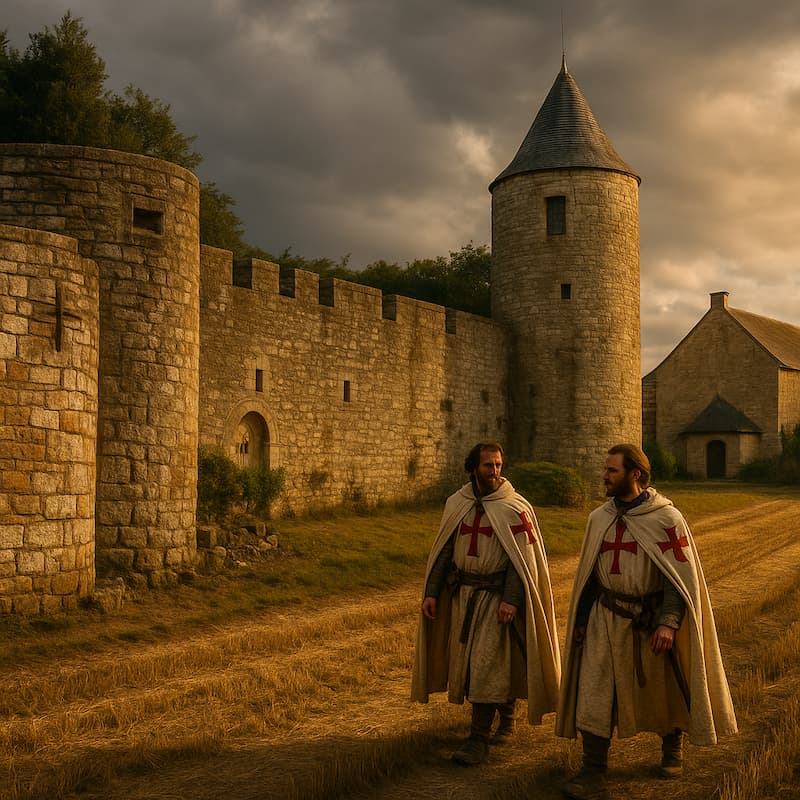
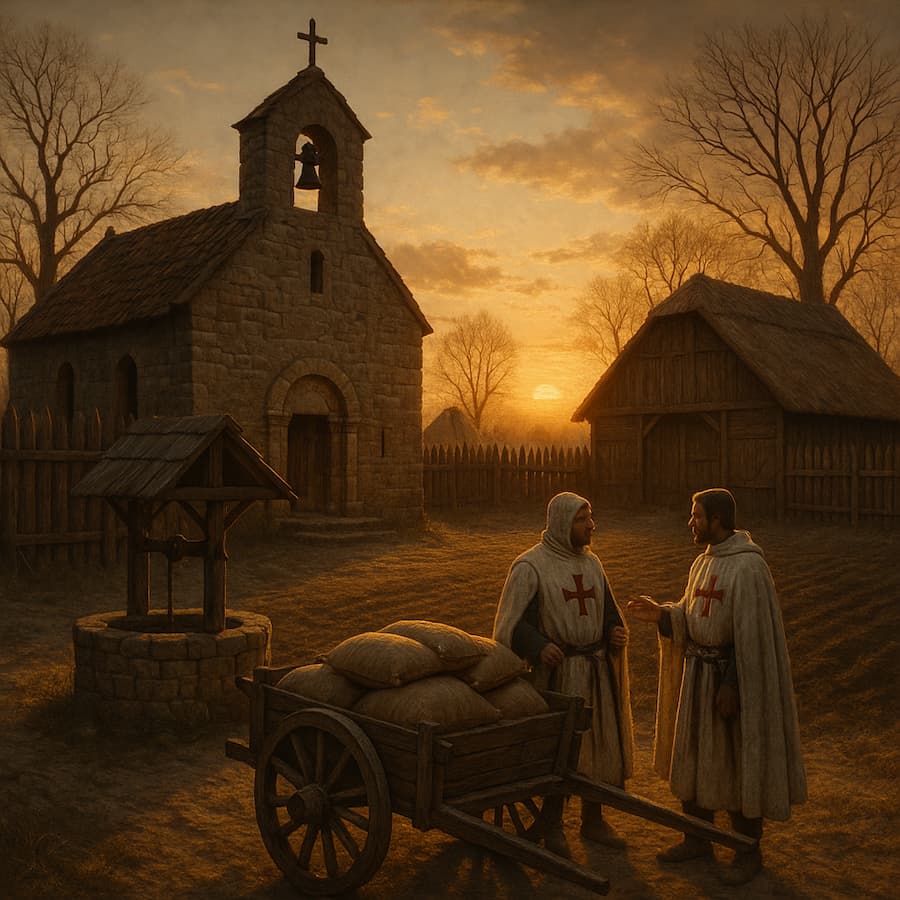
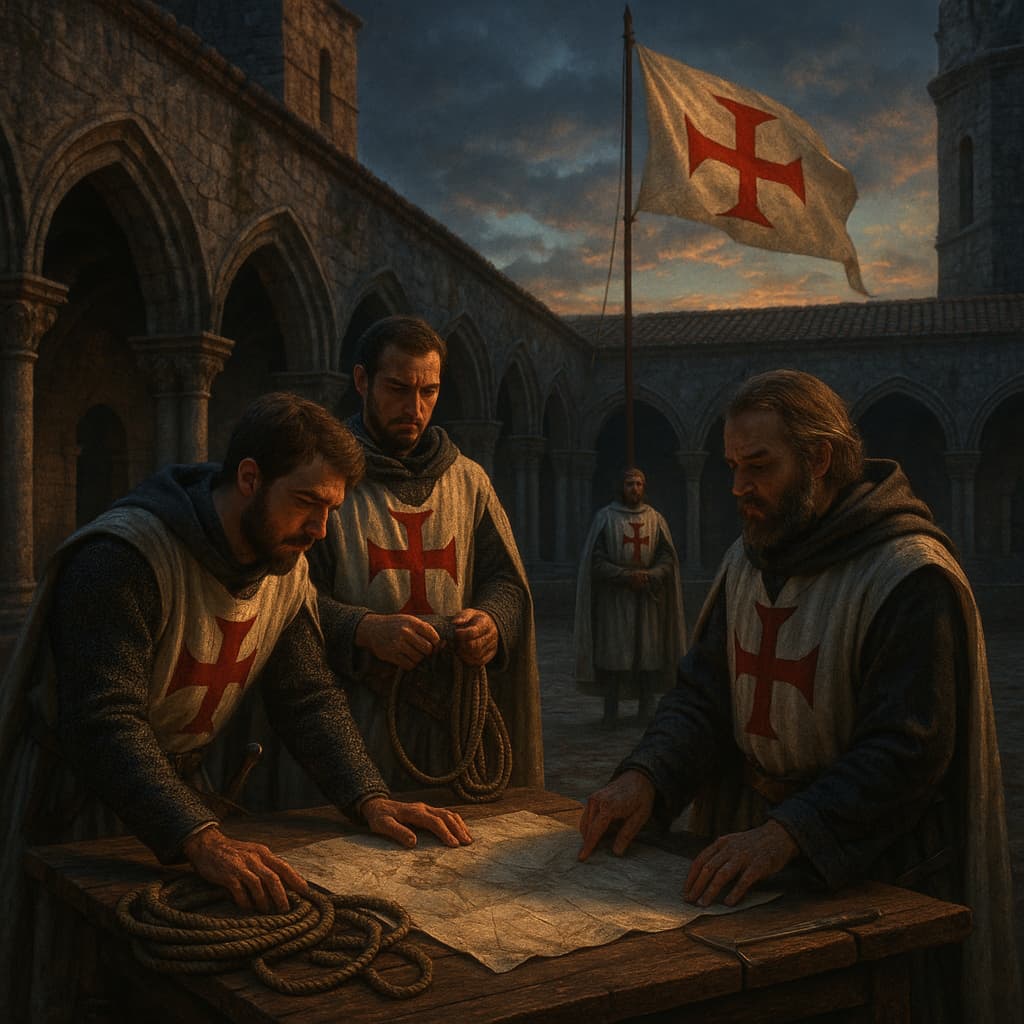
In the 13th century, the bell set the pace for everything. Matins before dawn, then chapters, reading and tasks, each brother alternating between prayer and service. The Rule of the Temple emphasized sobriety in meals, the keeping of weapons, and vigilance...
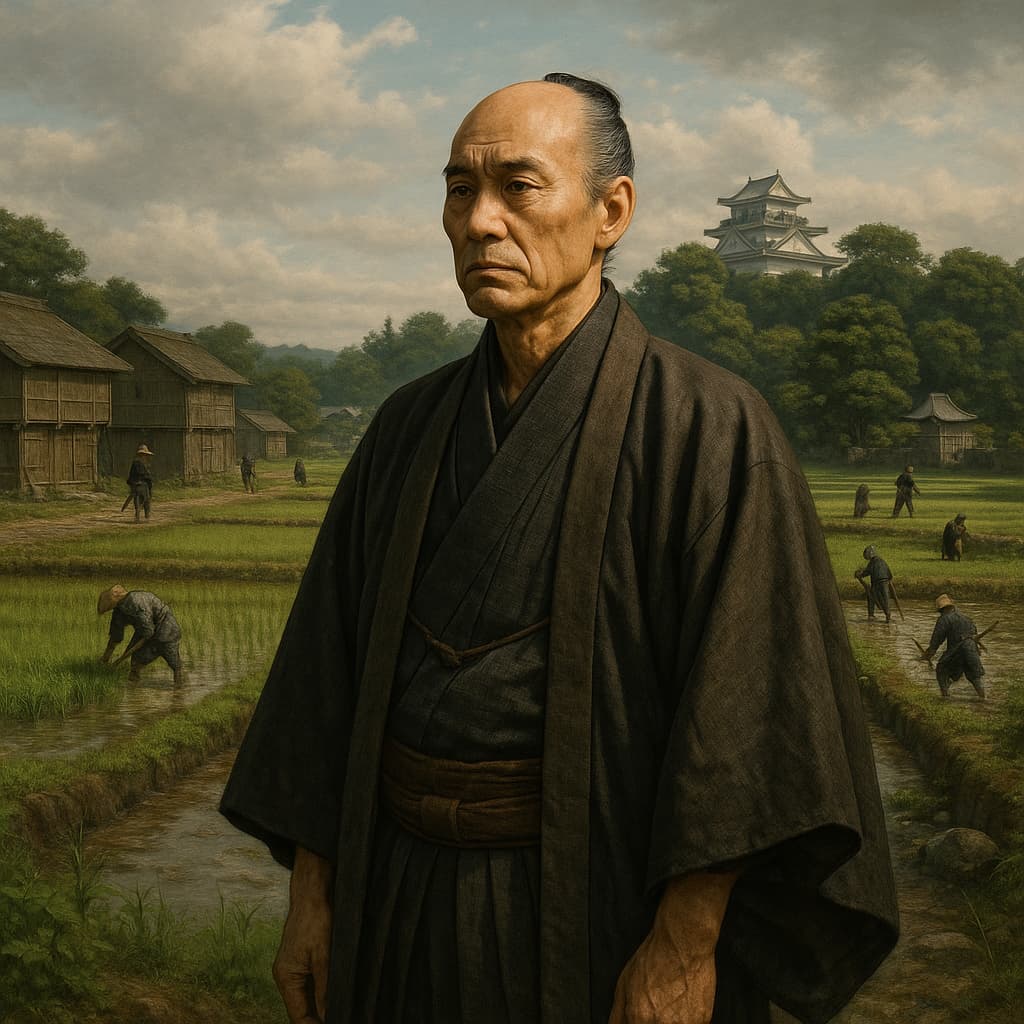
It is impossible to designate a single "first samurai," as the category gradually took shape between the 9th and 11th centuries. If we are talking about an imperial general, Sakanoue no Tamuramaro, who was active at the beginning of the Heian period...
The Knights Templar were right to make the former al-Aqsa Mosque their headquarters in the 12th century, hence their name linked to "Solomon's Temple." Cross-referenced sources and Malcolm Barber's summary confirm this...
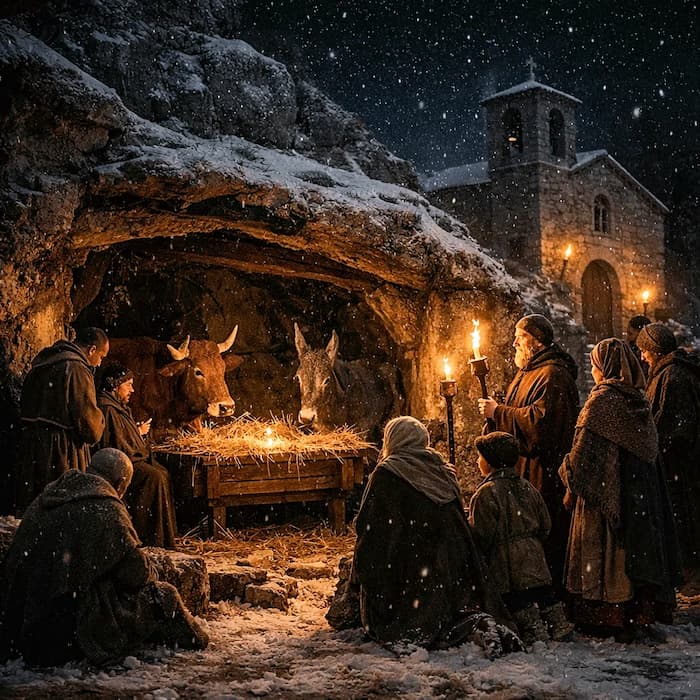
At Christmas 1223, in the hamlet of Greccio, Francis of Assisi imagined a "real" Nativity scene. A cave, a manger, an ox, a donkey, villagers... The living nativity scene was born. The idea, inspired by the places of Earth...
In medieval Japan, the Tianlong (Tenryū), or "celestial dragon," belonged to the Tenryū Hachibushū, eight categories of beings who protected the Law of Buddha. For warriors, it embodied spiritual defense and mastery.
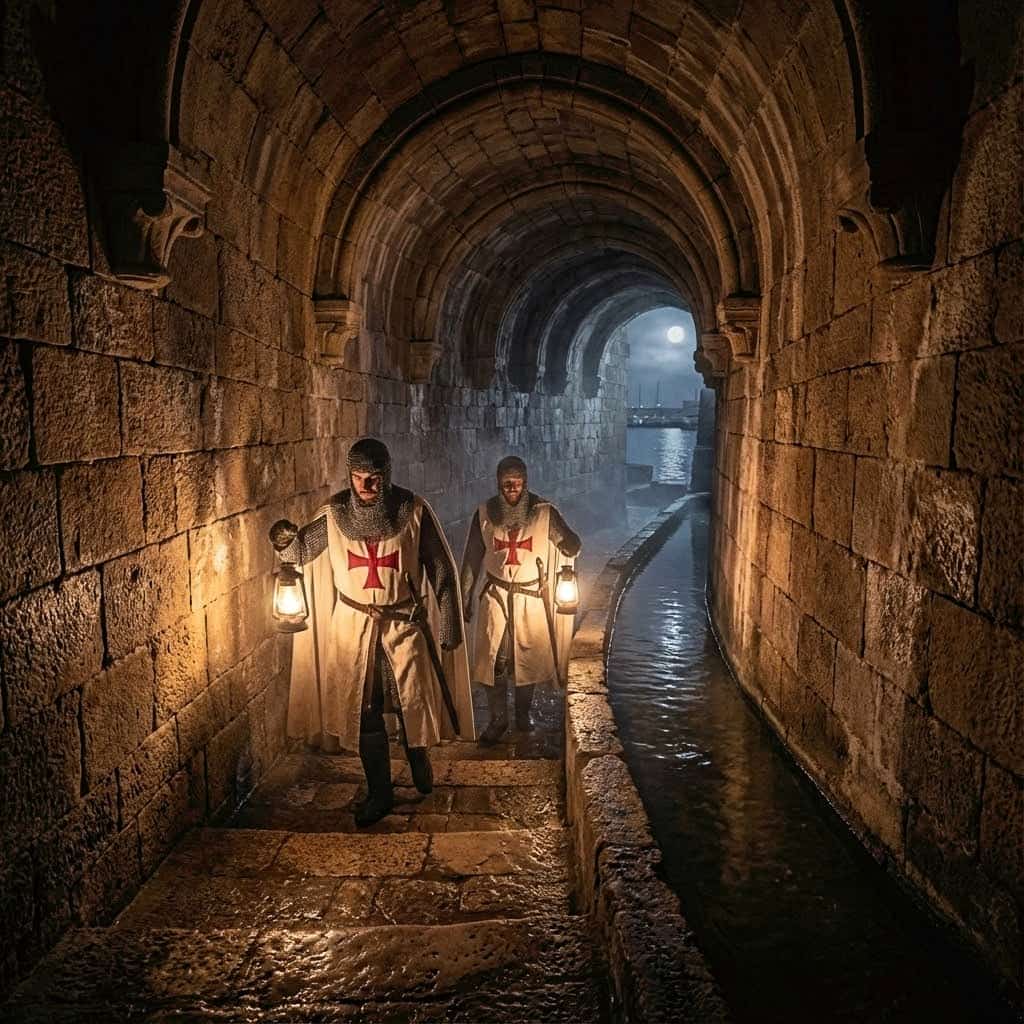
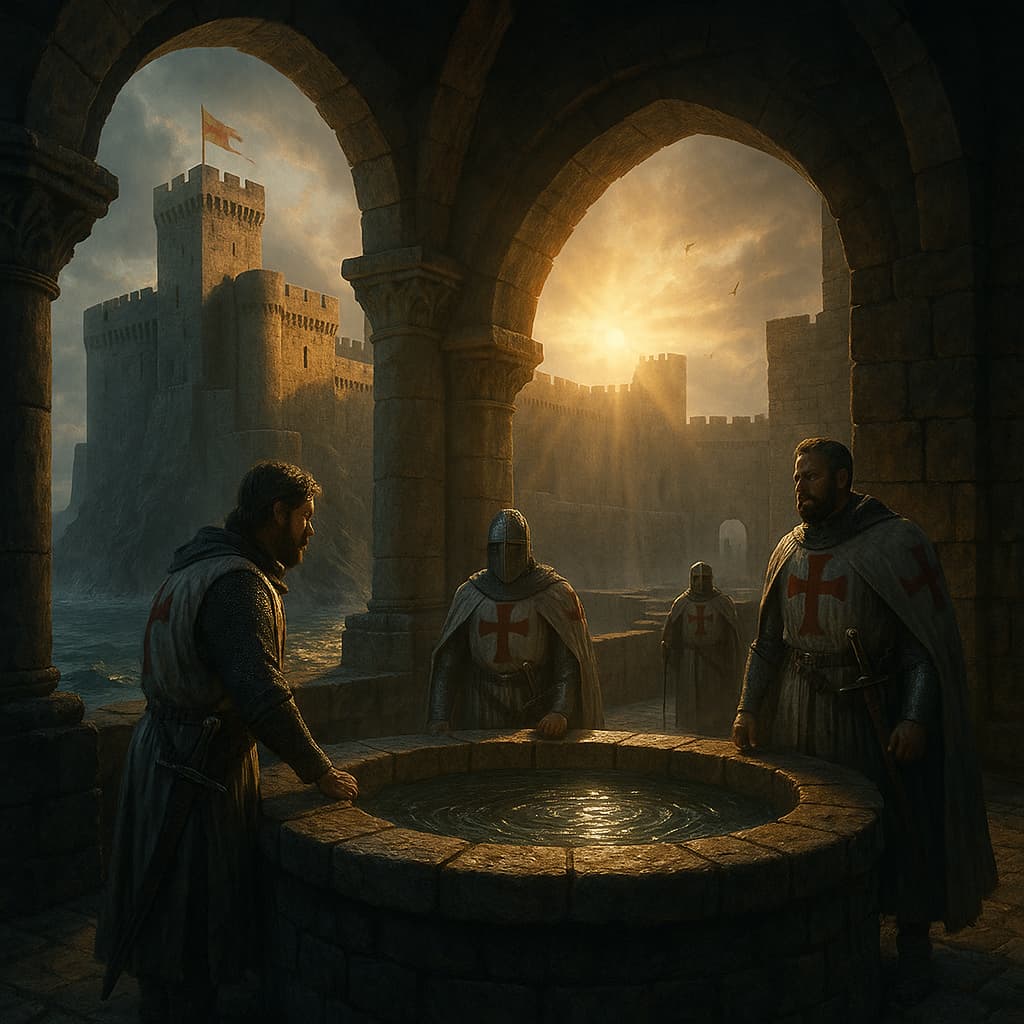
At the end of the 12th and 13th centuries, Acre was a Crusader capital where urban engineering was anything but archaic. The famous "Templar Tunnel," discovered in 1994, connected their fortress to the port, ensuring...
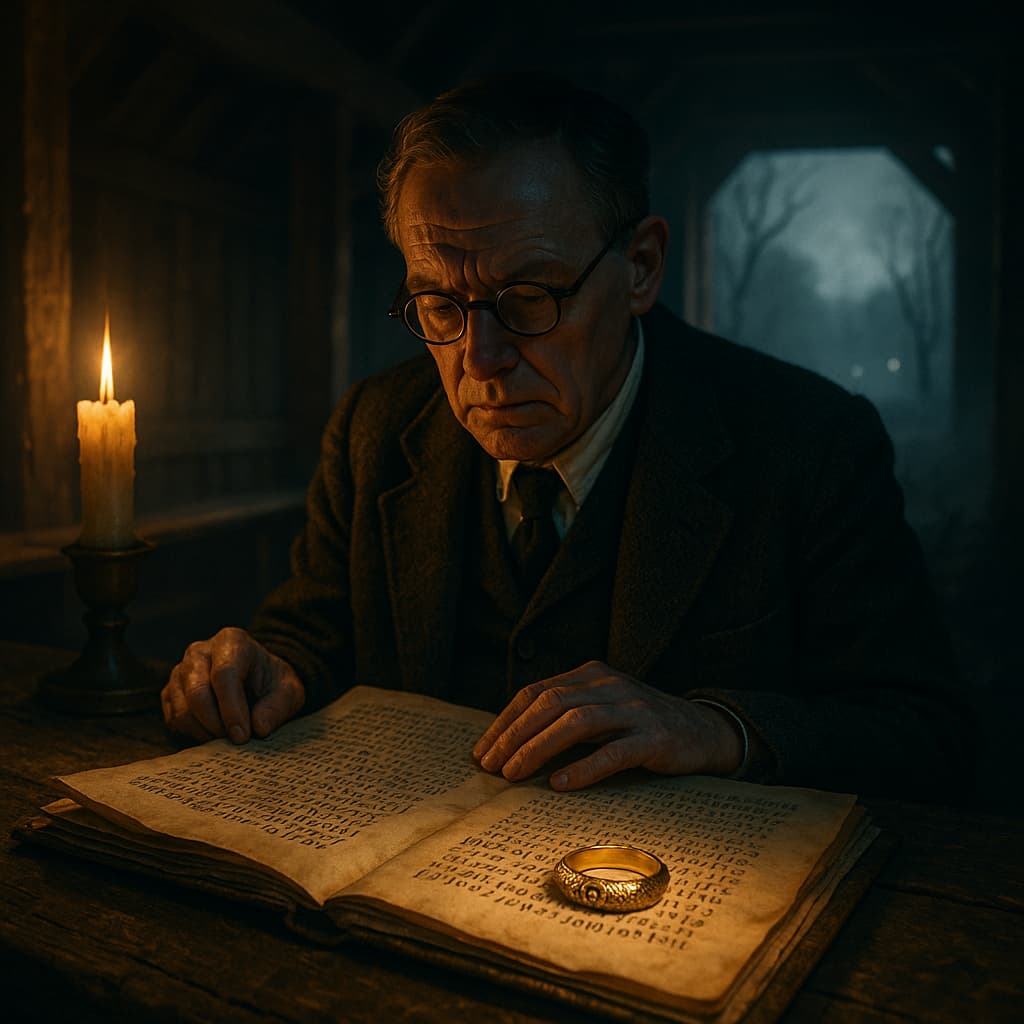
Did you know that the seven stars on Andúril are not merely decorative? Engraved between a sun and a moon, they represent the coat of arms of Elendil's heirs and, according to the canonical explanation, refer to the seven...
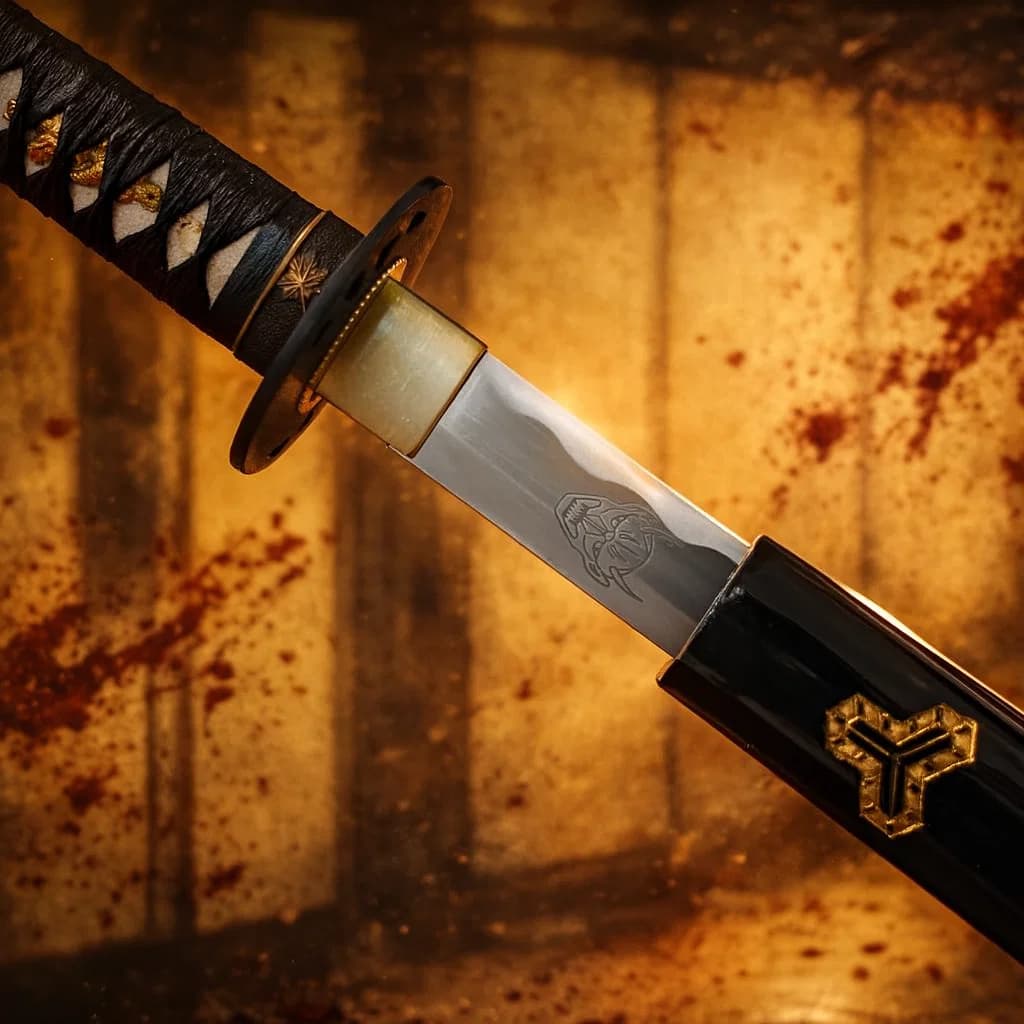
In Kill Bill, the Bride's blade does not display "Kill"... but a lion. This motif, often interpreted as a karajishi, refers to the guardian lions of shrines, symbols of protection and bravery. Conversely, the...
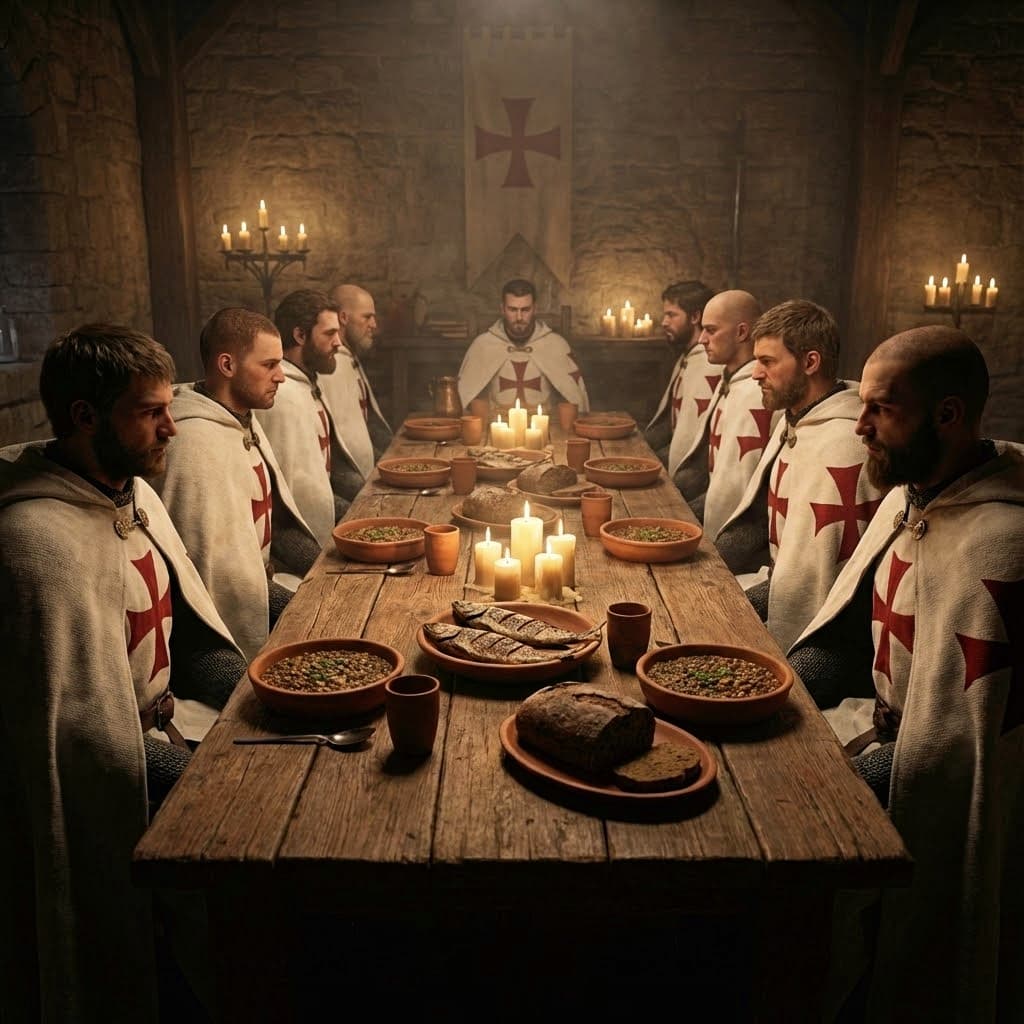
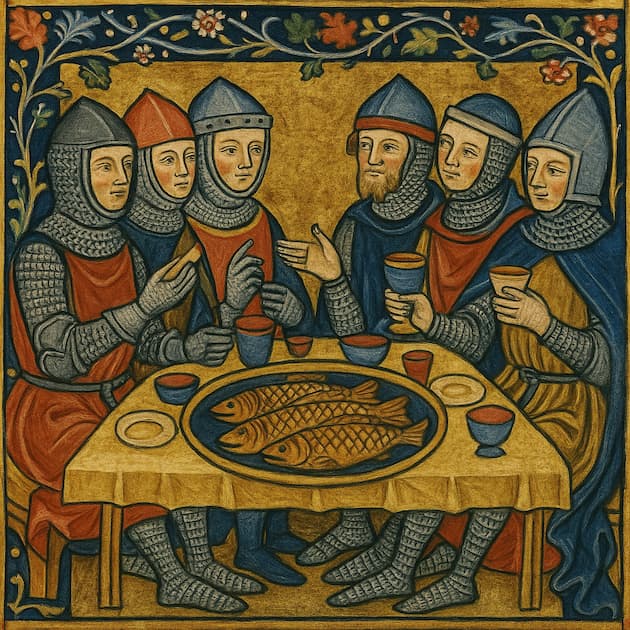
For a long time, people imagined the Knights Templar feasting like lords. However, in Tomar, the Portuguese capital of the Temple, science paints a more nuanced picture. Isotopic analyses carried out on the cemetery of Santa-Maria-do-Olival...
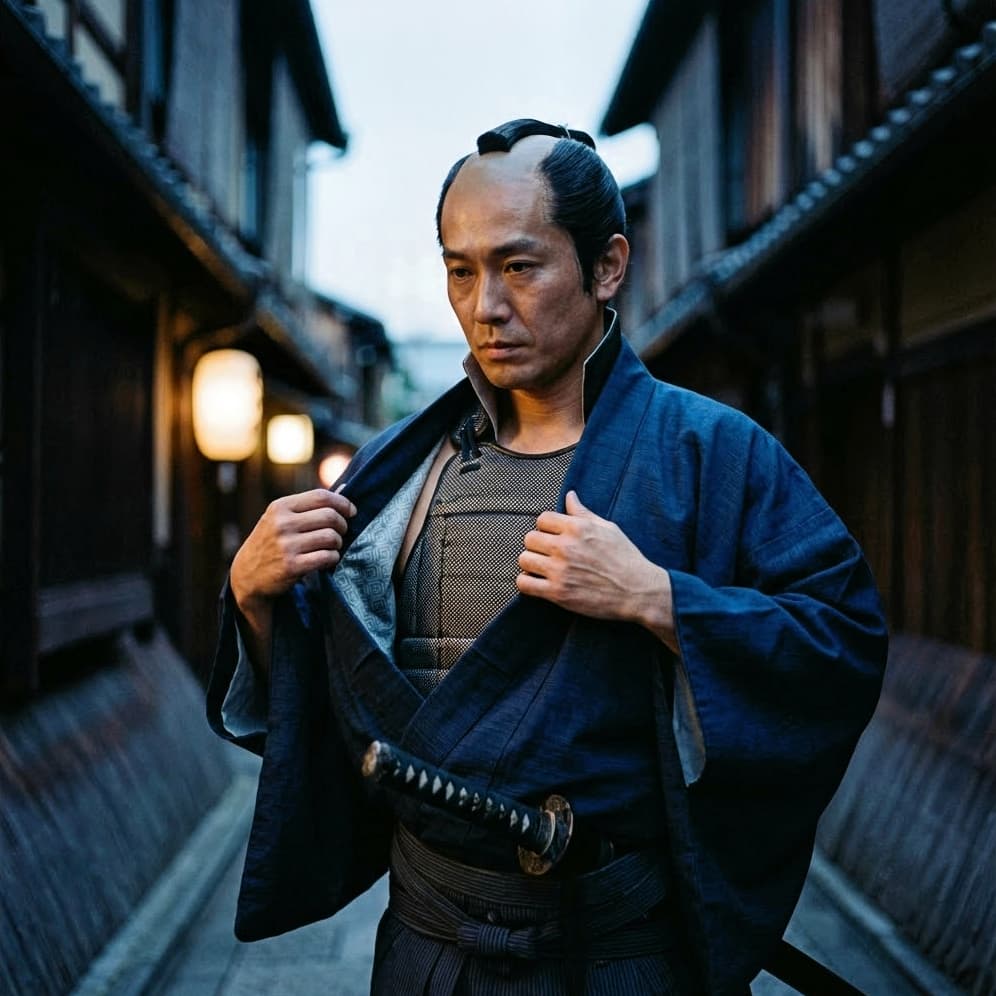
In the 17th-19th centuries, urban insecurity and arrests by the Edo police encouraged people to wear armor... under their clothes. Kusari katabira chain mail jackets, manchira vests, and manju no wa collars provided protection...
On the outskirts of Troyes, Payns embodies the birth of the Knights Templar in the West. Founded by Hugues de Payns around 1127–1128, the commandery was part of the sphere of influence of the Counts of Champagne and the routes of...
In the Edo period, the quality of a sword could be displayed in a macabre way. Some blades were given a saidan-mei on the tang, often inlaid with gold, noting the date and type of cut made by an expert...
Long overshadowed by the white cloaks of the knights, the sergeant brothers were nevertheless the backbone of the Order of the Temple. Recruited from outside the high nobility, they served armed on horseback or on foot, held the...
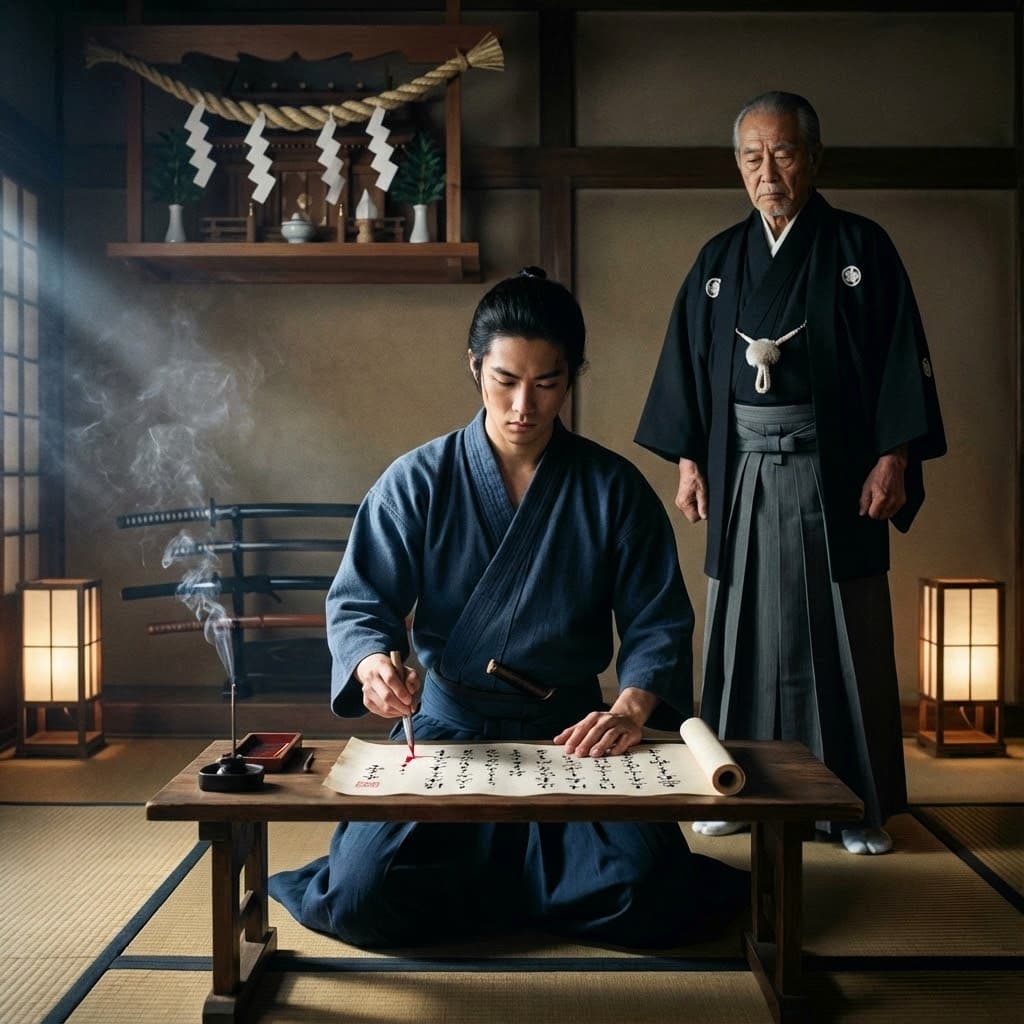
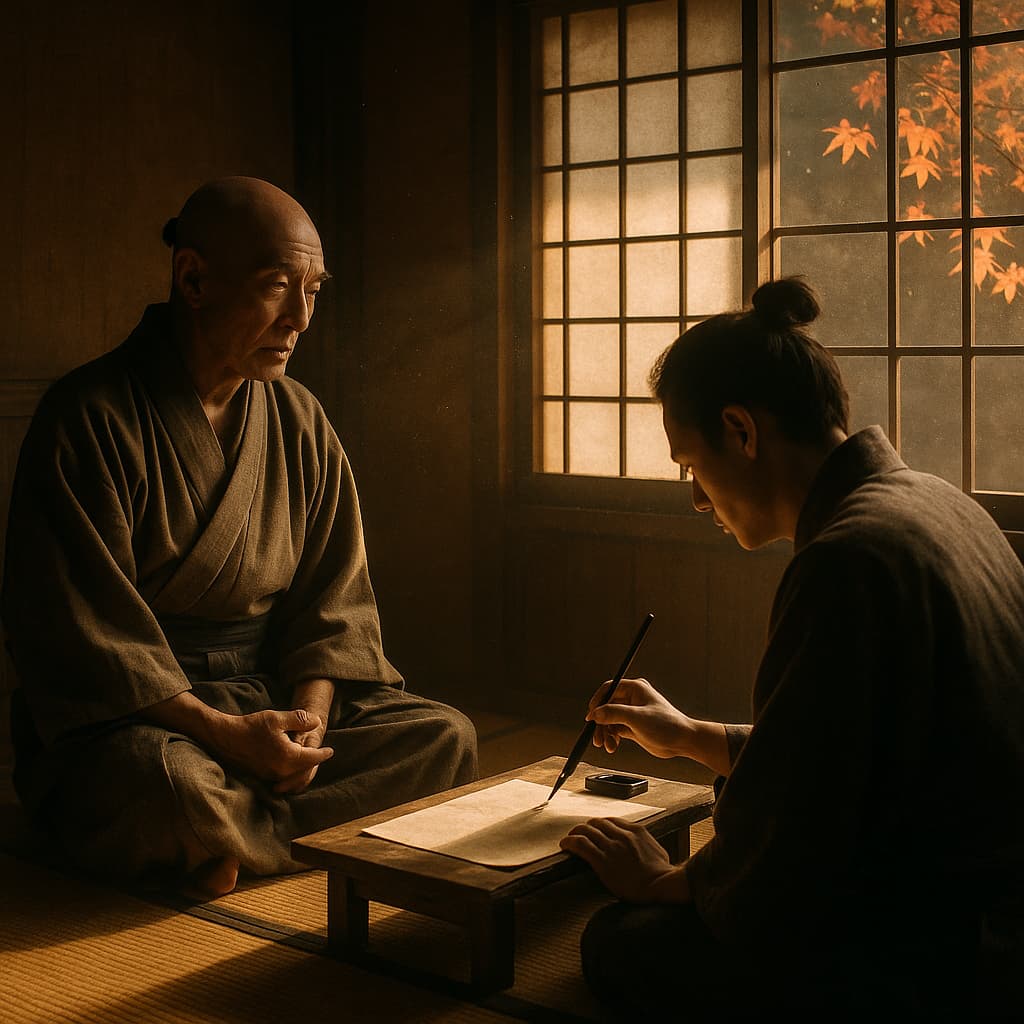
Far from the clichés, admission to an ancient martial arts school was not taken lightly. Candidates had to write a kishōmon and then affix a keppan, a "blood signature" committing them to good conduct before the...
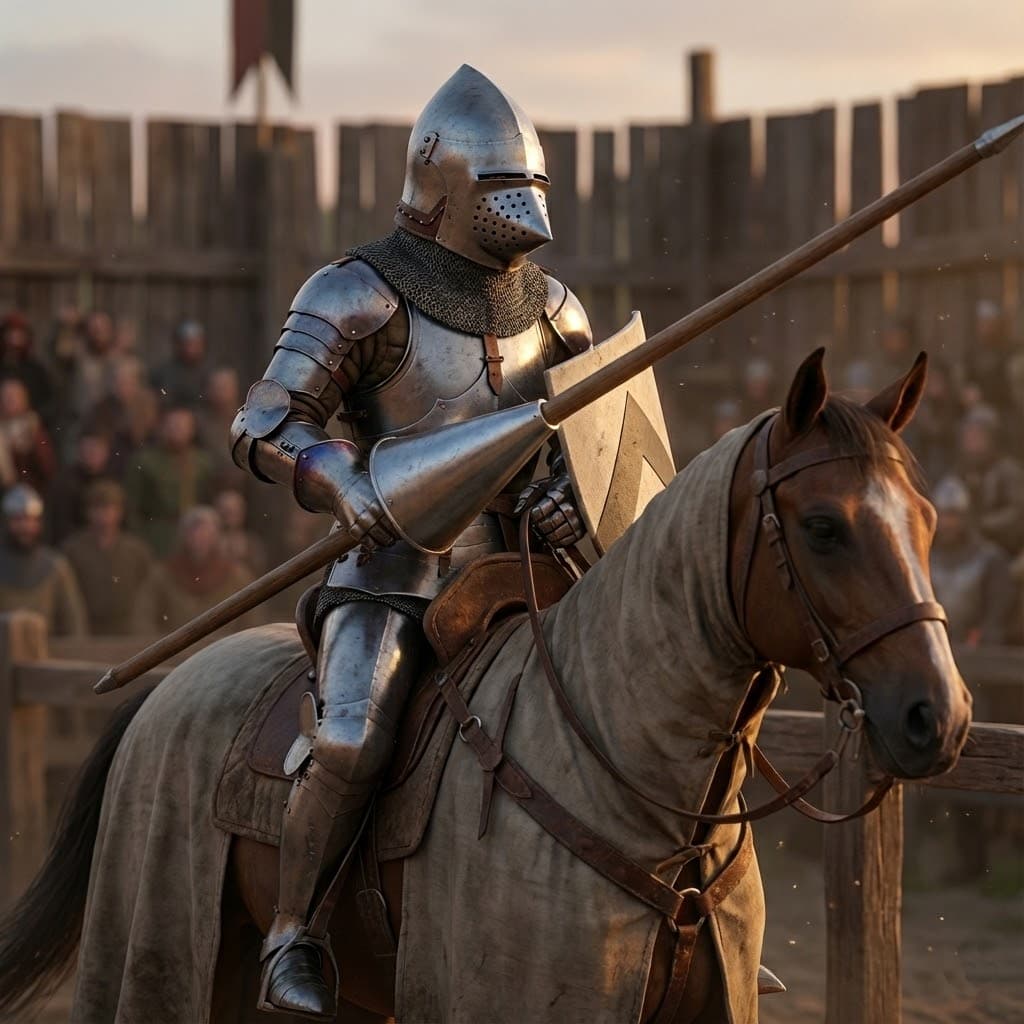
Beneath its pointed muzzle, the hounskull visor bascinet hides a knight's trick. In the 14th and 15th centuries, most helmets had breathing holes on the right side. In jousting, the lance is held on the right and strikes the...
A legendary sword from the imperial treasury, Kusanagi-no-Tsurugi links the legitimacy of the throne to the kami. According to tradition, Susanoo discovered the blade in the body of the serpent Yamata no Orochi and offered it to Amaterasu before her...
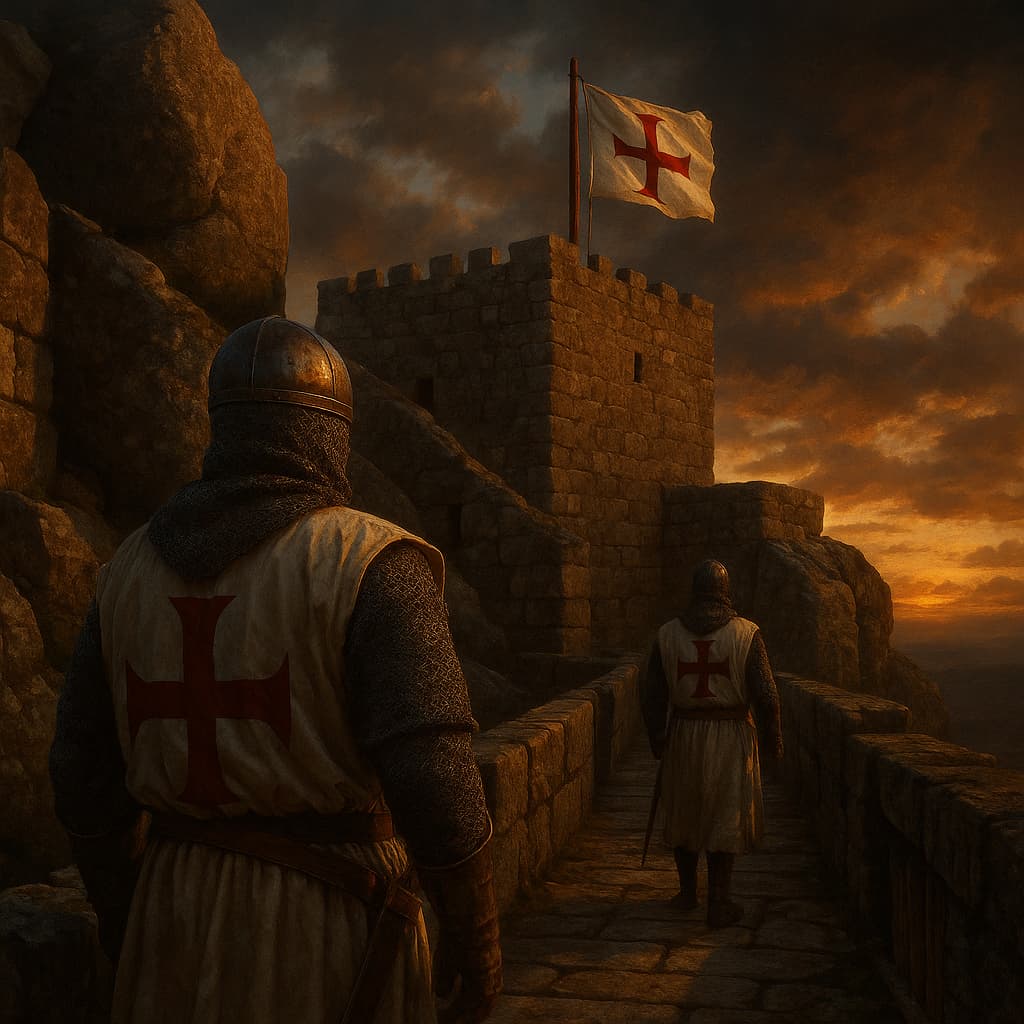
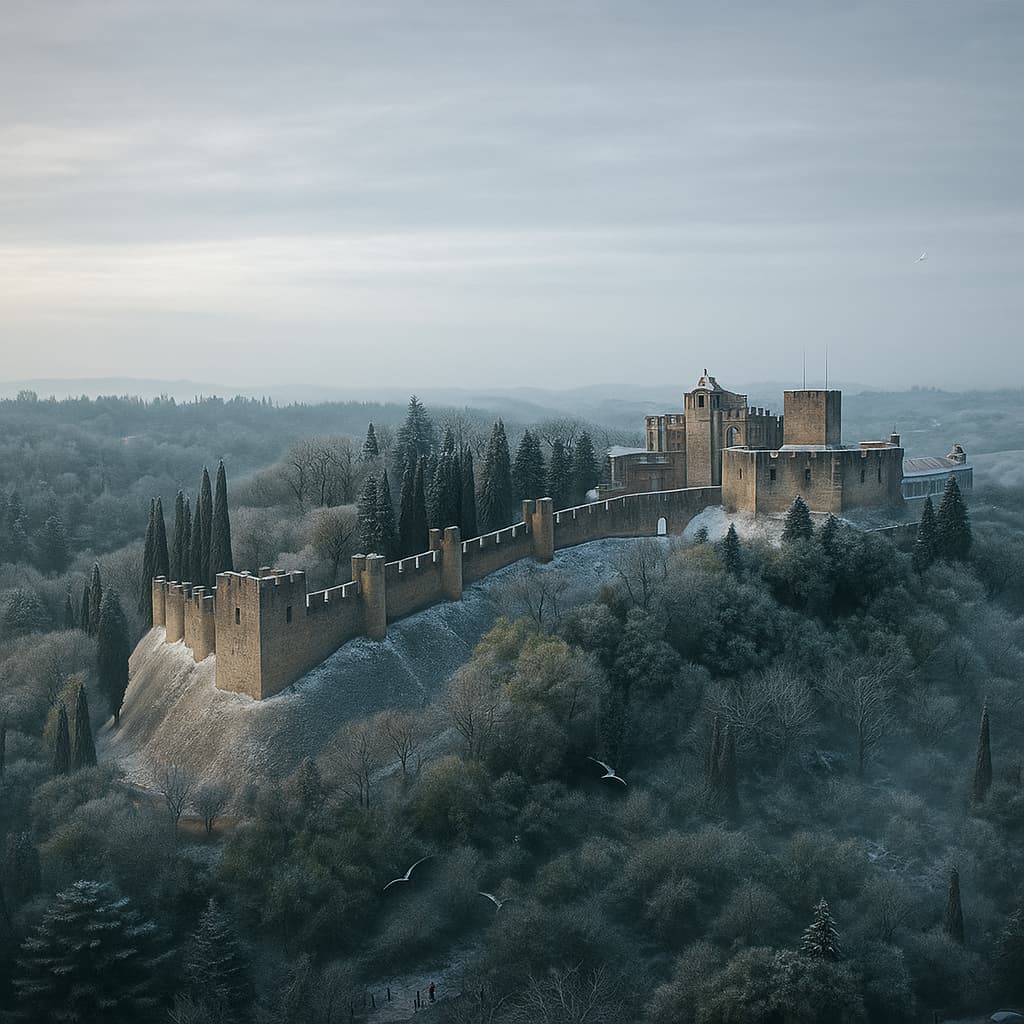
Isolated on a granite island, Almourol is Portugal's Templar icon. Rebuilt in 1171 according to an inscription linked to Gualdim Pais, the castle is part of the "Tagus line" defense system along with Tomar and Pombal.
In Japanese sources, 「不言実行」 ( fugen jikkō ) means "to accomplish without unnecessary words." This value echoes a classical root: 「義を見て為さざるは勇無きなり」, a maxim from the Analects of Confucius that reminds us that...
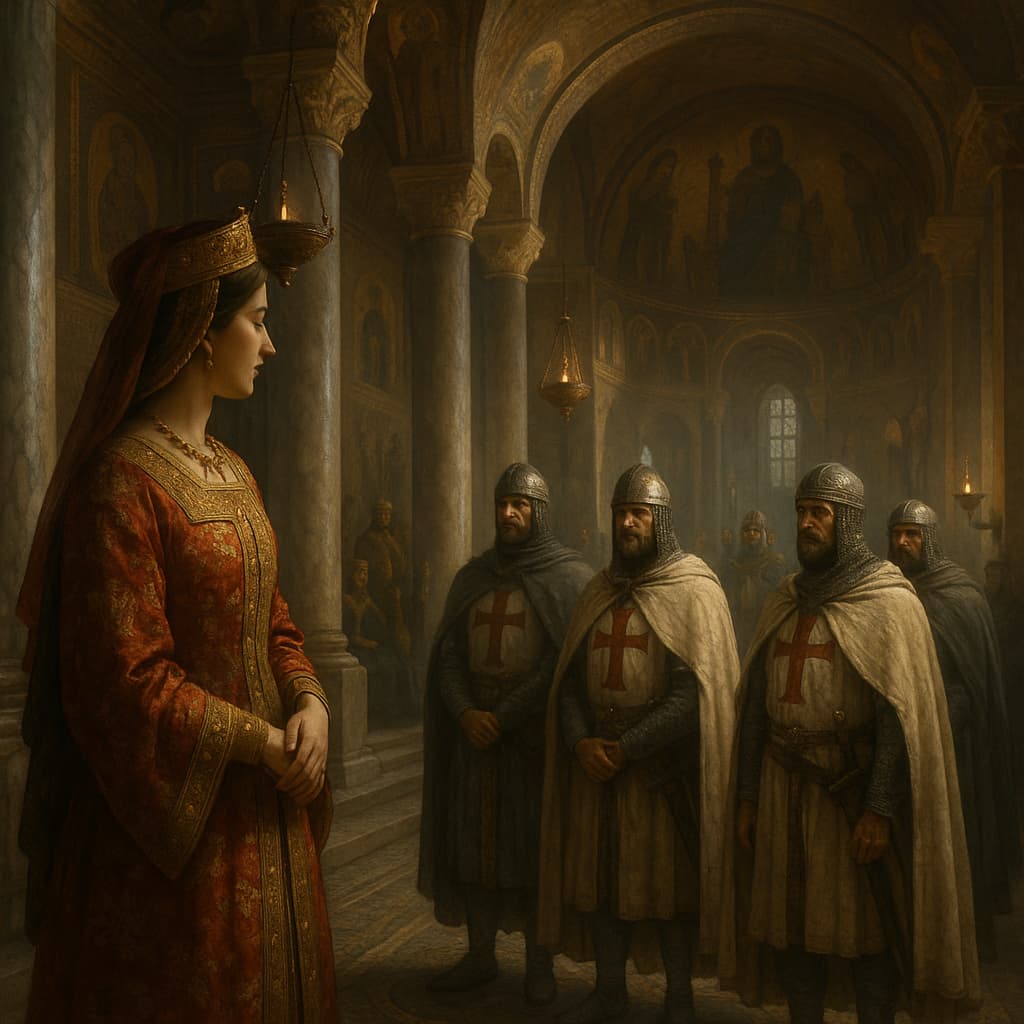
In the 11th century, even before the official founding of the Order of the Temple, some of the knights who would form its core took part in the First Crusade and passed through Constantinople. At the imperial court at that time was...
In October 2021, off the coast of Carmel in Israel, a diver discovered a long sword almost entirely covered in marine concretions. Dating from the 12th-13th century, it measures approximately 1 m for the blade and 30 cm for the hilt.
In Welsh sources of the Arthurian cycle, Arthur is not limited to Excalibur. He also possesses a dagger, Carnwennan, literally "little white handle." In Culhwch ac Olwen, Arthur refuses to part with it...
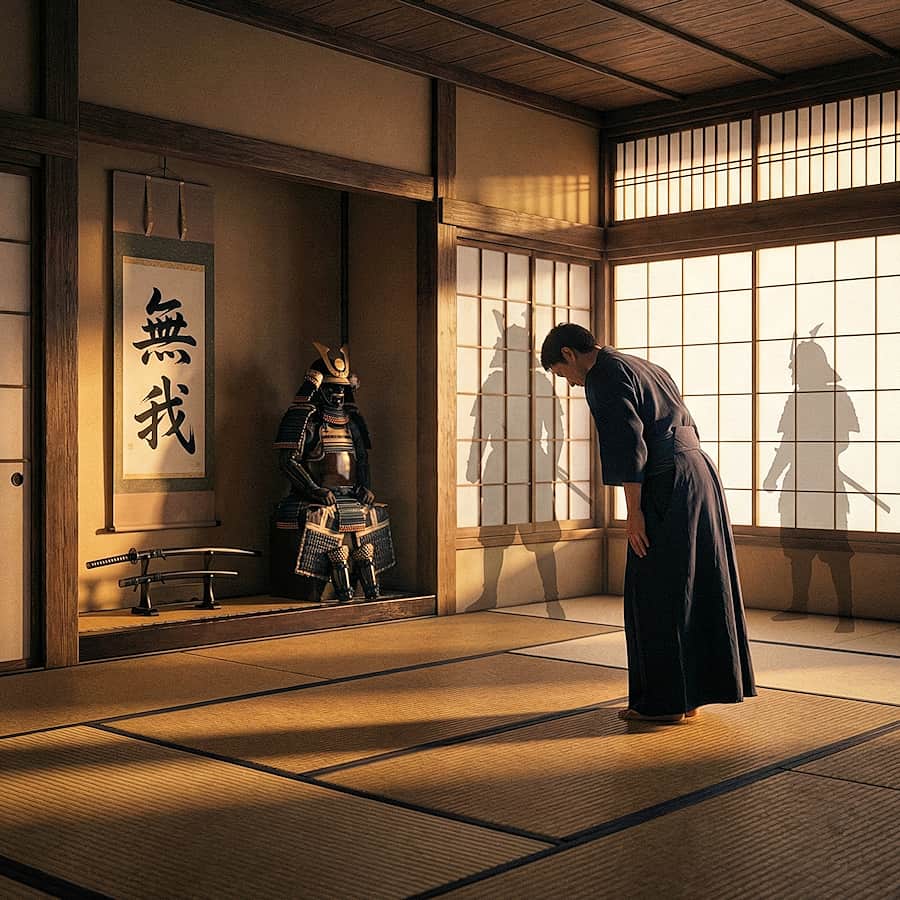
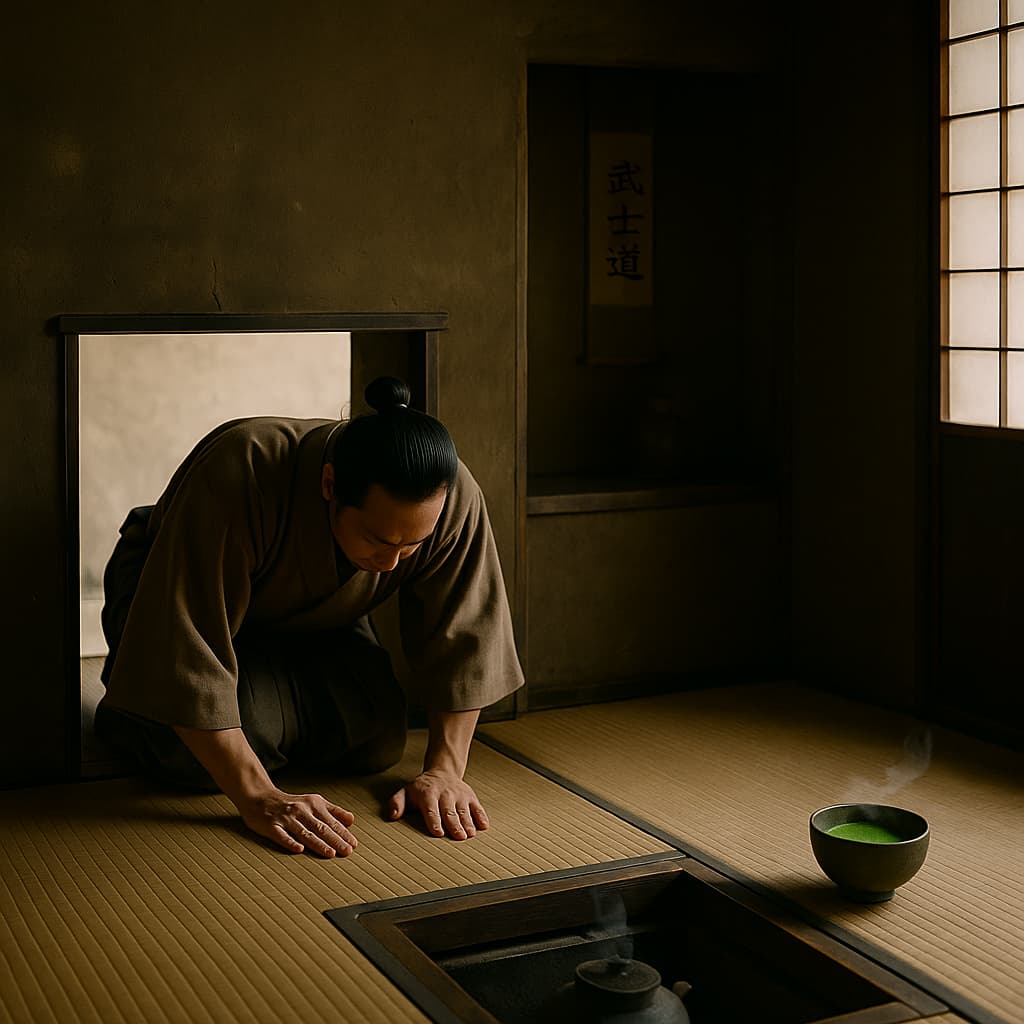
In feudal Japan, passing through the small nijiriguchi door of a tea pavilion meant that a samurai had to lay down his swords and humble himself. The gesture was not insignificant: designed to remind guests of their equality, it was a sign of respect and humility.
In 1178, in the heart of the Bierzo region, the crown of León handed Ponferrada over to the Knights Templar to ensure the security of the Camino de Santiago. On an earlier site, the brothers built a castle which, in the XIIIᵉ century, became one of the...
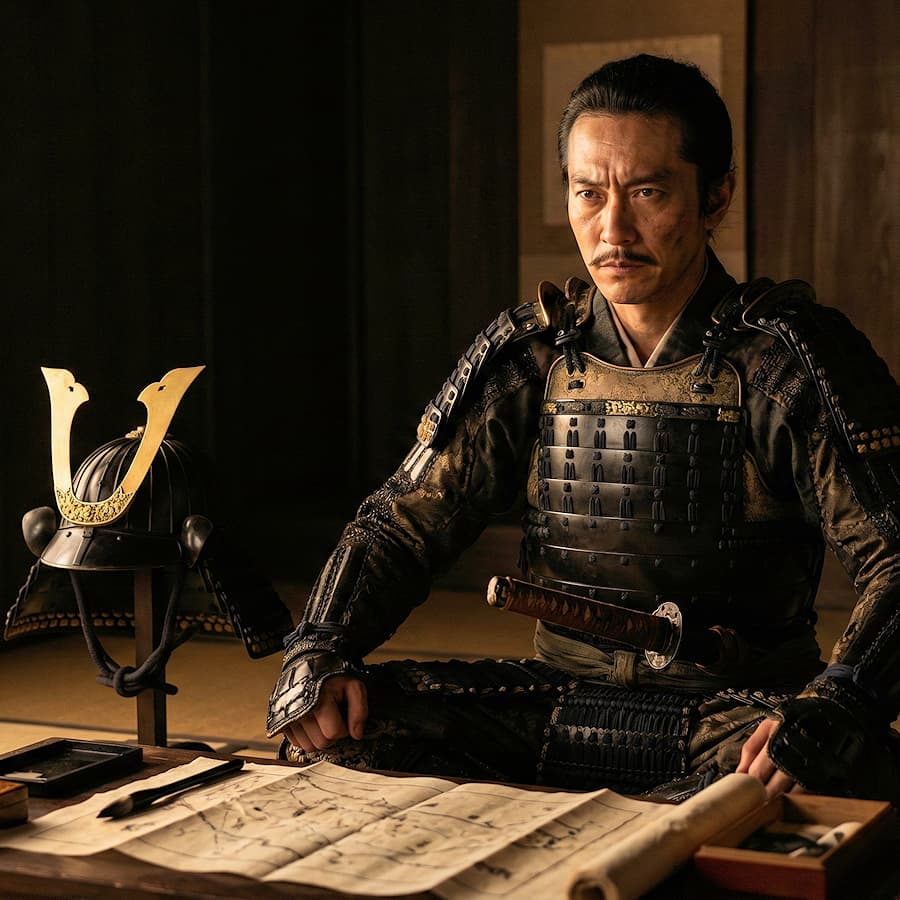
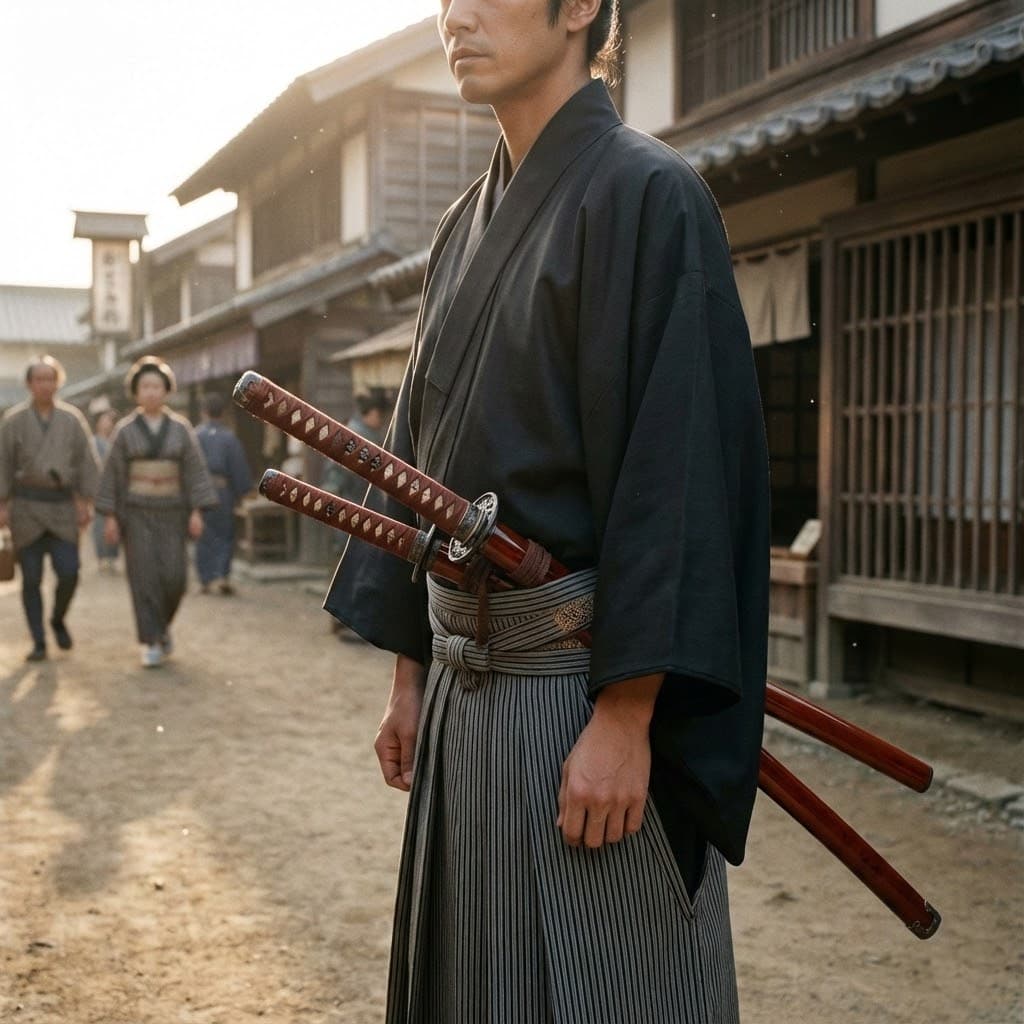
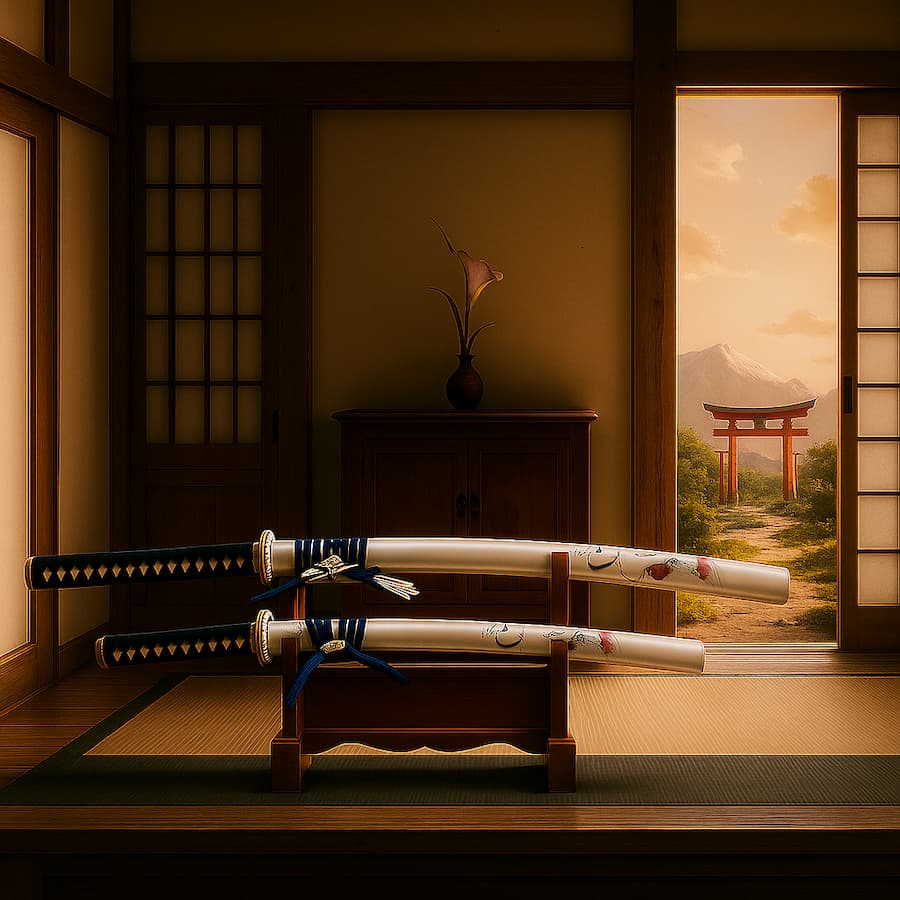
In the imagination, all samurai have always carried two swords. In reality, the daishō , katana / wakizashi pair , became widespread and codified especially in the XVIIᵉ century, when the Tokugawa peace transformed the sword into...
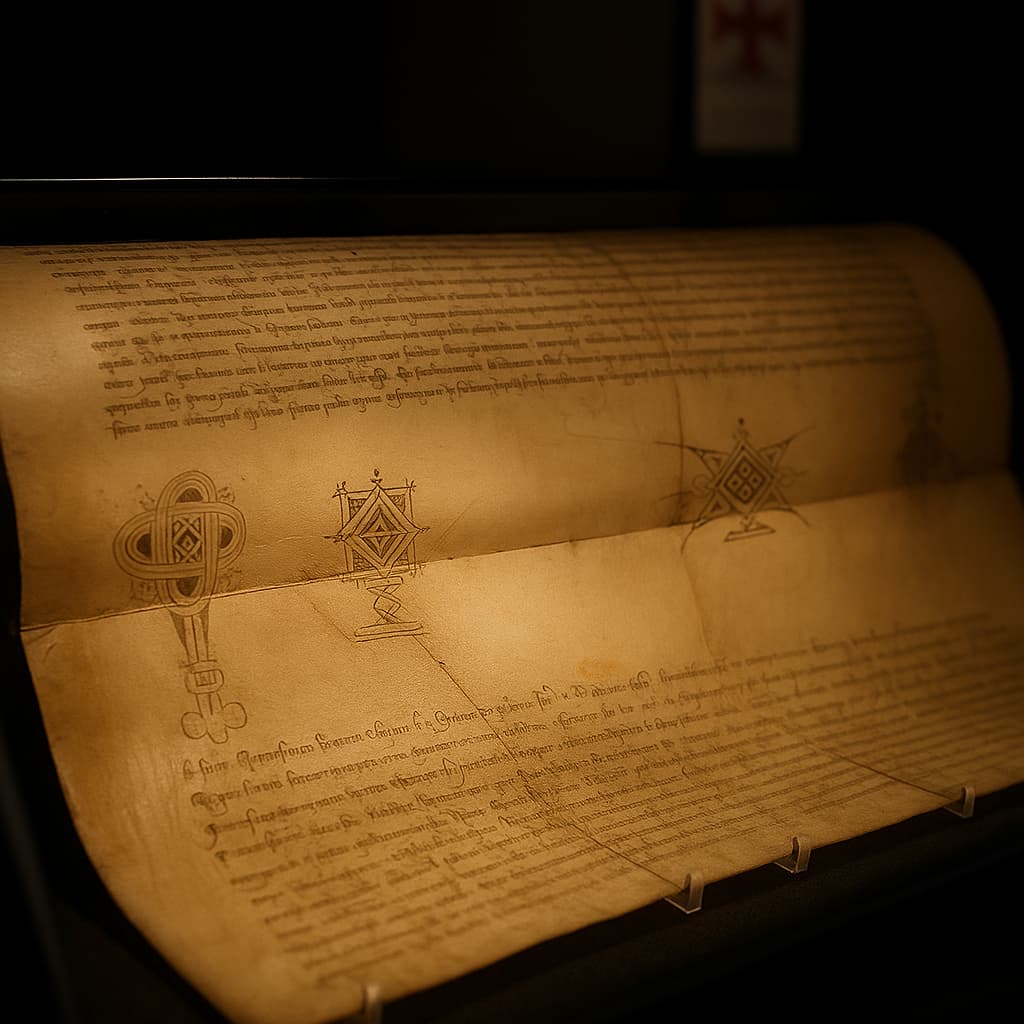
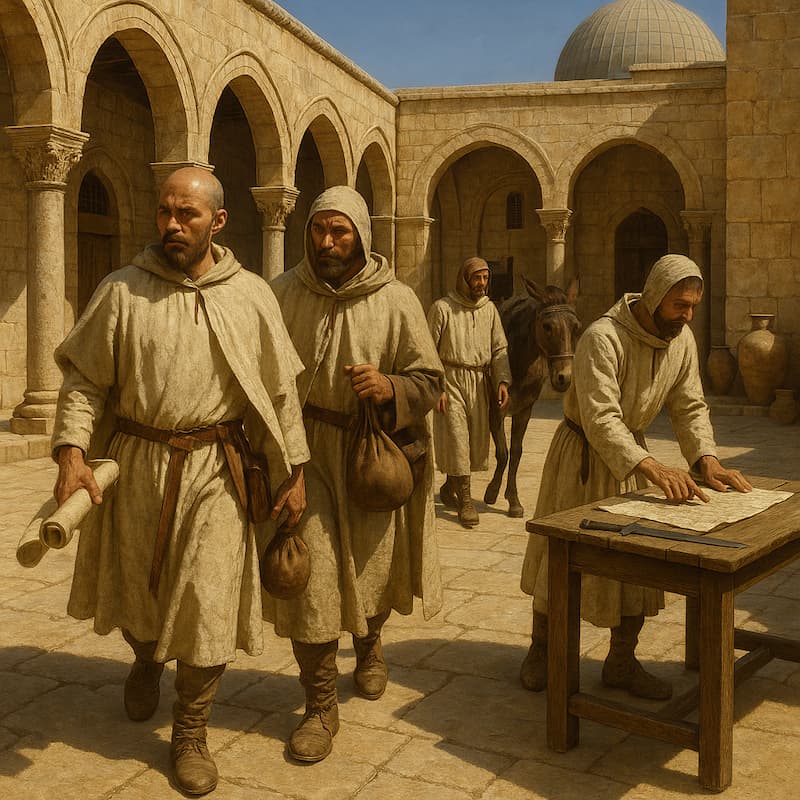
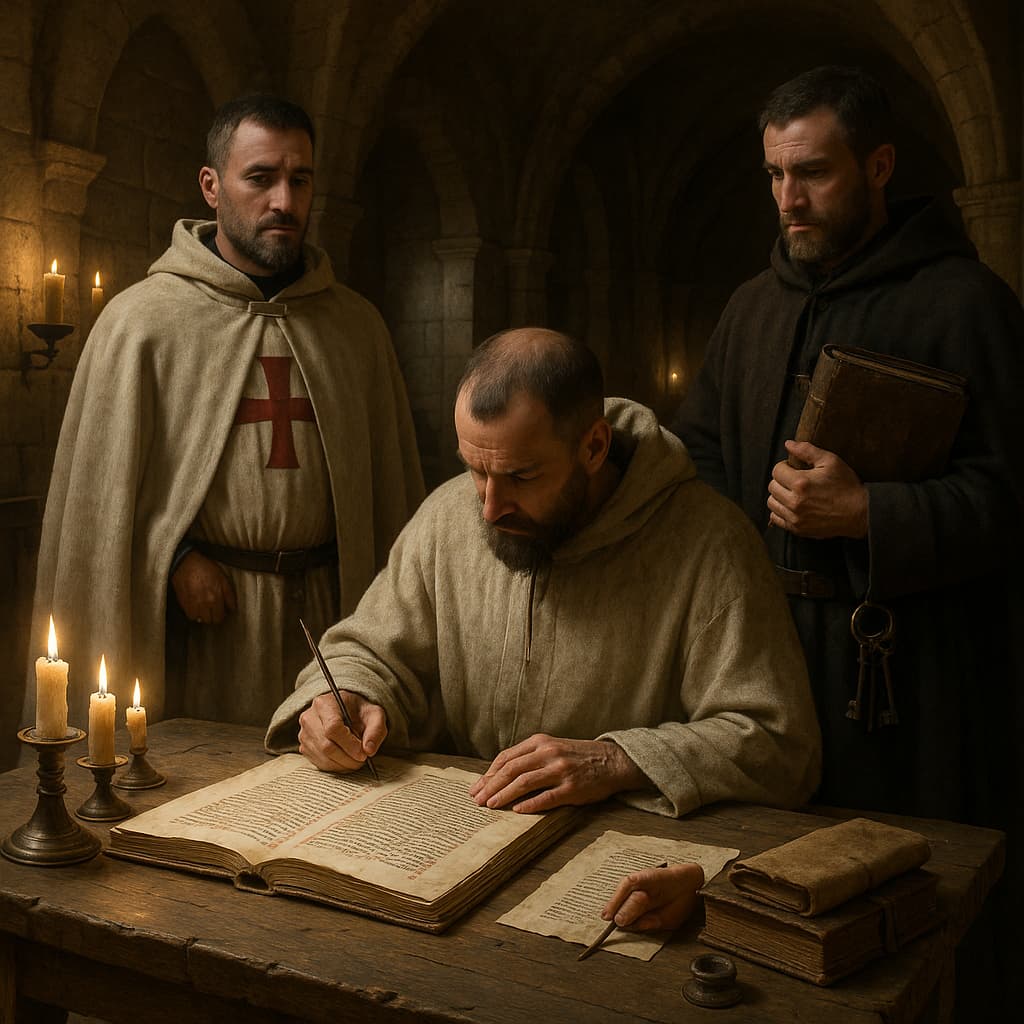
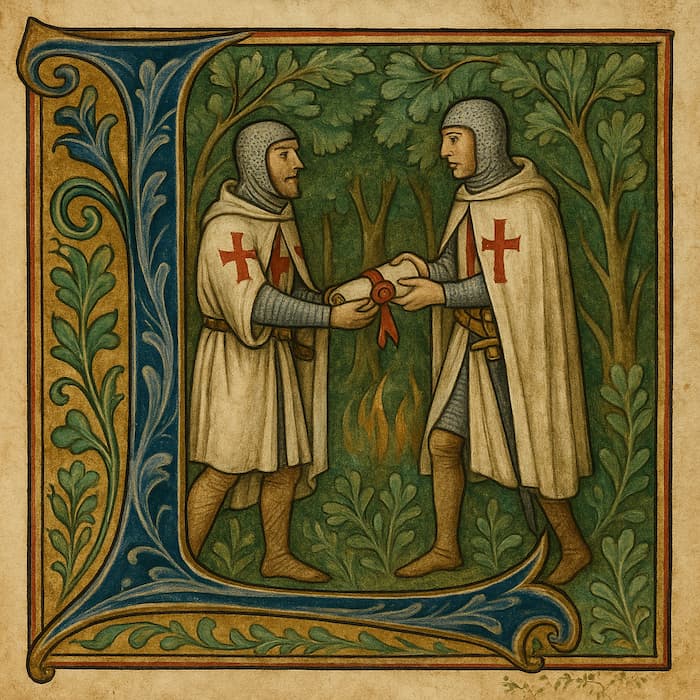
Produced in the autumn of 1307, the Templar interrogation scroll records, on 22 meters of parchment assembled into 44 membranes, the depositions of 138 brothers arrested in Paris. Each seam bears the signatures of four...
Forged by the Elves of Gondolin in the First Age, Orcrist was not just a prestigious weapon, but almost a character in its own right. Its name means "Goblin-cleaver", a translation of the Goblin-cleaver of...
Did you know that the "Kotetsu" of Kondō Isami, head of the Shinsengumi, might not be an authentic Kotetsu? Sources cite a Minamoto Kiyomaro blade bearing a "Kotetsu" signature engraved by the forger...
In the XIIIᵉ century, the Knights Templar were not confined to the Brandenburg march, far from it. On the Rhine, in Bad Breisig, a Templerhof is mentioned in 1215; in 1245, a chapel there houses a relic of the True Cross,...
Shihomizue refers to a forge where the blade is built in "four envelopes", close to the classic shihōzume. The blacksmith assembles a tough core, then dresses it with more carbon-rich steel on the back, sides and...
Same vows, same weapons, two horizons. The Knights Templar were born early in the XIIᵉ century, an institution centered on the Holy Land and a European network of commanderies. The Teutonic Order, recognized in 1198-1199, took over the heritage...
A character created by Shimozawa Kan in 1948, Zatoïchi plays a blind masseur from the Tōdōza, a guild of which zatō is the lowest rank... hence his name. On screen, his image has made its mark in chanbara thanks to a...
Born of the needs of stage combat and re-enactment, the SK system conveniently classifies exhibition swords into three levels. SK-A is aimed at the most accomplished, hardened blades for sustained use; SK-B...
In Japanese vocabulary, 伝世 ( densei ) refers to property handed down from generation to generation. Swords occupy a singular place. From Kamakura XIIIᵉ to early Edo XVIIᵉ, blades that became meibutsu...
Hattin, July 4, 1187: exhausted by heat and thirst, the army of the Kingdom of Jerusalem is encircled near the volcanic "horns" of Hattin. In the center, the Knights Templar attempt desperate breakthroughs; the...
Did you know that some Seki blades are instantly recognizable by their "cedar forest" hamon? Magoroku Kanemoto, active at the juncture of the XVᵉ-XVIᵉ centuries, popularized sanbonsugi, an alternating...
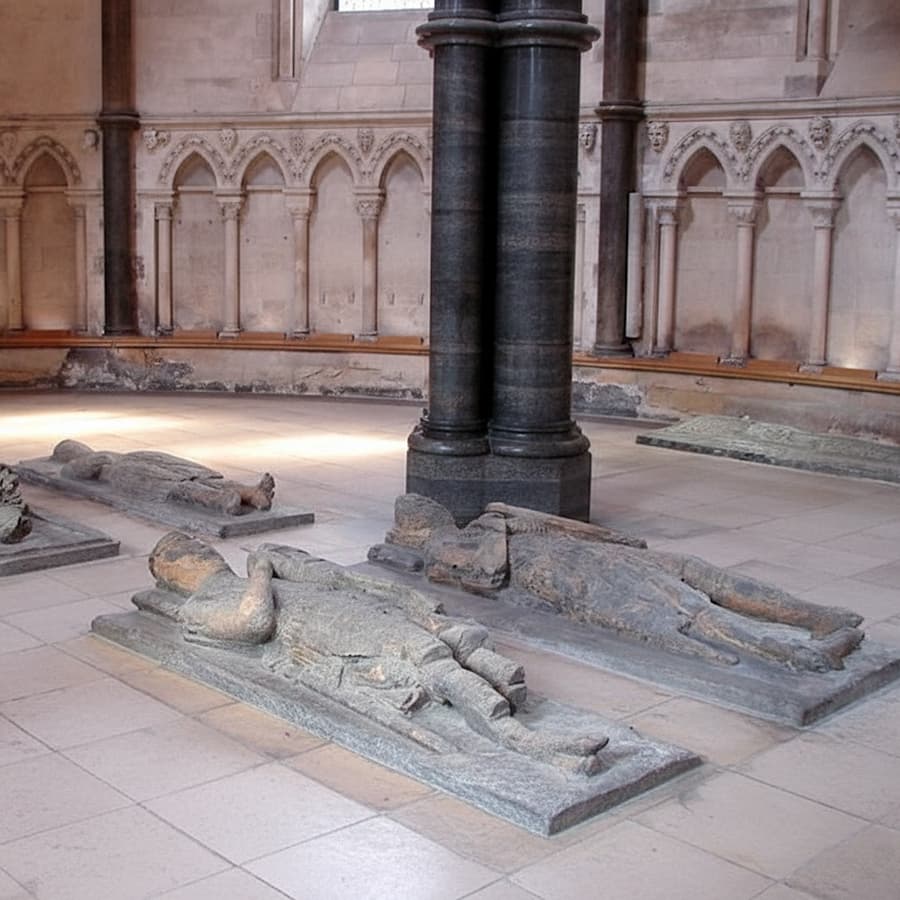
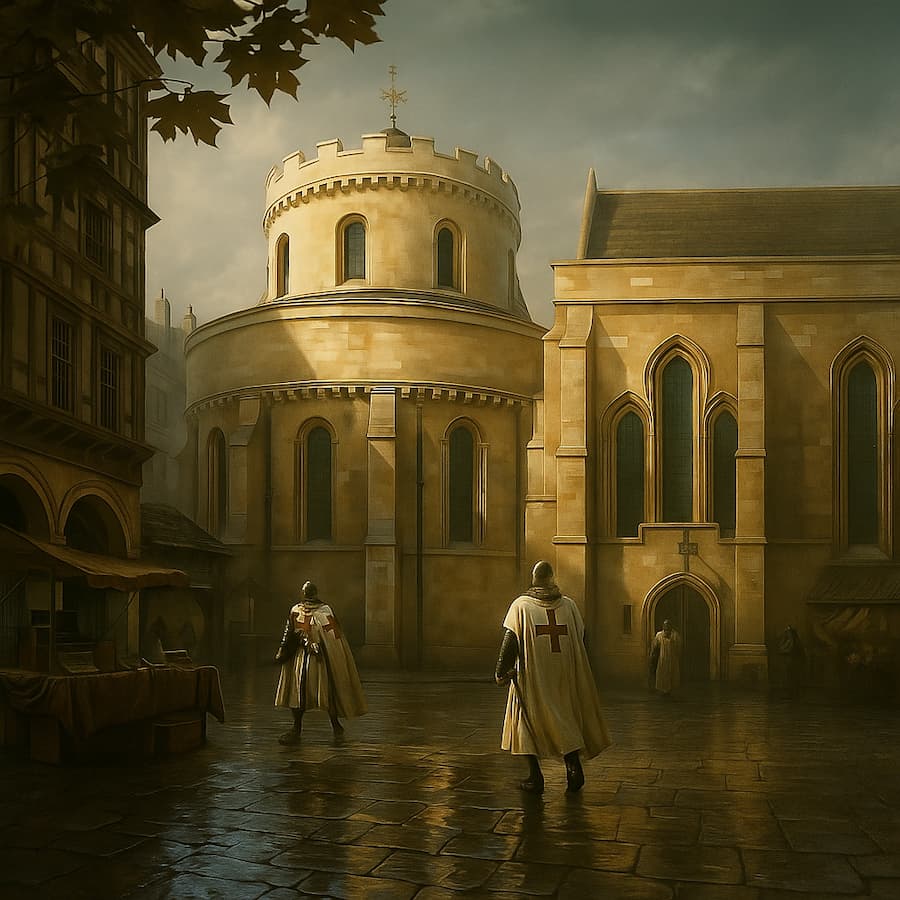
In England, the Temple adopted urban practices very early on. In London, the New Temple served as a royal treasury and deposit hub; the Temple Church, with its round nave copied from the Holy Sepulchre, symbolized this vocation....
Did you know that an iconic blade, the Kogarasu-maru, is said to be the work of Amakuni, a semi-legendary blacksmith of the VIIIᵉ-IXᵉ century? This curved, double-tipped kissaki-moroha-zukuri tachi is often described as...
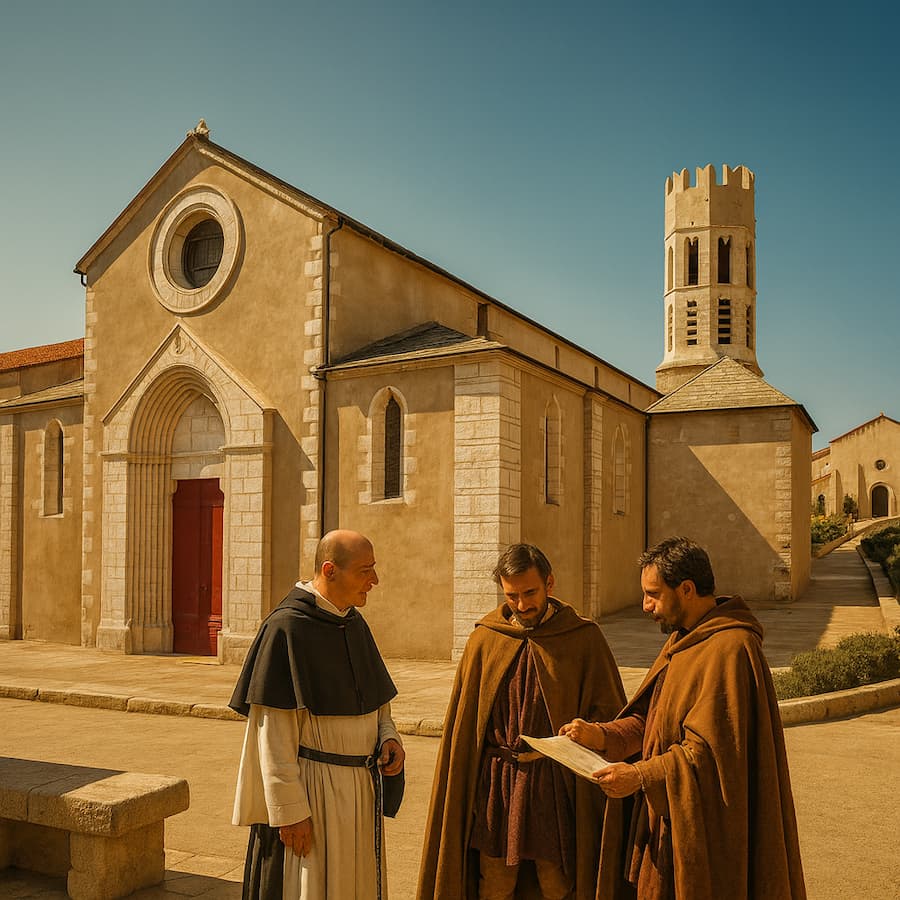
In Corsica, the Knights Templar are mostly the stuff of legend. In Bonifacio, the church of Saint-Dominique is regularly referred to as a "Templar" church... even though heritage records clearly link the site to the...
The katana isn't just a blade, it's a powerful imaginary that manga has brought to the world. While we often speak of the bushidō, historians remind us that this is a tradition that was largely reconstituted in...
In the north of medieval Paris, the Temple enclosure functioned as an "autonomous district" from the XIIᵉ century, with its own franchises, markets and justice system. The Knights Templar administered warehouses, lent to the authorities, housed...
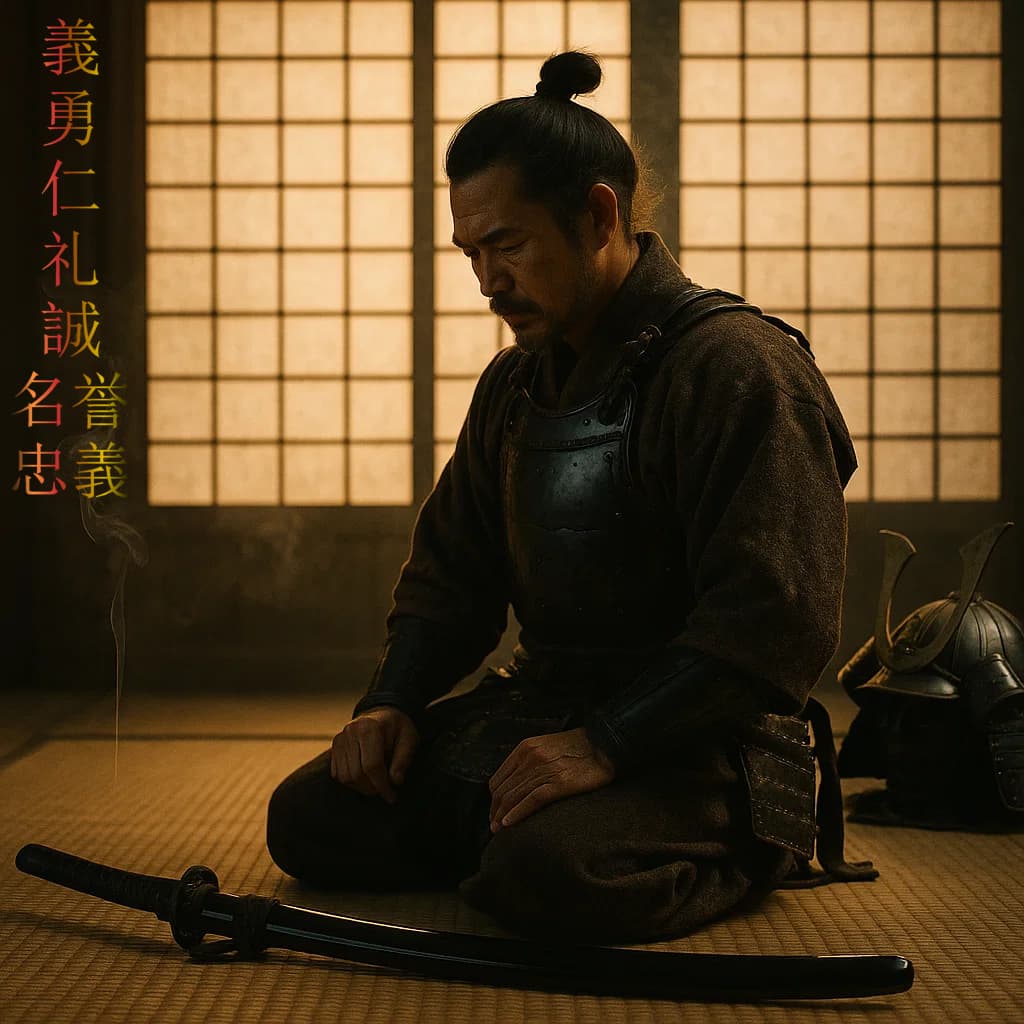
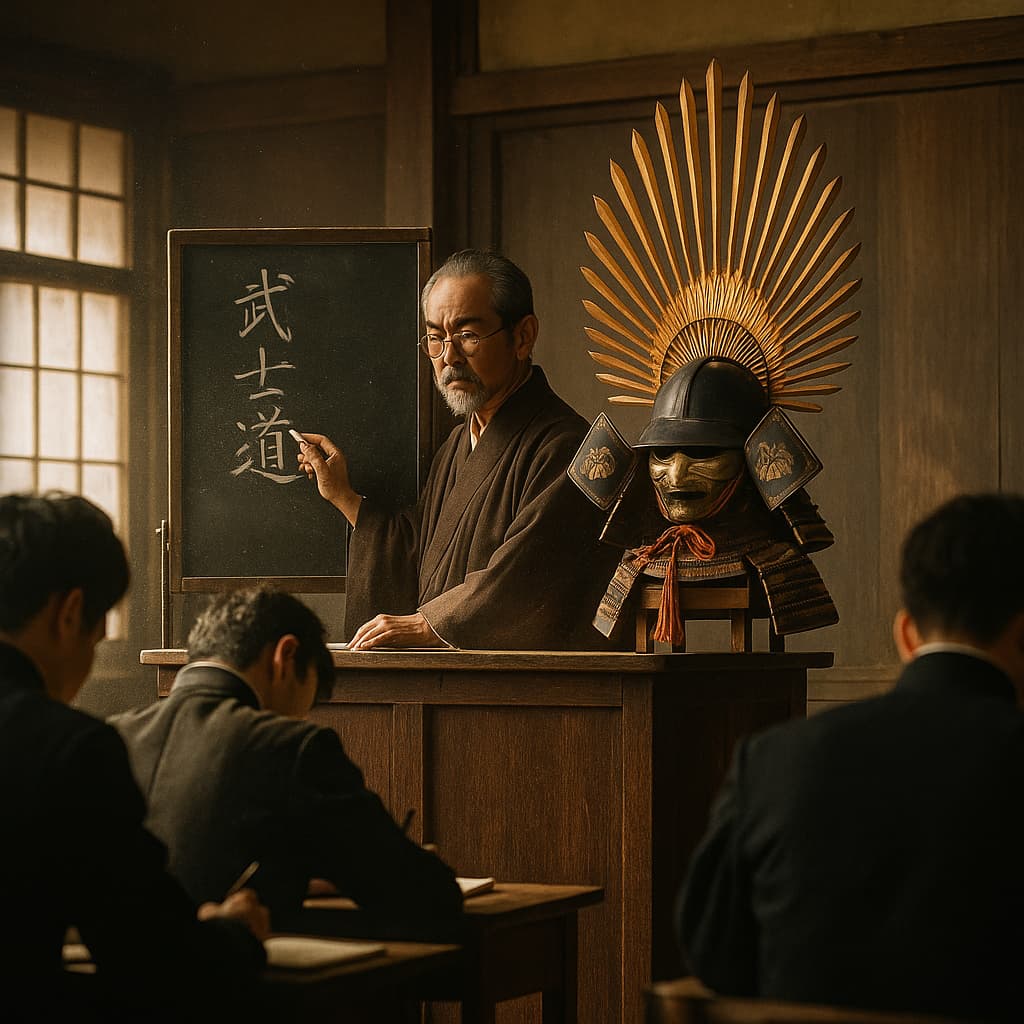
In feudal Japan, the *bushidō* provided the warrior with an ethical compass. Seven virtues condense its spirit. 義 ( gi ), righteousness, deciding justly without prevaricating. 勇 ( yū ), courage, to face and endure. 仁 ( jin ), the...
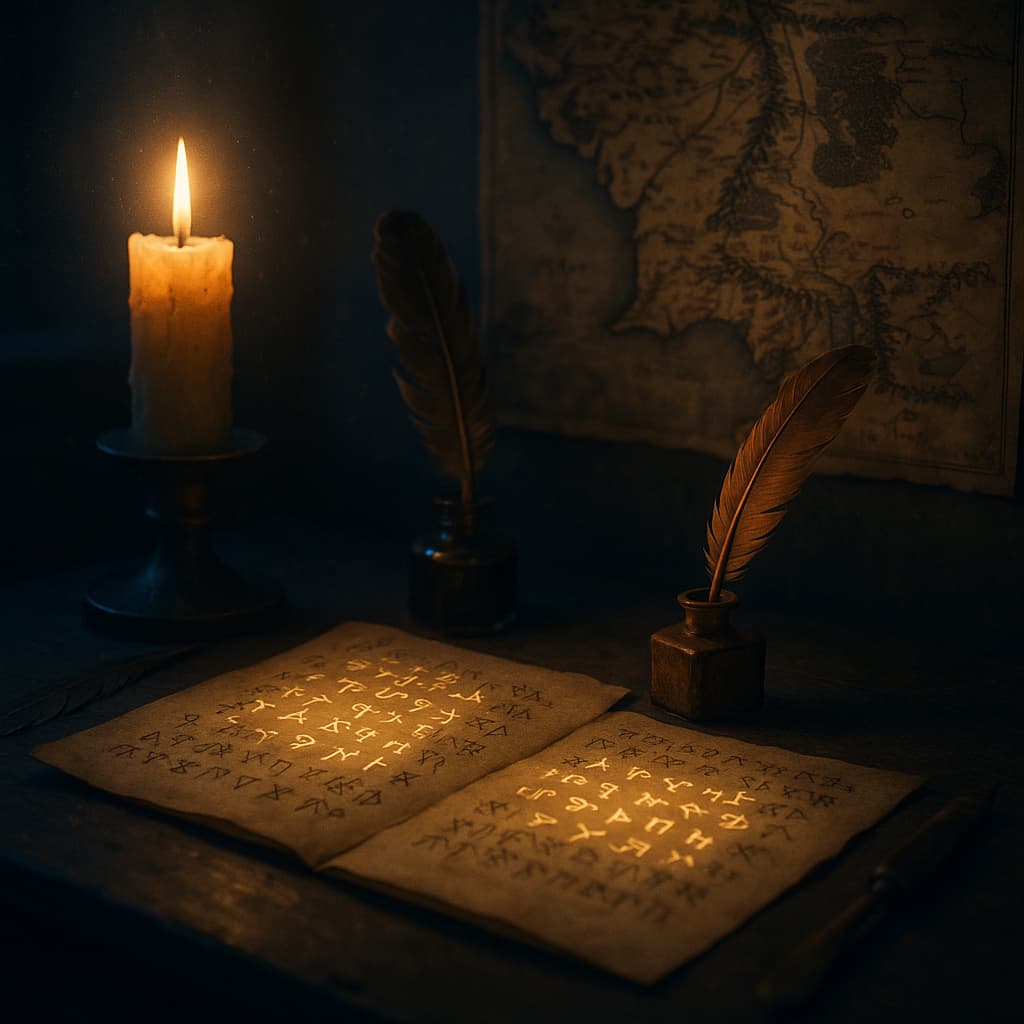
Before the plot, Tolkien forges linguistic systems. Quenya and Sindarin are born from real-life matrices, Finnish and Welsh, then call up peoples, myths and history. The Rohirrim speak a language...
Communal Italy reveals a lesser-known face of the Temple. In Verona, the house of San Vitale was more than just a logistical staging post; liturgical books found on site, including a missale votivum , attest to the presence...
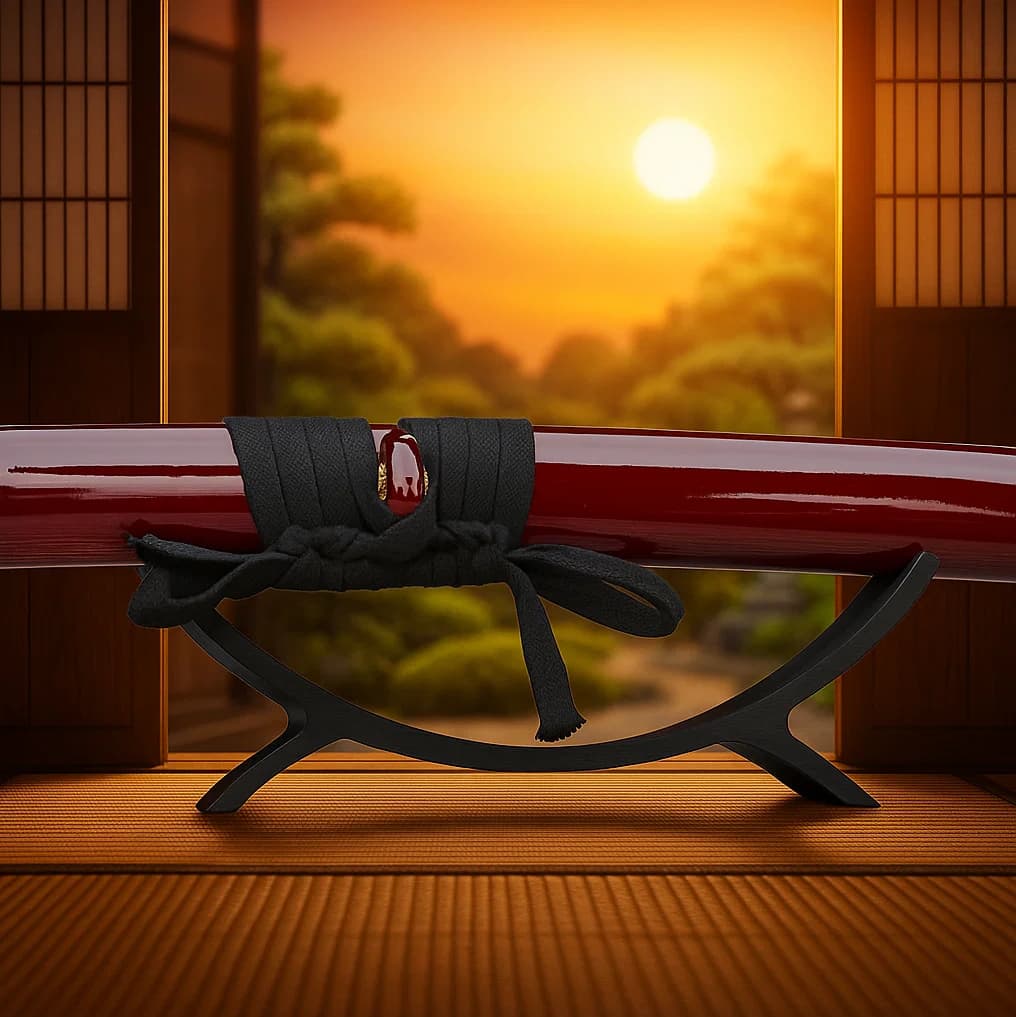
In iaido, the sageo is first and foremost used to secure the saya to the obi to prevent the sword from falling or coming off, a function historically attested to on katana, wakizashi and tanto mounts. It is therefore neither a simple...
Did you know that Sengo Muramasa's swords, active in the XVᵉ-XVIᵉ century, were reputed to bring bad luck to the Tokugawa... even though some Tokugawa actually owned them? The legend, amplified by kabuki theater and...
The Champagne region was doubly important to the Knights Templar: in Troyes, around 1129, their rule was framed; on the ground, houses and barns backed onto fair roads. At Avalleur, near Bar-sur-Seine, the chapel...
Did you know that one of Japan's most famous katanas simply disappeared after the Second World War? The Honjō Masamune, an emblematic blade handed down from shogun to shogun within the Tokugawa family, was classified...
The myth of a buried hoard obscures a far more prosaic and powerful reality. From the XIIᵉ to the XIVᵉ century, Templar wealth came primarily from donations, estates and regular income: cens, mills,...
In The Walking Dead , Michonne's katana isn't just a weapon; it's a visual signature. The fact that it is worn on the back, rarely seen in medieval Japan, is mainly a matter of staging, silhouette...
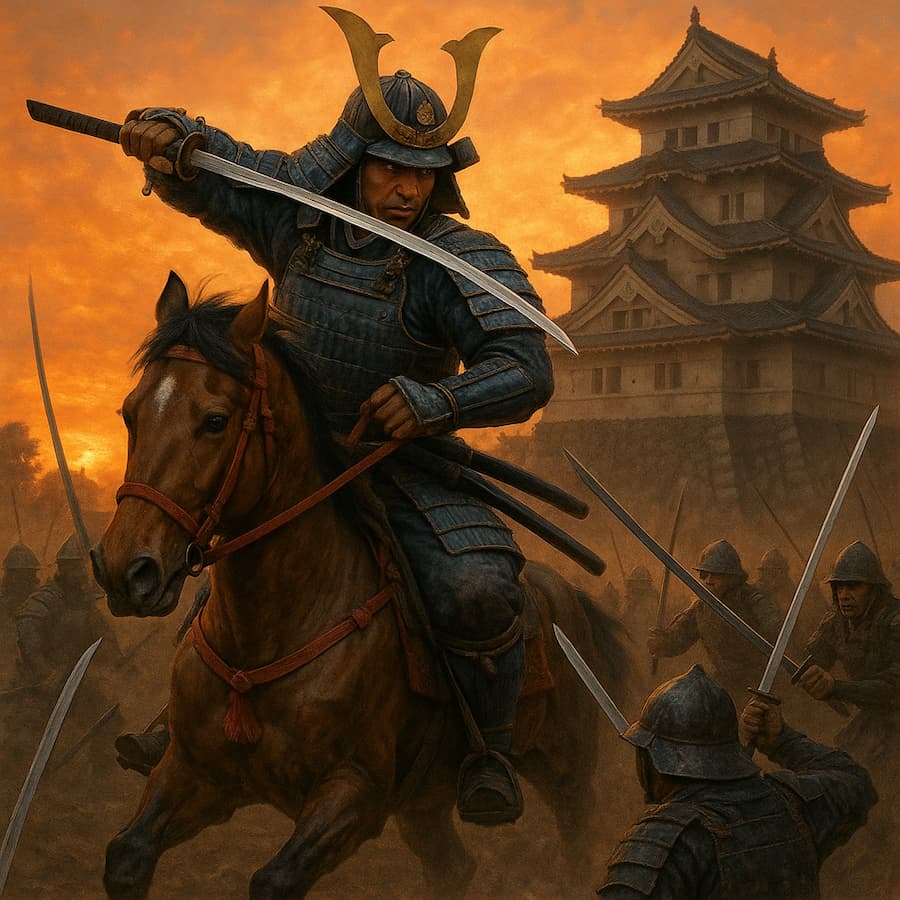
We often imagine him as the sole master of the battlefield, yet the katana was not the samurai's queen weapon. From the XIIIᵉ to the XVIᵉ century, formations relied mainly on the yari spear, wielded by ashigaru and...
In Hesbaye, the Haneffe commandery illustrates a Templar settlement that was more managerial than warlike. Mentioned in a 1265 charter in connection with Val-Saint-Lambert, it administered land and revenues around...
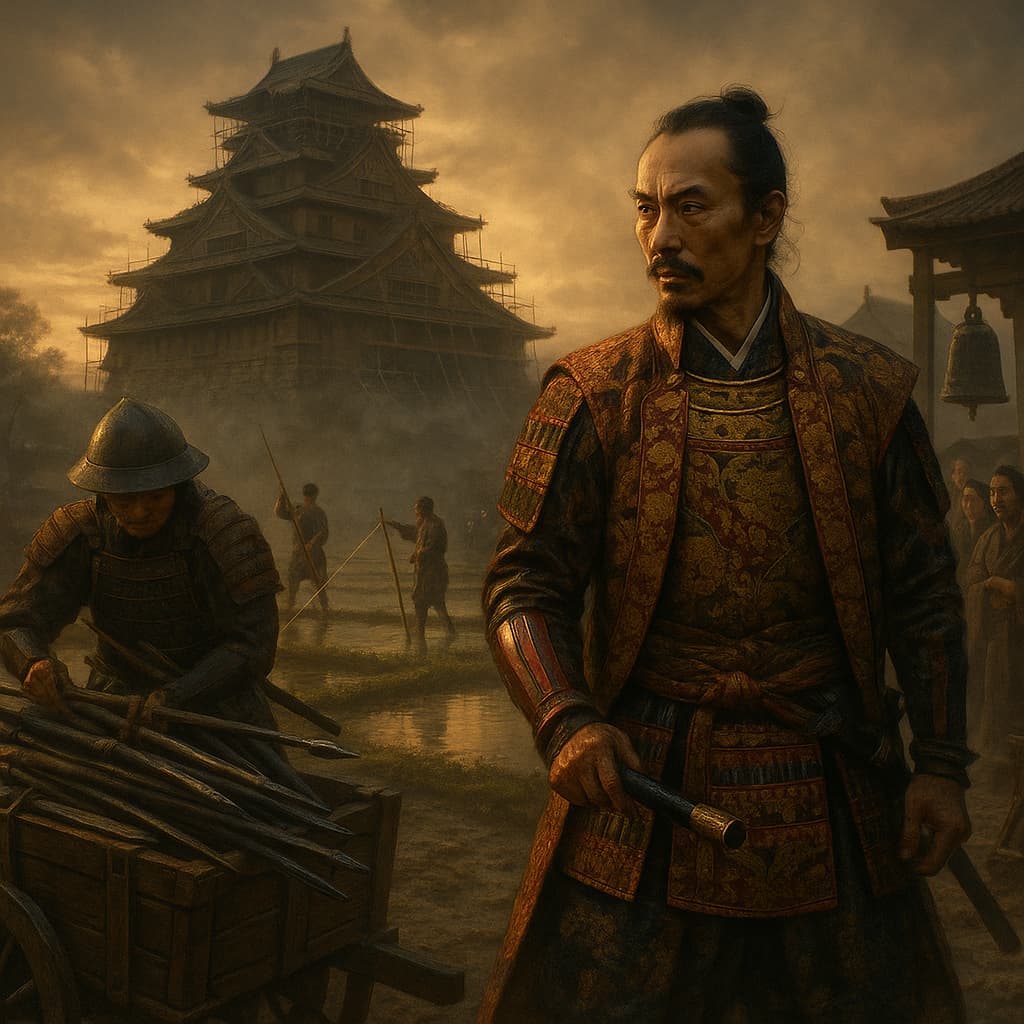
Born into a peasant family in Owari, Toyotomi Hideyoshi entered Oda Nobunaga's household as a simple servant... before becoming his confidant and, after 1582, the architect of unification. In 1585, he became...
In medieval French-speaking Switzerland, the Knights Templar didn't rule over formidable castles, but rather managed the passage of people. At La Chaux, received before 1223, the commandery coordinated hospices in Orbe, Villars-Sainte-Croix and...
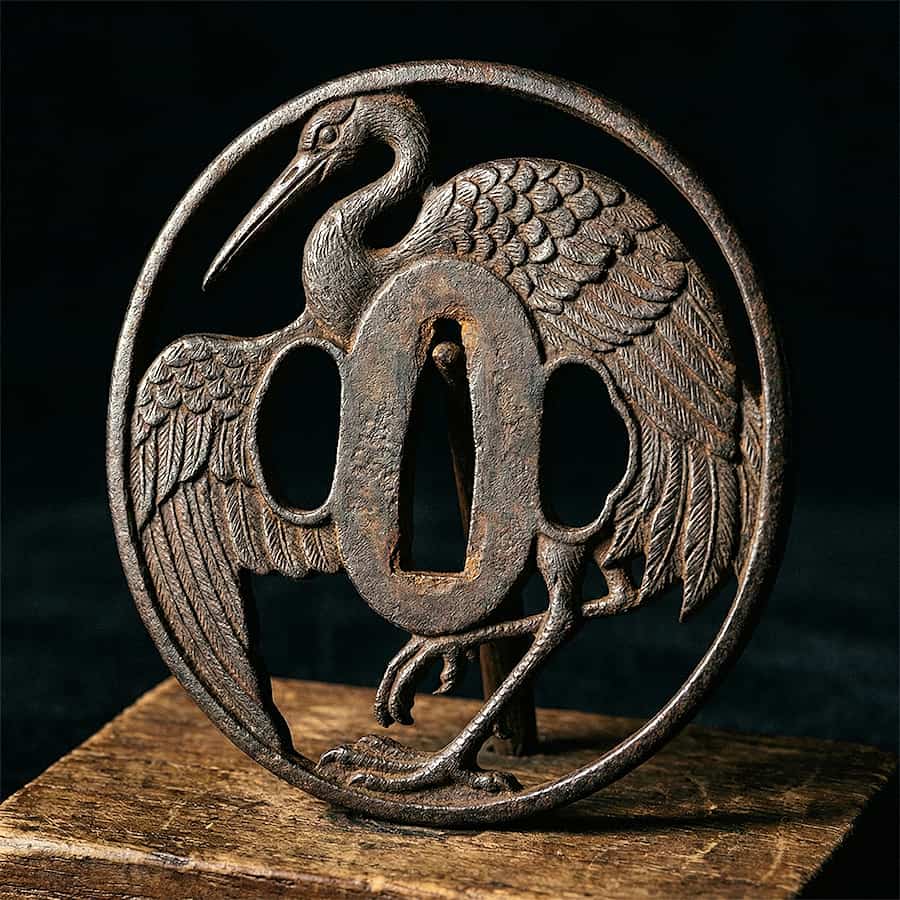
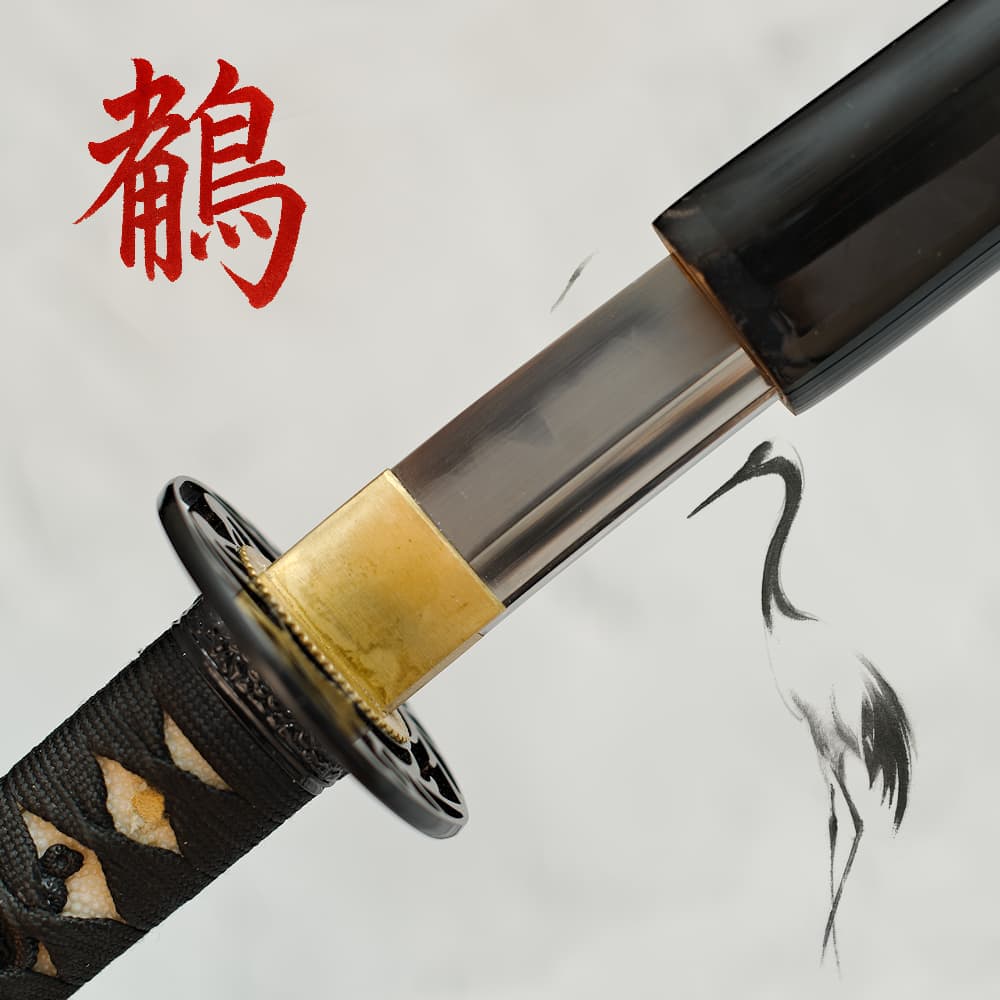
In Japan, the tanchōzuru crane is the emblem of longevity and fidelity; it can be found on warriors' kamon and even on tsuba carved in the Edo period. But here's the wink that often surprises...
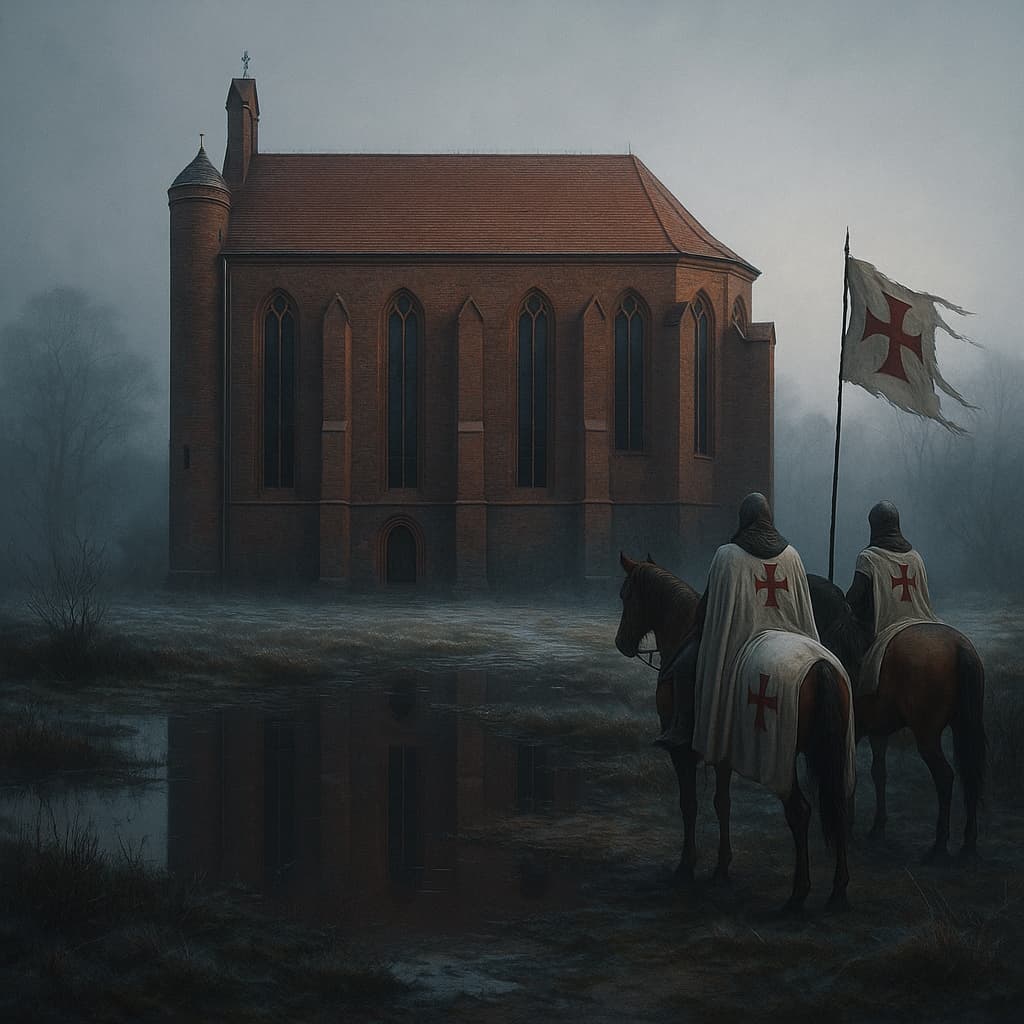
In the XIIIᵉ century, the Piast dukes welcomed theTemplars to Polish lands. In Chwarszczany, a Gothic brick chapel, one of the first of its kind in western Poland, rises from a...
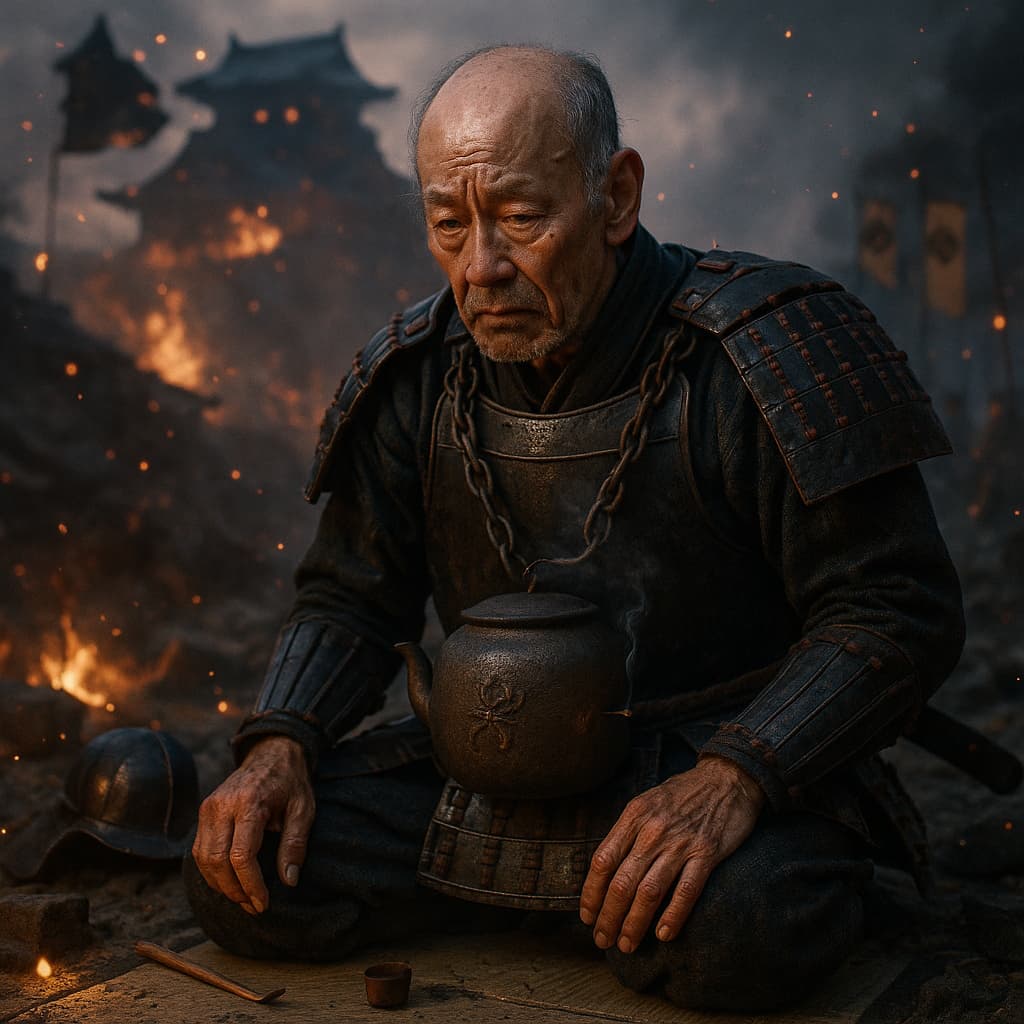
A devious daimyo of the XVIᵉ century, Matsunaga Hisahide ended up cornered in his Shigisan castle in 1577 by Oda Nobunaga. Rather than surrender, he chose a theatrical and political exit. His Hiragumo tea kettle,...
In Portugal, the Knights Templar built a veritable frontier. In the charter of 1165, Afonso Henriques handed over the lands of Idanha and Monsanto to Gualdim Pais; the castle, built on granite, became a lock of the XIIᵉ...
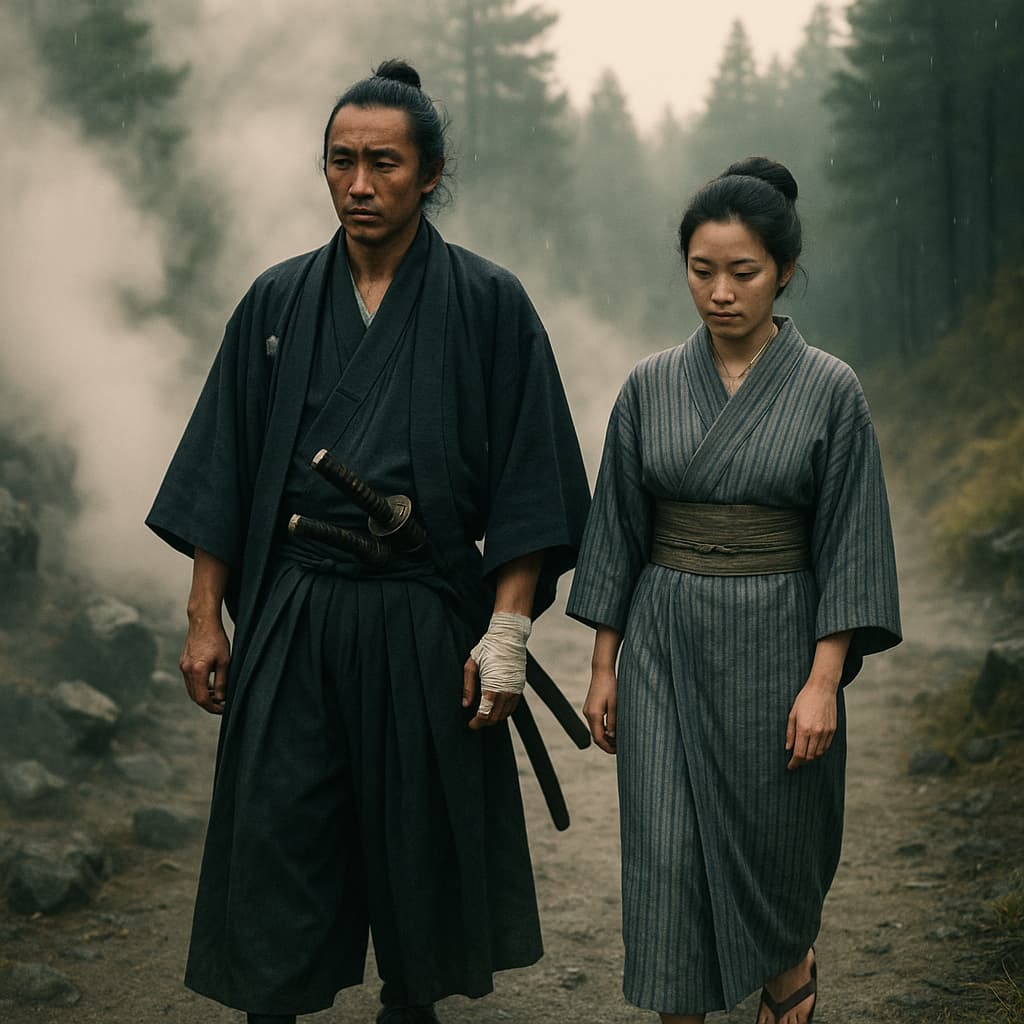
In March 1866, at the Teradaya Inn near Kyoto, Narasaki Ryō, known as Oryō, rises from her bath to warn Sakamoto Ryōma, a Tosa samurai reformer, that a raid by shogun agents was in progress. Ryōma, wounded in...
When Tolkien built his legendarium, he didn't embroider randomly. As a philologist, he drew on Beowulf and Old English poetry to shape Rohan, right down to the lament that repeats the ubi sunt motif. Norse myth...
In medieval Belgium, the Knights Templar were part of princely and episcopal networks rather than on war fronts. At Villers-le-Temple, in the heart of the Hesbaye region, Brother Gérard de Villers was granted...
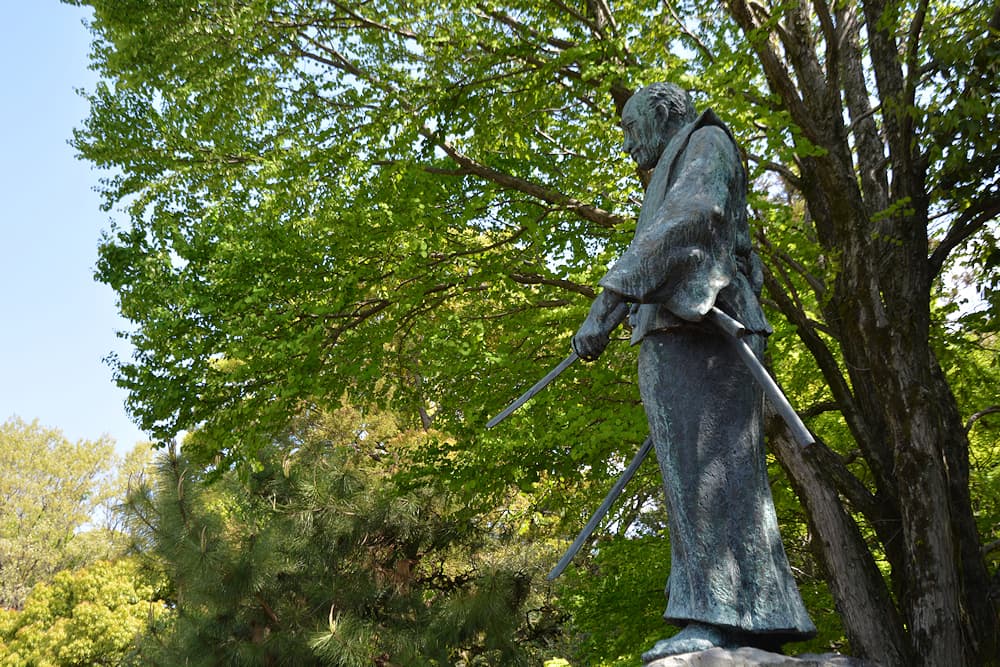
In the XVIIIᵉ century, Uesugi Yōzan took over the reins of an indebted and starving Yonezawa... starting by setting an example. He cut back on his lifestyle, simplified administration, encouraged sericulture, pottery...
In the lands of the Empire, the Temple was less dense than in France or Iberia, but its houses were interwoven with episcopal powers and urban networks. In Berlin, the Tempelhof kommende, founded around 1200,...
To say that a katana is "balanced" because its center of gravity is measured is not enough. In dynamics, what counts in the hand is the couple of center of gravity + moment of inertia around the tsuka, which governs...
In communal Italy, the Temple speaks the language of the cities. As early as the XIIIᵉ century, its houses lined active ports and markets, from Genoa to Barletta, and invested urban sociabilities. In Perugia, the church of...
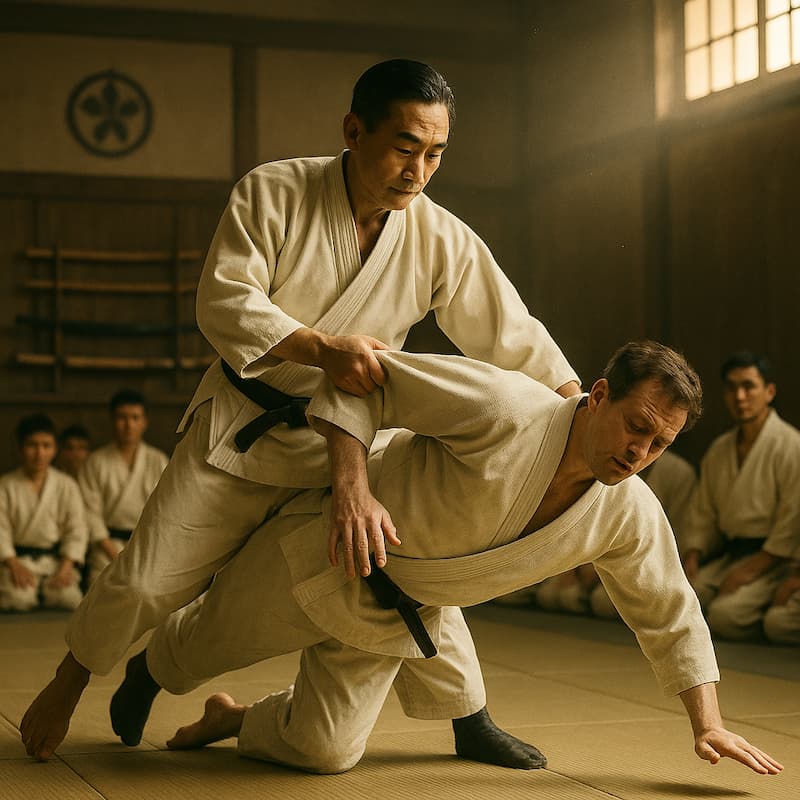
From battlefield bujutsu to education-oriented budō, the martial arts have been one of the great vehicles of the samurai imagination outside Japan. In 1909, Kanō Jigorō, educator and founder of judo, became...
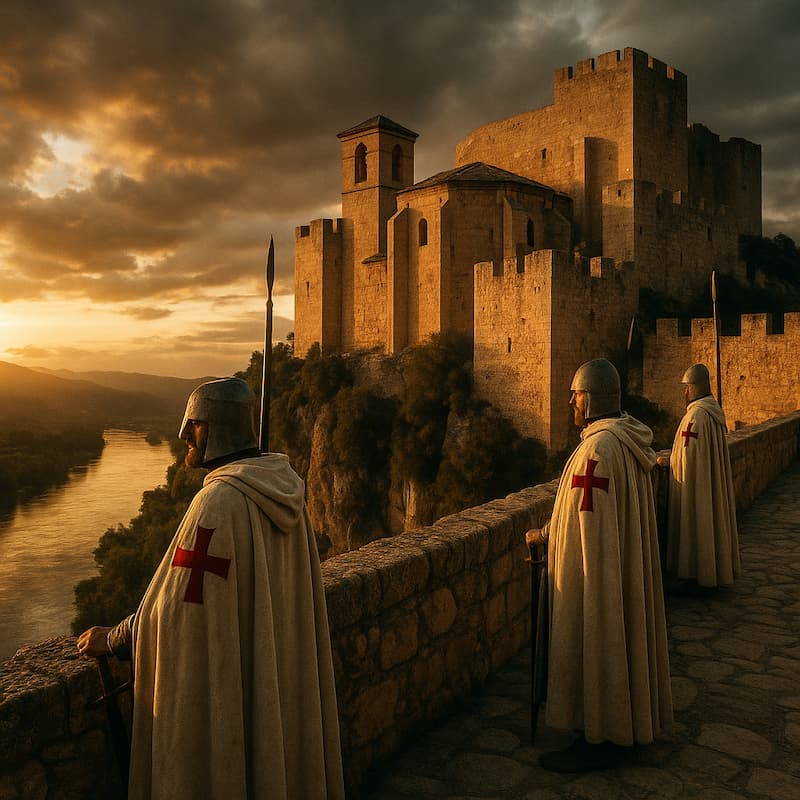
In the Crown of Aragon, the Knights Templar were not just soldier-monks, but lords of the march. At Miravet, given to the brothers after 1153 and rebuilt in the style of the Holy Land, they organized a...
Take a journey through time and space, from the shores of the Mediterranean to the far reaches of the Atlantic, to meet the brothers of the Temple in the heart of the Middle Ages. This section takes you from commandery to commandery...
Presenting a katana horizontally follows a centuries-old code. The upward edge protects the blade, as it doesn't rest on the inside of the saya, and when exiting, it slides over the mune rather...
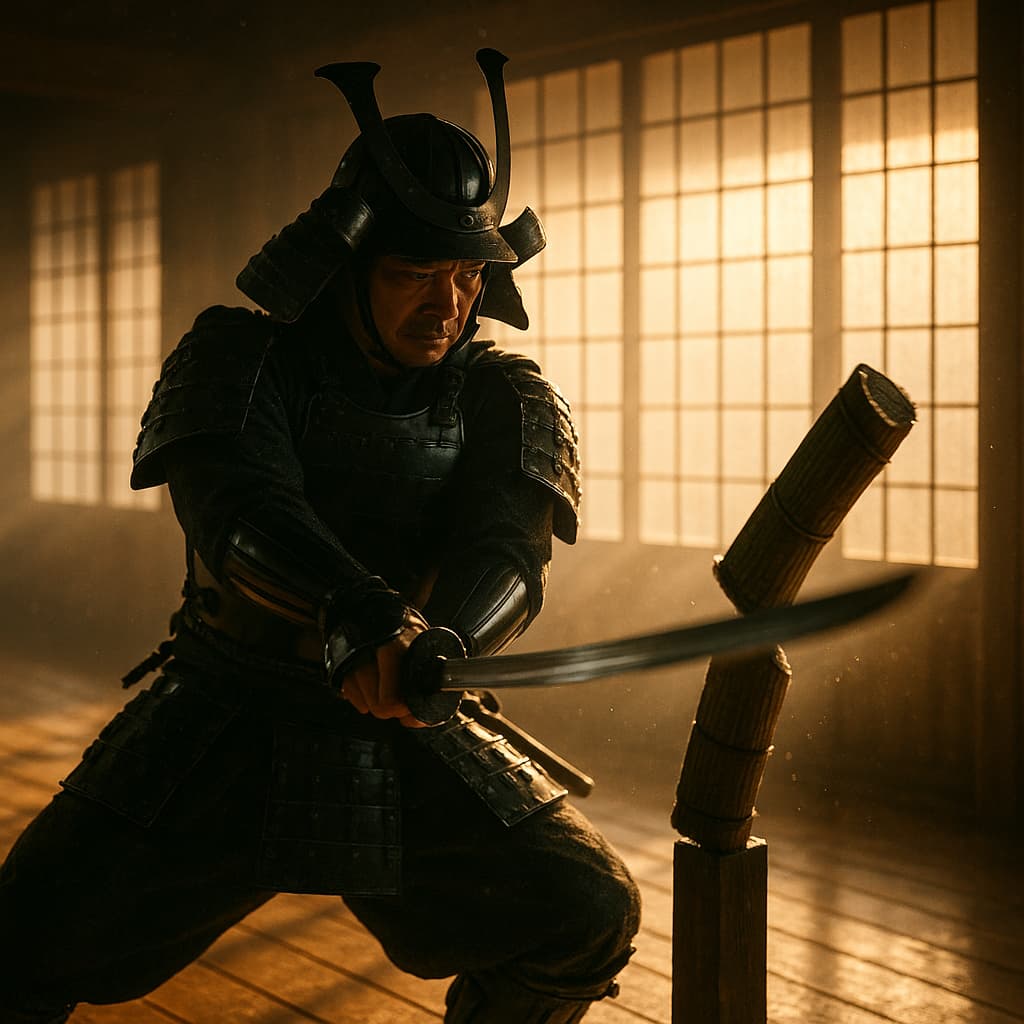
In the art of cutting, the real "force" is not muscular, but geometrical. The hasuji , the alignment of the wire with the trajectory, decides whether the blade splits or tears. A slight slice component lengthens the...
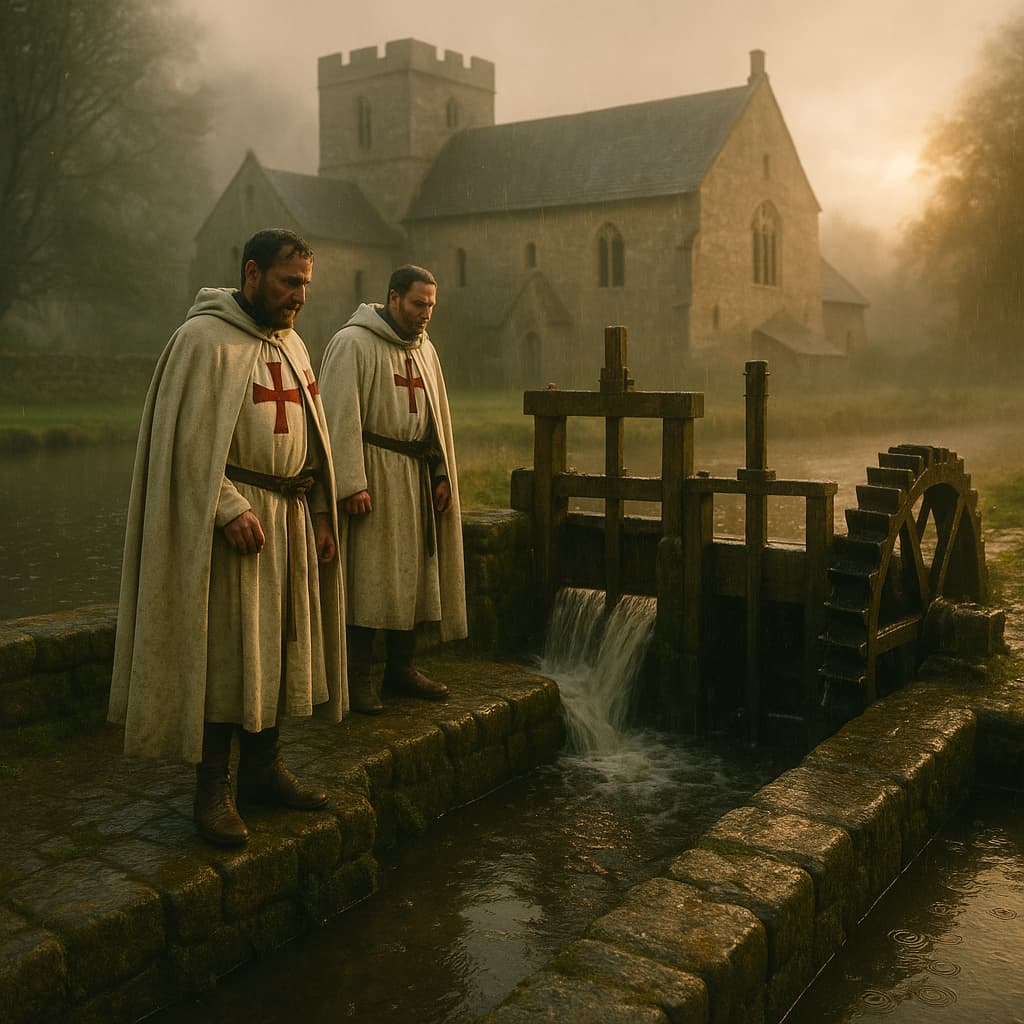
In the XIIIᵉ century, some Temple houses were more than just chapels and barns. At South Witham, archaeologists have uncovered a complete water mill, complete with holding pond, nearly 45 m dike, reach,...
Less than a shaku (≈ 30 cm), the tantō appeared as early as Heian, then was perfected in Kamakura. A close-up dagger, it is worn high and drawn quickly. One of its most elegant mounts, the aiguchi , does away with the guard:...
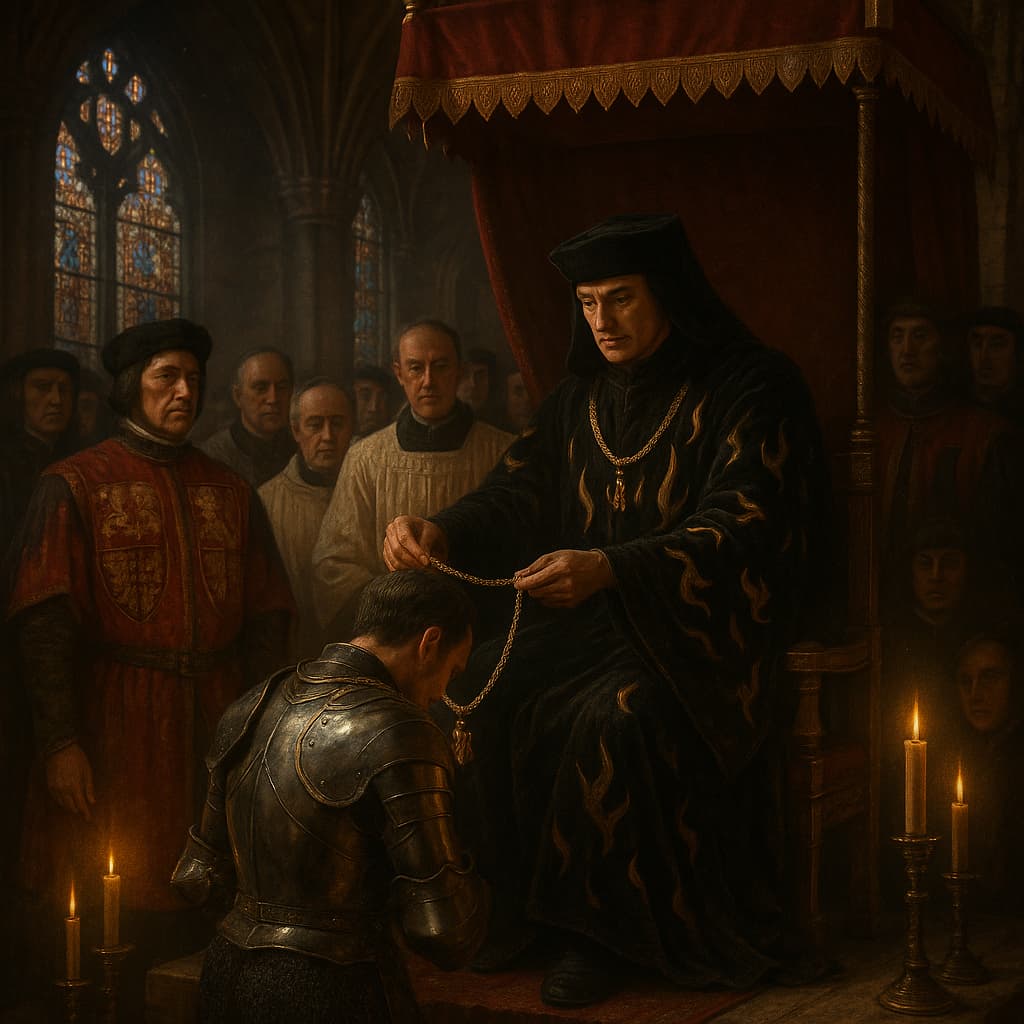
From the XIIIᵉ to the XVIᵉ century, the chivalric ideal served as a bridge between warrior ethics and courtly civility. Geoffroi de Charny's Livre de chevalerie codified honor, prowess and loyalty, while orders...
Ikigai is not a coaching gimmick, but a "sense that makes you live" described in the XXᵉ century by Mieko Kamiya. Among the samurai, this sense espoused the Way, dō: serving one's lord, refining one's art, living soberly....
Written in the early XVIIIᵉ century, the Hagakure is not an ancient code carved in marble; it's a collection of talks dictated by Yamamoto Tsunetomo and recorded by Tashiro Tsuramoto between 1709 and 1716. The famous...
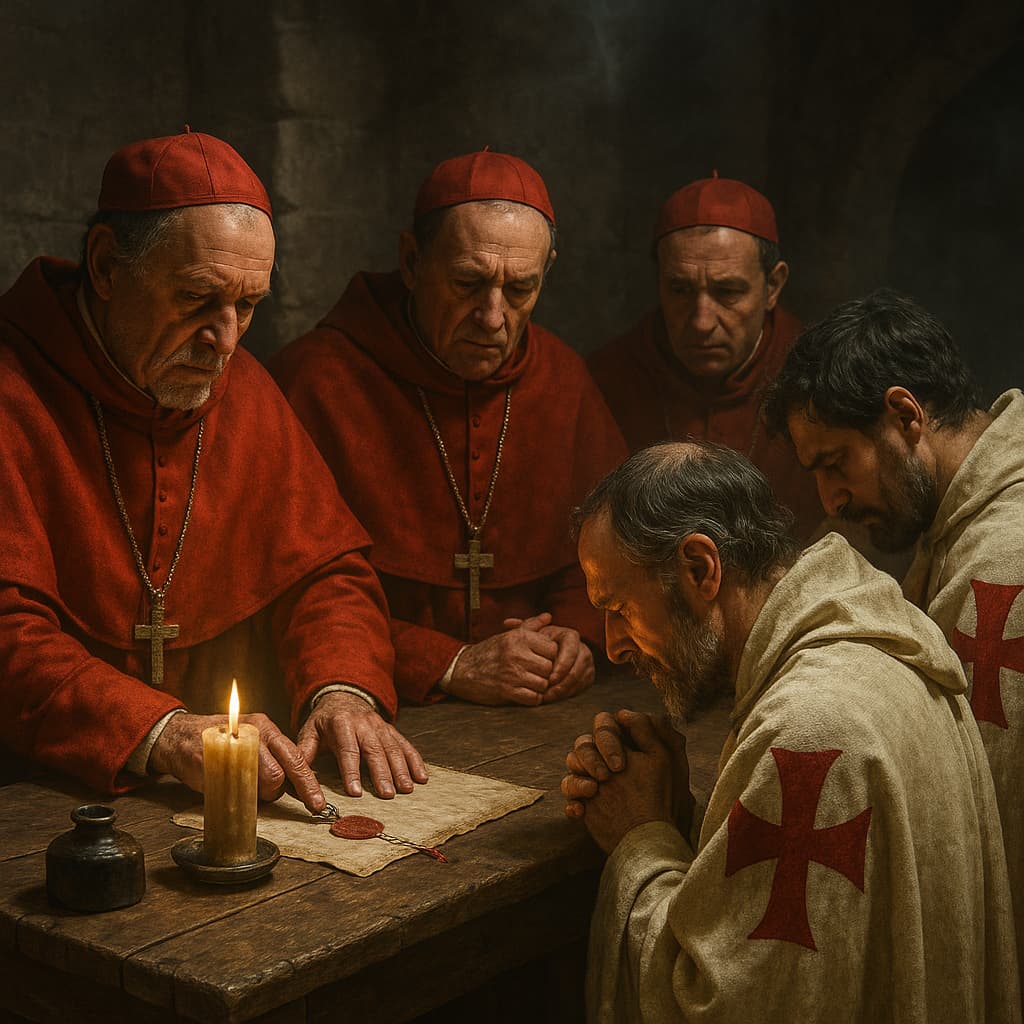
In the XIVᵉ century, an unexpected scene plays out in Chinon. At the behest of Clement V, three cardinals heard Jacques de Molay and the main Templar dignitaries; the "Chinon parchment", rediscovered in 2001,...
What we call bushidō today is, for the most part, a construction of the late XIXᵉ century. Historian Oleg Benesch has shown that the term and the idea were systematized in the Meiji era, then spread to...
At the beginning of the XIIᵉ century, the "Poor Knights of Christ" were only a handful for a long time. Guillaume de Tyr notes that "after nine years, they were still only nine". Housed by the king in the al-Aqsa mosque, taken...
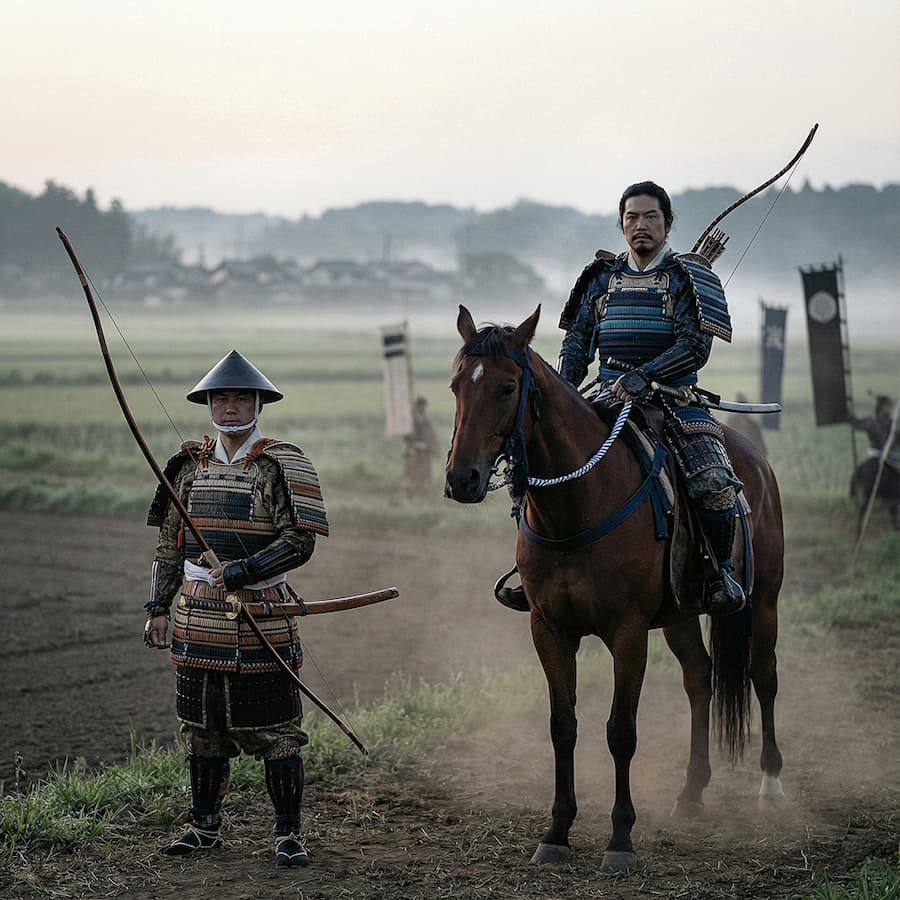
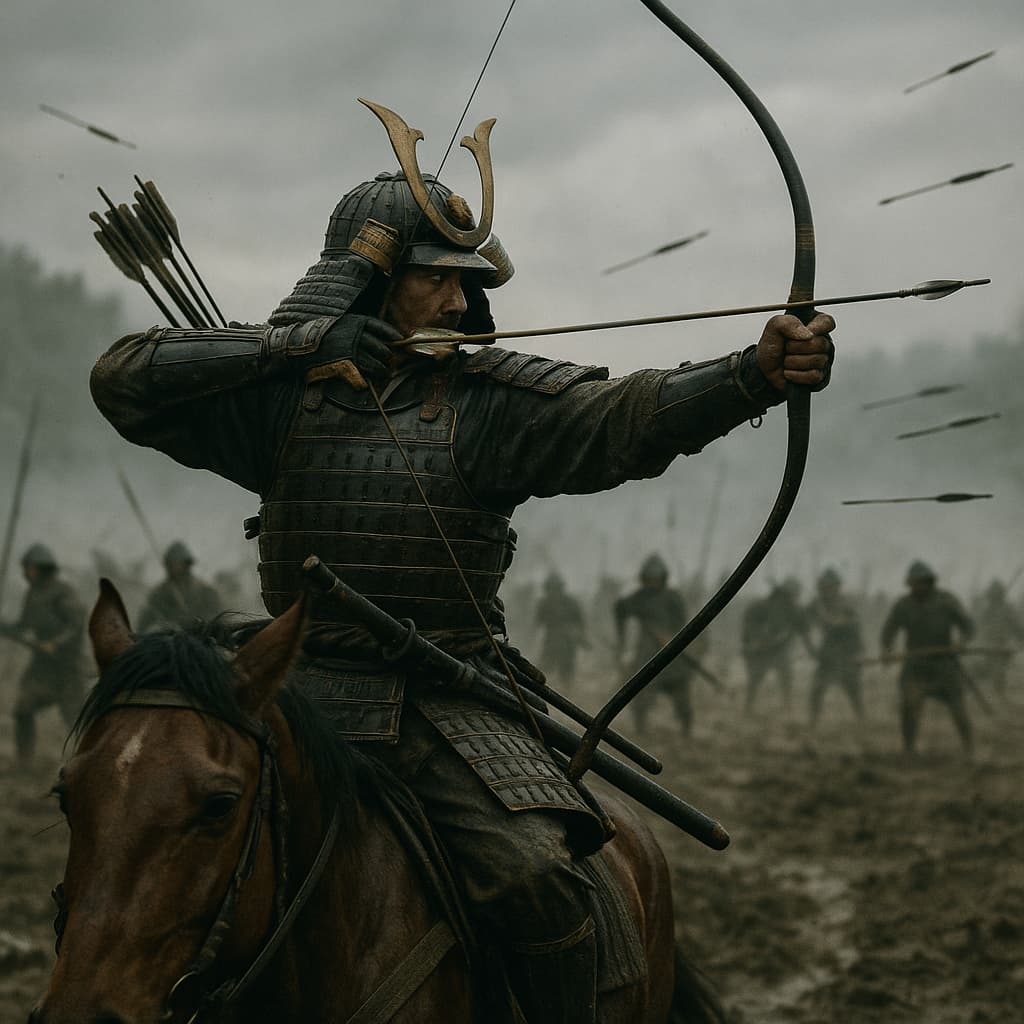
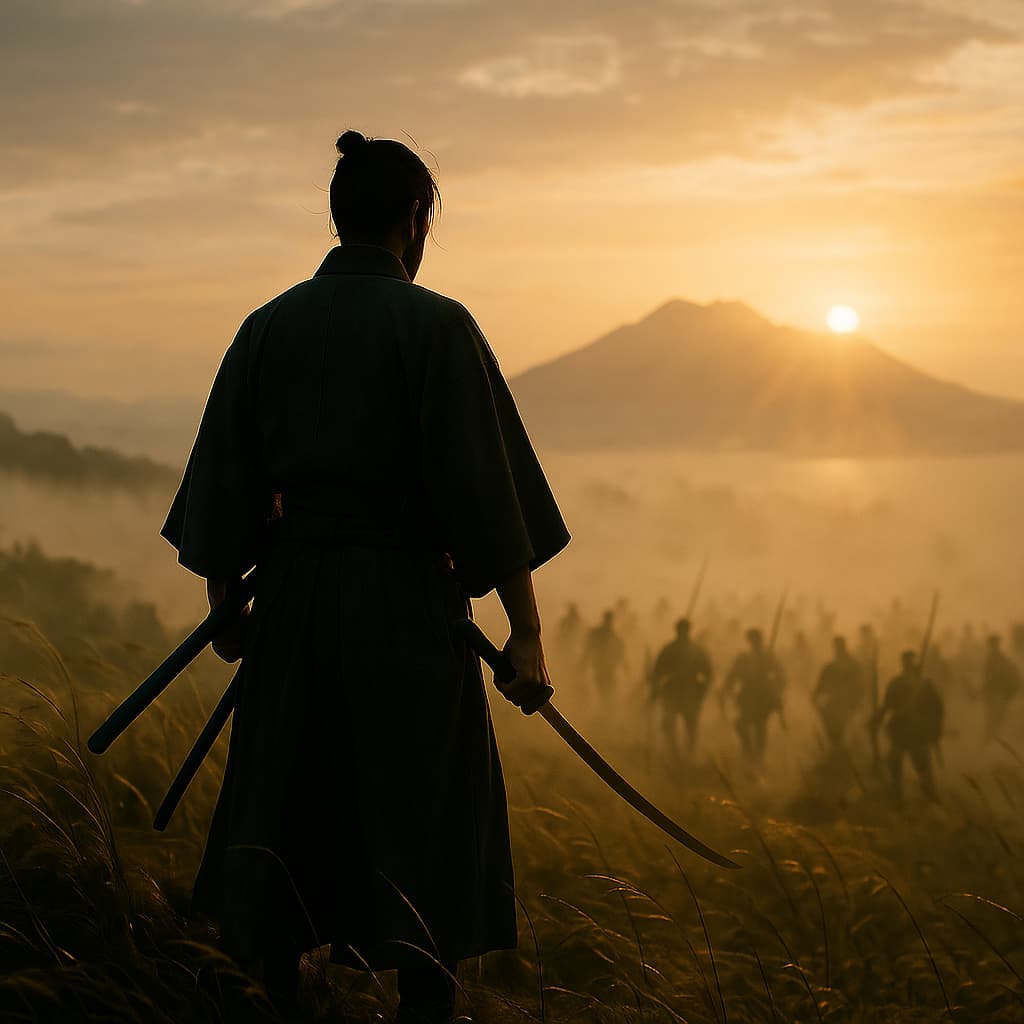
Contrary to the image of the katana duel, wars in medieval Japan were first and foremost matters of projectiles. Serial analysis of battle reports ( kassen chūmon ) and reward petitions (...
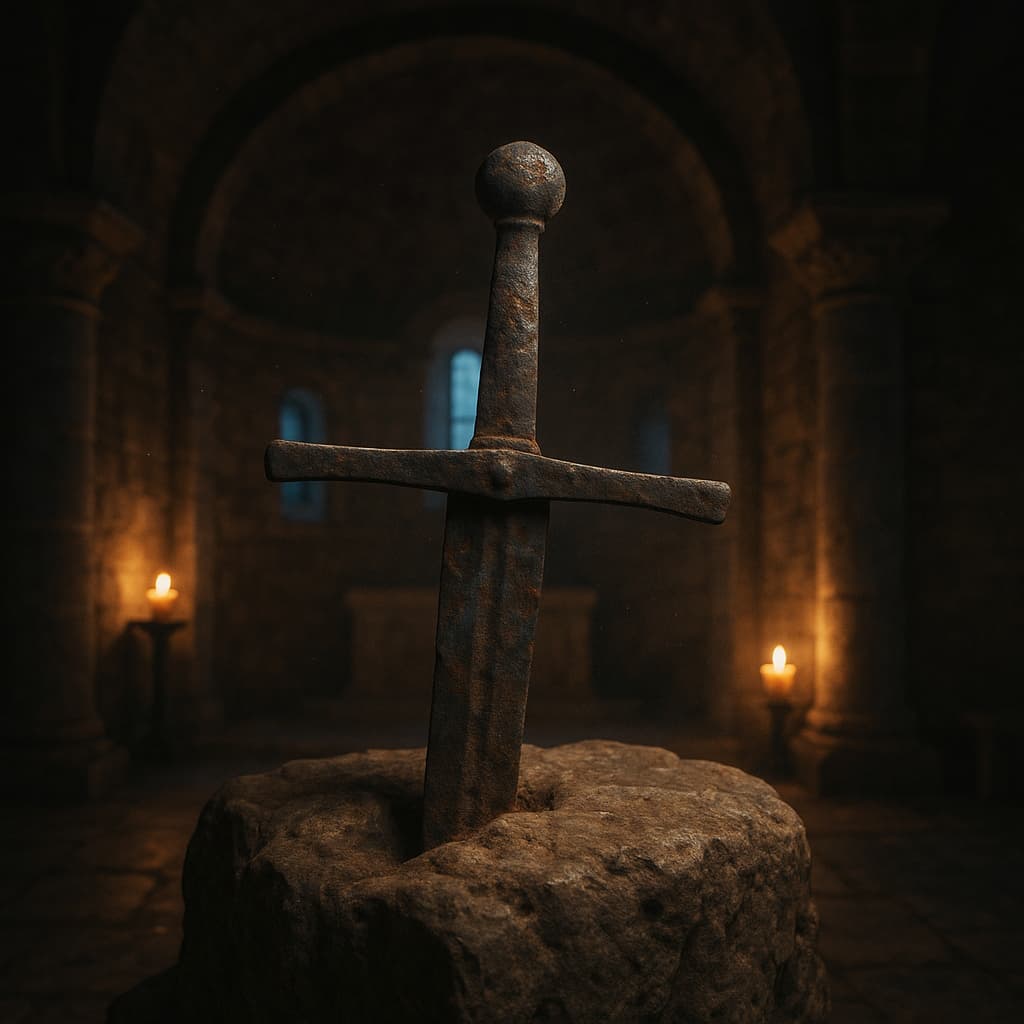
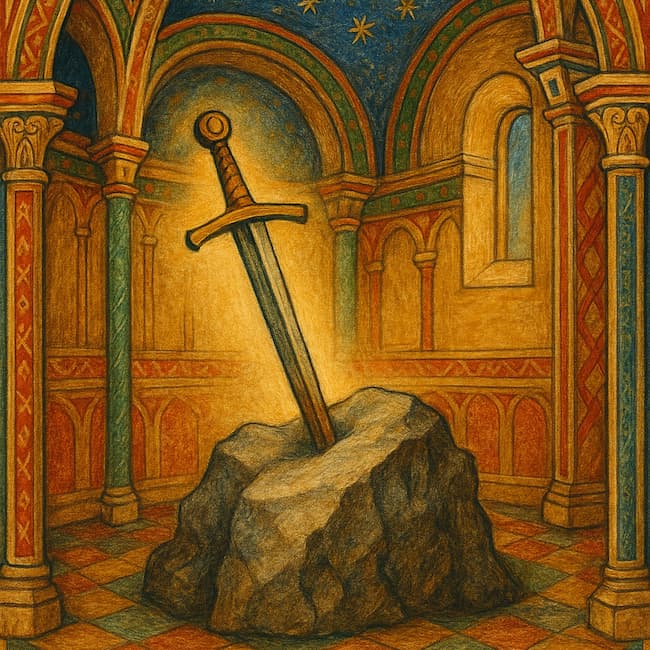
Did you know that the most famous sword in the stone could have a very real cousin in Tuscany? At the Montesiepi hermitage, San Galgano's "spada nella roccia" is a genuine medieval sword, studied in...
Long before the katana, Japan adopted Chinese-inspired straight chokutō blades, as evidenced in the imperial deposits of Shōsōin in the 6th-8th centuries. During the Heian period, warfare on horseback favored the tachi...
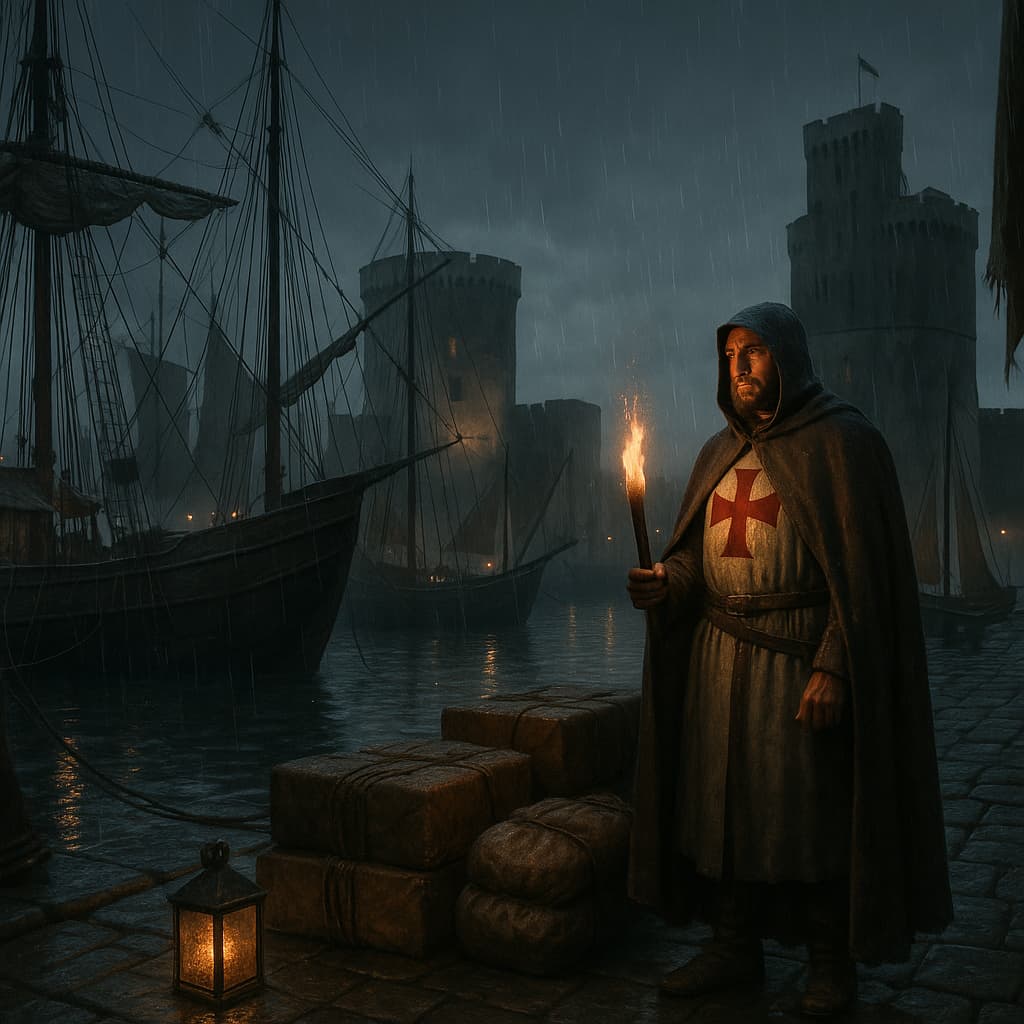
In 1307, the arrest ordered by Philippe le Bel quickly fed the idea that a Templar fleet had disappeared from La Rochelle. However, the historical investigation revealed only an isolated testimony evoking ships, with no accounting trace...
When the hamon revealed a sleeping dragon
In certain ancient schools of Japanese blacksmithing, it was said that the hamon was not only the result of controlled tempering... but the visible trace of a spirit...
Far from a "regulation of war", the Rule of the Temple was born in the XIIᵉ century as a monastic rule: 72 so-called "primitive" Latin articles, then numerous withdrawals in Old French detailing silence, prayers,...
💡 Did you know? When neutrons unlock the secret of katanas In the XXIᵉ century, katanas are still delivering secrets thanks... to neutrons. At J-PARC, the RADEN instrument performs Bragg-edge imaging resolved in...
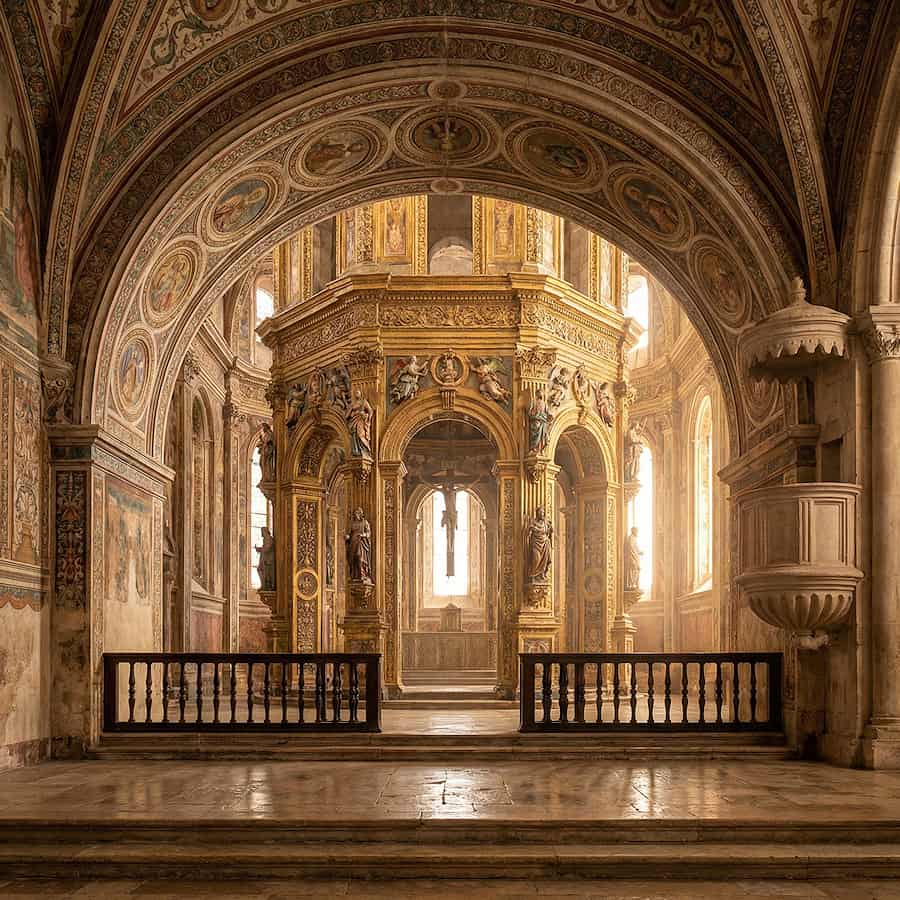
From Friday September 19 to Sunday September 21, 2025, the 42ᵉ European Heritage Days invite you to (re)discover architectural heritage. Thousands of sites will be opening their doors all over France, often...
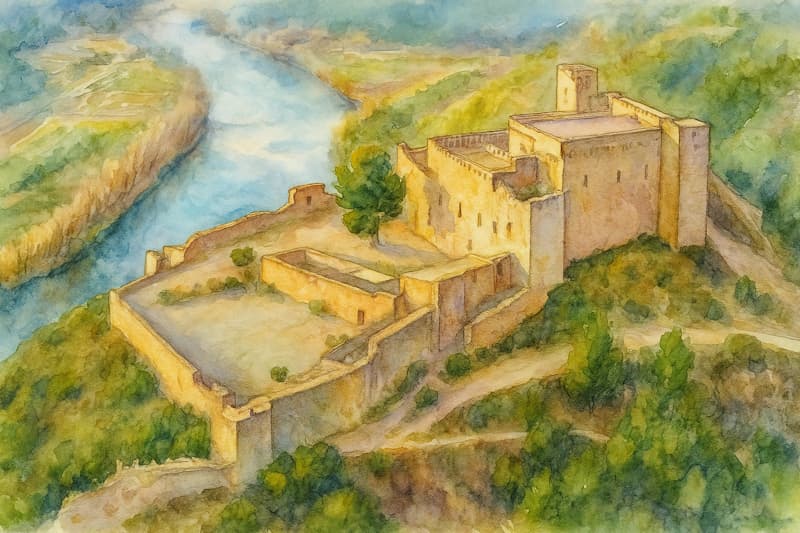
Perched high above a meander in the Ebro river, Miravet castle (Tarragona province) embodies a major episode in Templar history: between 1307 and 1308, 63 brothers resisted the king's troops for fourteen months...
In 1312, the Council of Vienna suppressed the Temple with the bull Vox in excelso; a few weeks later, Ad providam entrusted its property to the Hospital... except in Castile, Aragon, Portugal and Majorca, reserved for a...
In the archipelago, many tachi from the XIIIᵉ-XIVᵉ centuries were given a "second life" as katana . In the Edo period, belt-wearing, upward-edged weapons and closer combat favored...
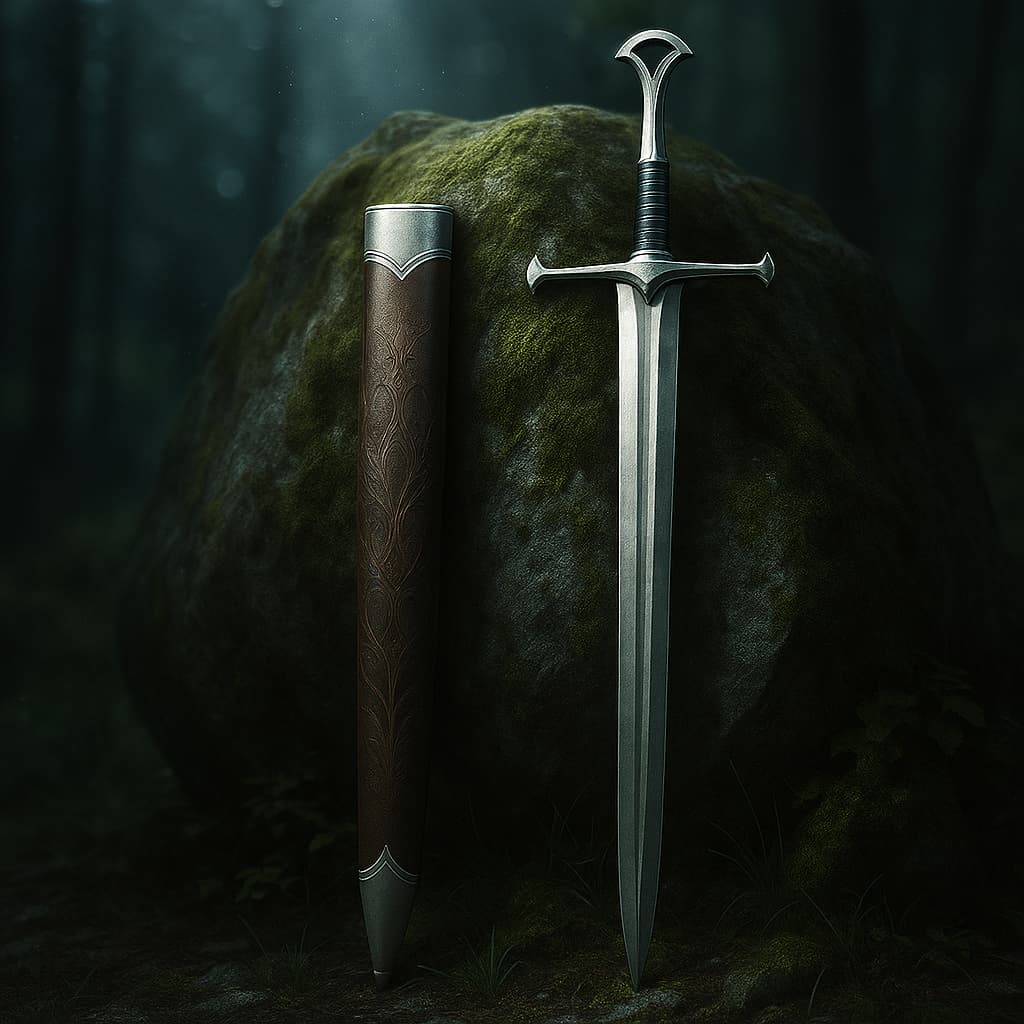
In the forest of Lothlórien, Galadriel offers Aragorn more than just a prophetic word... She gives him an elven scabbard fashioned for Andúril. Its virtue is clear in the story, the blade that rests in it does not tarnish,...
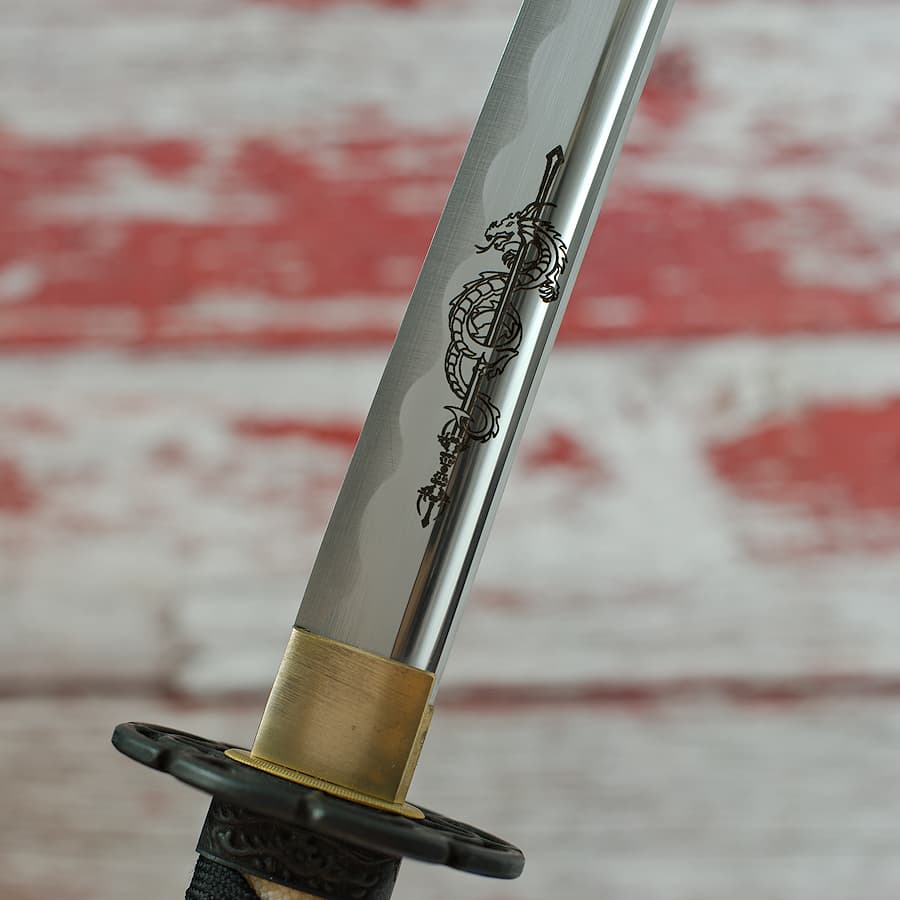
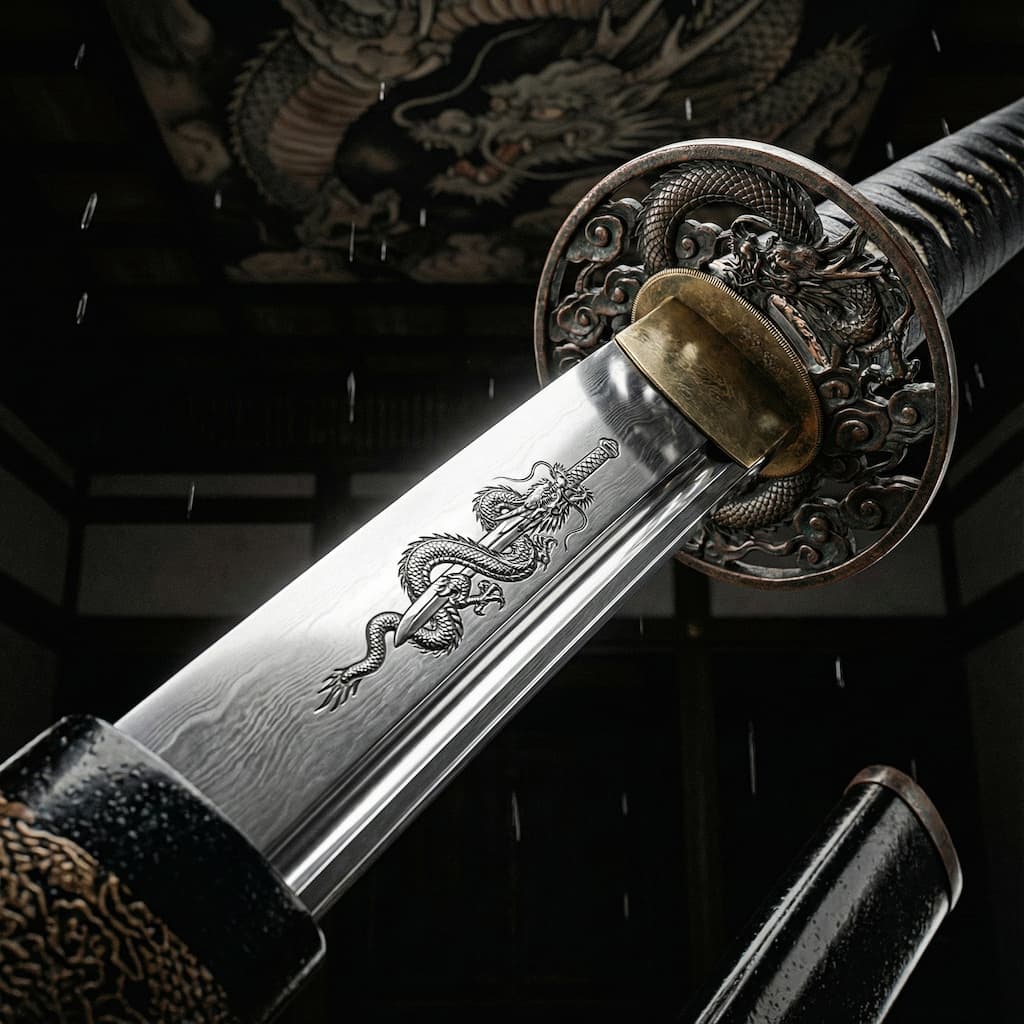
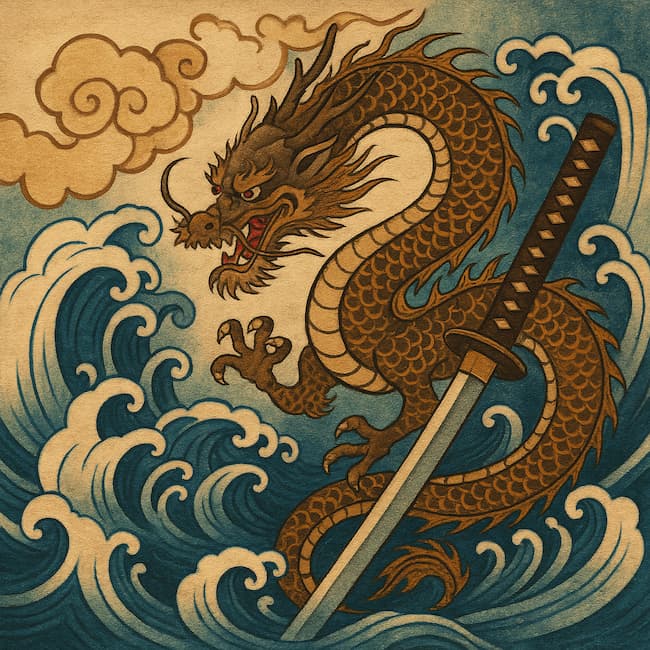
In medieval Japan, the dragon wasn't just a mythical creature; it symbolized rain, protection and authority. Master silversmiths of the Gotō school, active in the XVIᵉ, chiseled ornate sword mounts...
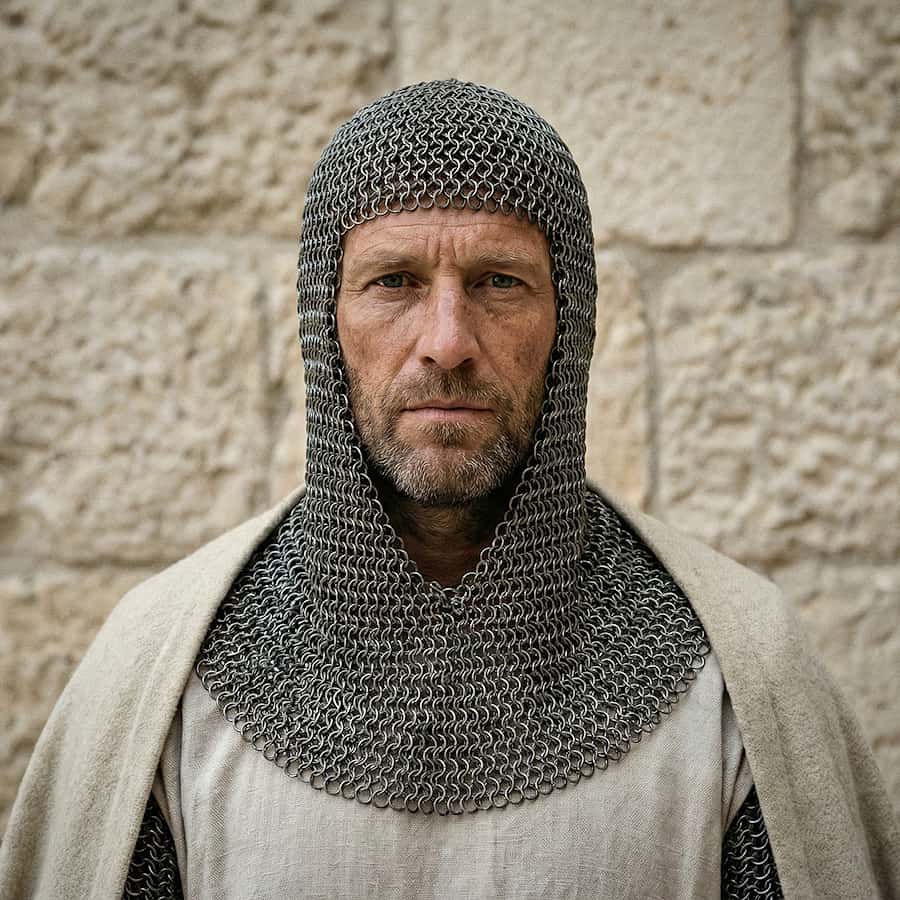
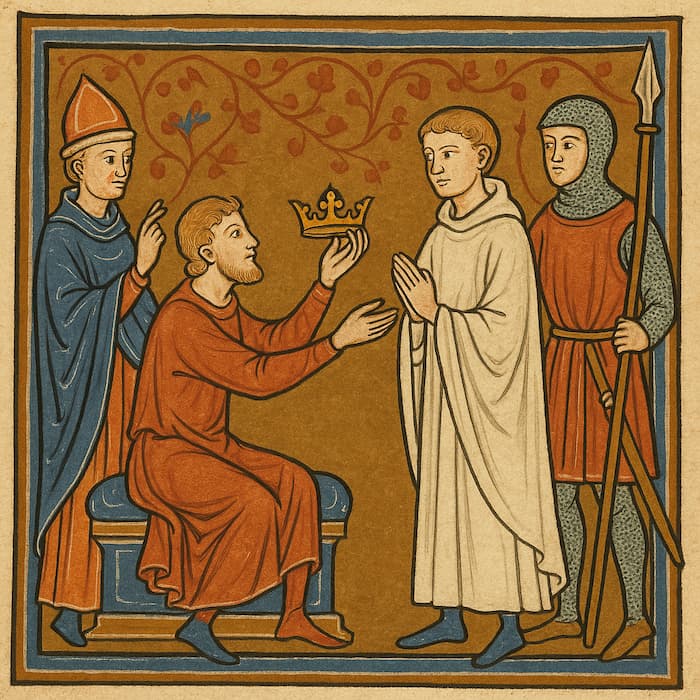
Contrary to chivalric clichés, the primitive Rule of the Temple describes a regulated life closer to the cloister than to the court. Clothes of a single color, a white coat for the brother knights; clothes without...
In feudal Japan, the famous curvature of the katana did not come from the anvil... it was born in water. Before tempering, the blacksmith coats the blade with a clay that is thicker on the back and thinner along the future edge. During the...
In January 1129, the Council of Troyes established the primitive Rule of the Temple, a Latin text appended to the minutes which organized the common life, vows and discipline of a brotherhood of repentant knights, more monastic than...
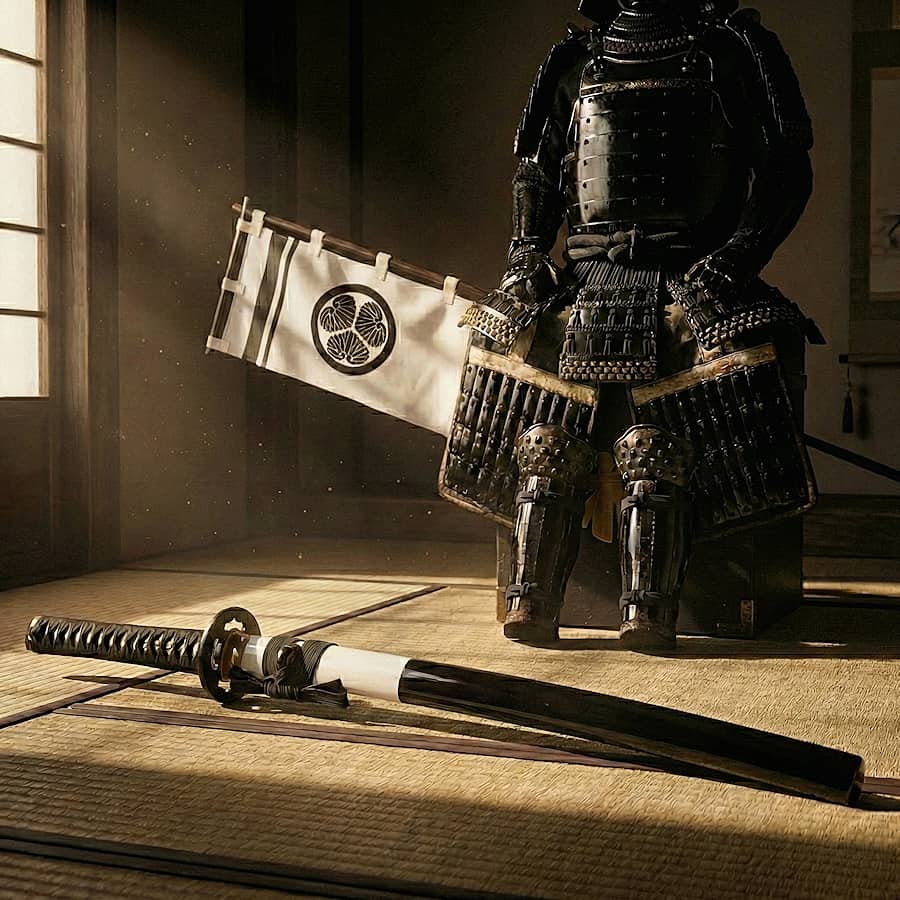
Before radio, identity and orders were conveyed through highly coded wartime signage. The family mon was displayed on armor and banners; dorsal sashimono identified companies and platoons; huge...
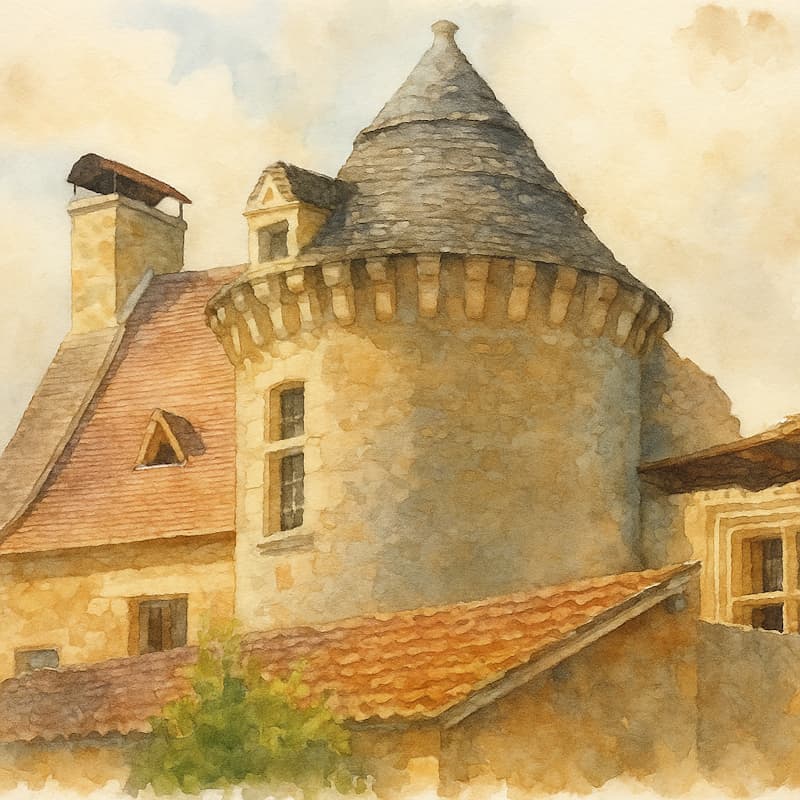
Château de Cramirat, located in Sergeac in the Dordogne, is a former Templar commandery founded in the XIIᵉ century. Selected by Mission Patrimoine 2025 (Loto du Patrimoine), it is one of 102 prize-winning sites in...
In 1312, at the Council of Vienna, the bull Vox in excelso suppressed the Order of the Temple. But in Portugal, King Dinis pleaded for continuity; in 1319, in Avignon, Pope John XXII erected the Order of Christ with the bull Ad ea ex quibus...
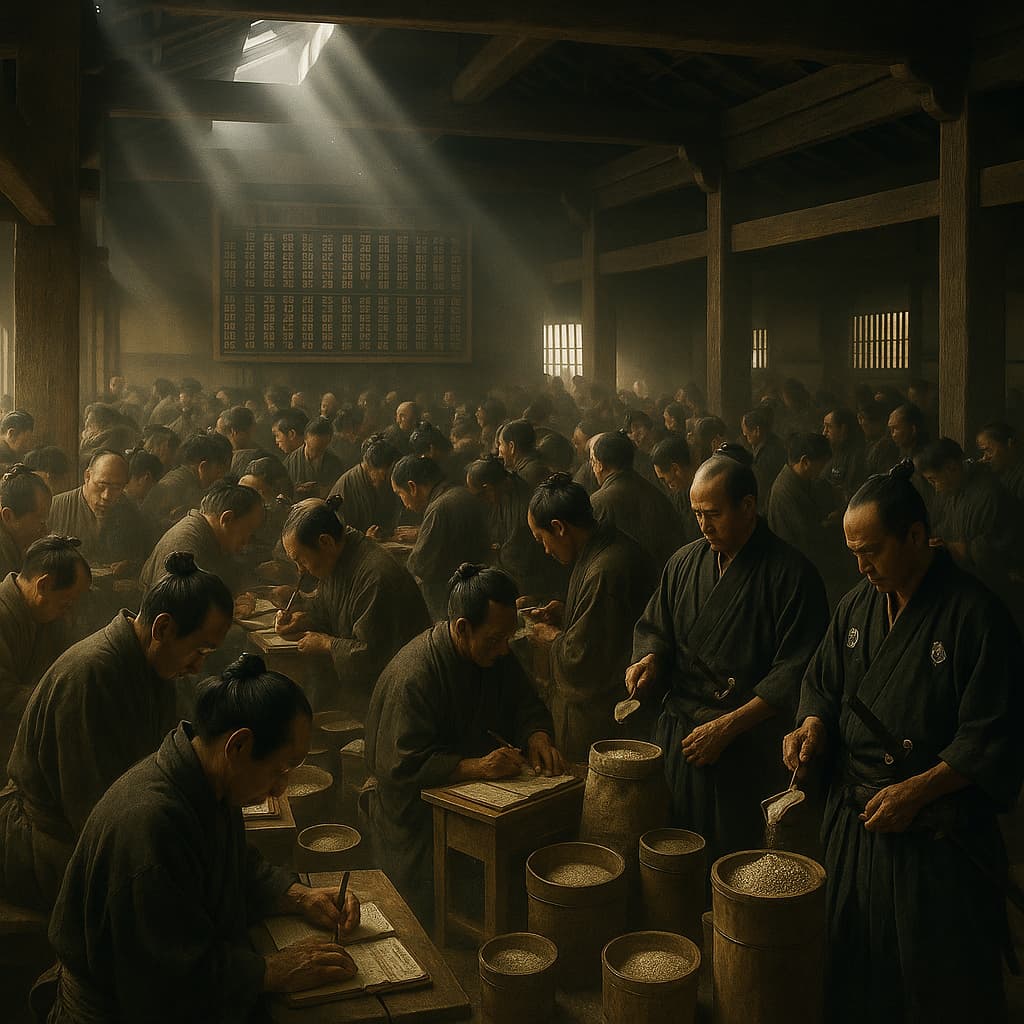
Paid in koku, the samurai of the XVIIIᵉ century lived on a rice salary that had to be "monetized" to pay rents, debts and purchases. Hence the need to visit the brokers of Osaka, where Dōjima Square...
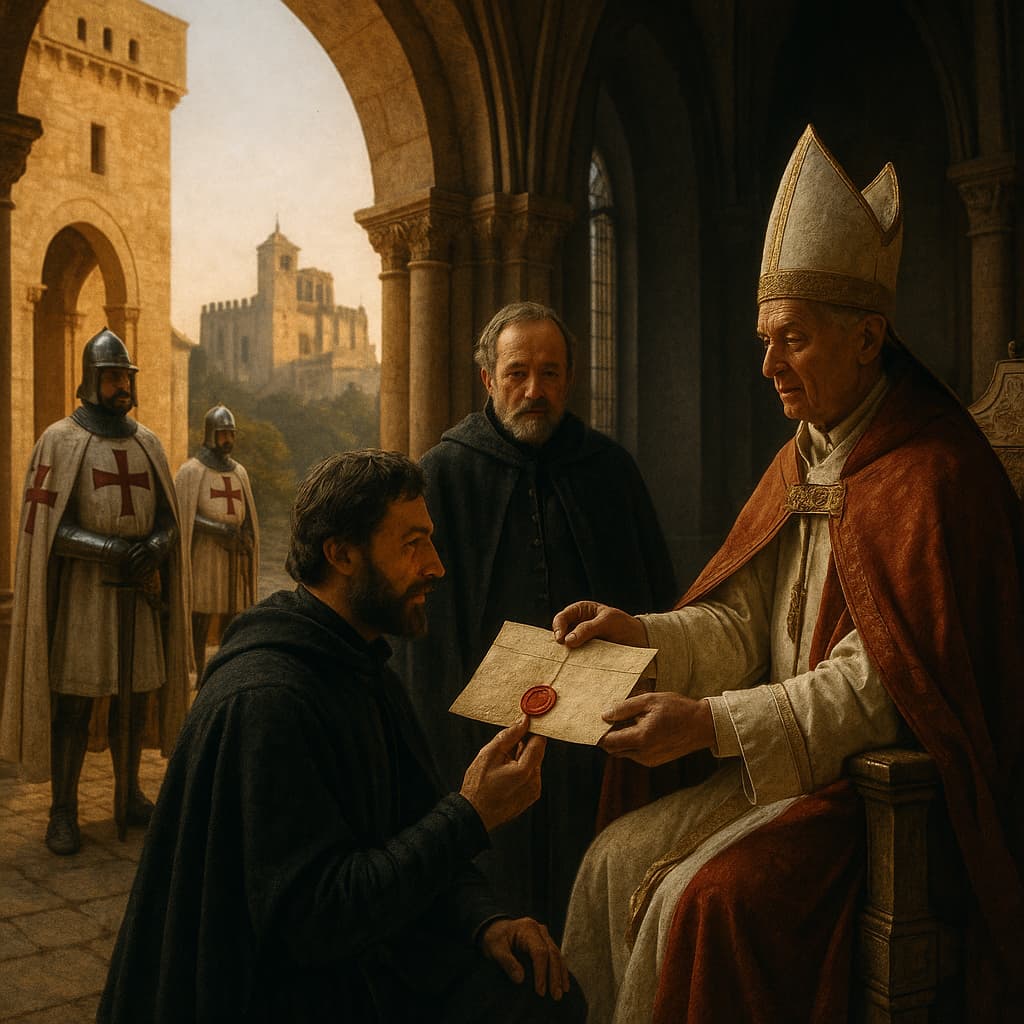
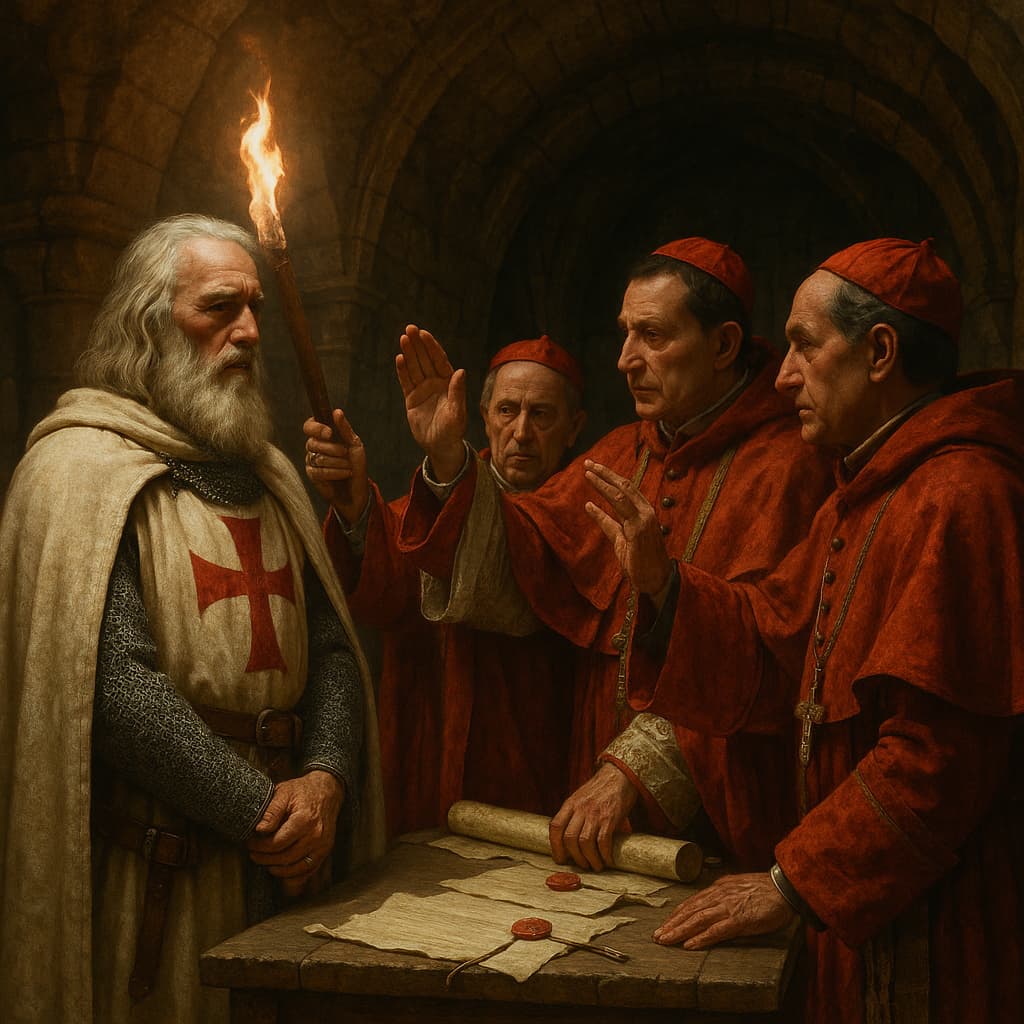
August 1308, Chinon. Mandated by Pope Clement V, cardinals Bérenger Frédol, Étienne de Suisy and Landolfo Brancaccio question Jacques de Molay and the main Templar dignitaries. At the end of the hearings, they...
Contrary to popular belief, the samurai katana is not a thousand-year-old weapon in its current form. Before its famous curvature, Japanese warriors used straight blades called chokutō ,...
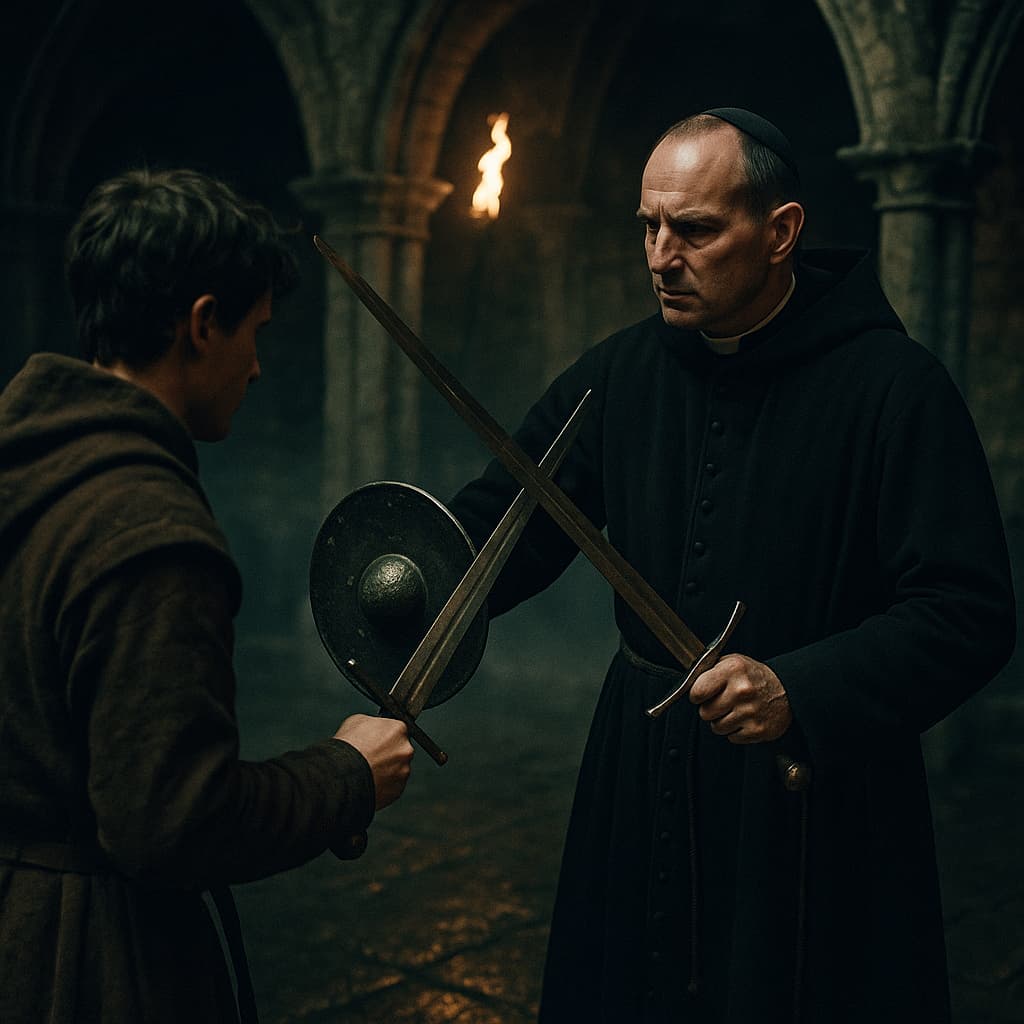
Dating from the early XIVᵉ century, manuscript I.33 is the oldest surviving European fechtbuch. It shows a priest teaching a pupil the art of the sword and the bocle in a highly structured progression: seven "guards"...
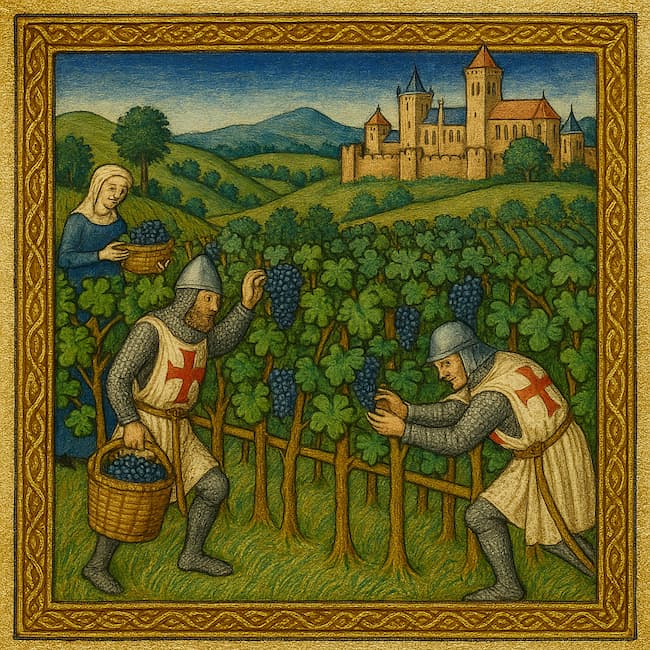
Contrary to the myth of the "treasure", the Templars' strength lay in their network of farms, vineyards, mills, sheepfolds and stables run by brothers and employees. The commanderies collected...
The de facto capital of the kingdom after 1191, Acre was home to ports, markets and the houses of the orders. The vast hospital quarter, which has been excavated and can now be visited, welcomed the sick and pilgrims; the Order employed...
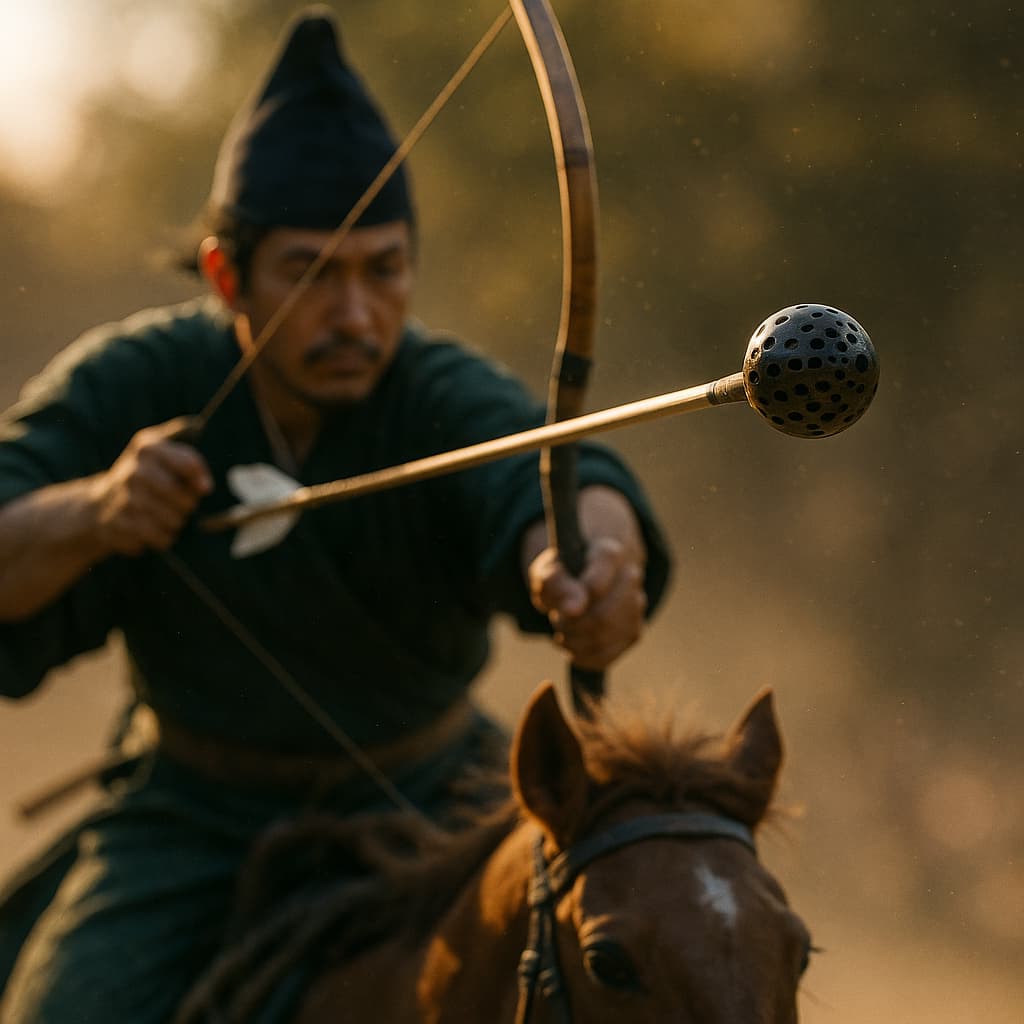
Beyond the image of the sword duel, many battles opened with the bow. The kabura-ya (lit. "shuttle-arrow") bears an openwork bulb at the head which, in flight, emits a piercing whistle. This sound heralded engagement,...
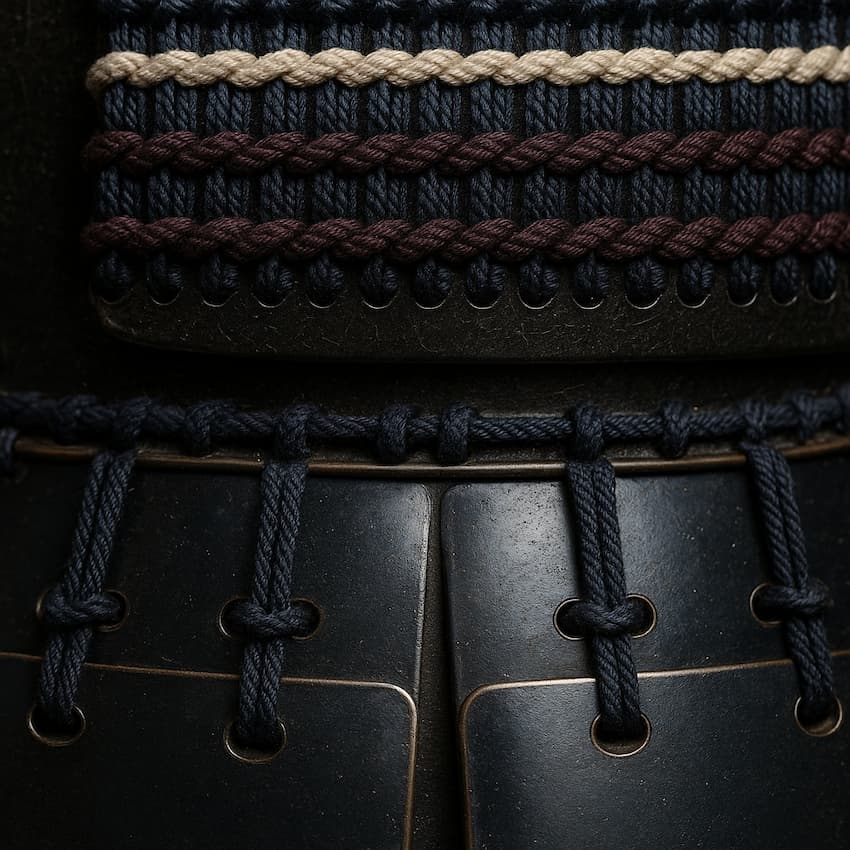
Beneath the shiny lacquer, the armor speaks through its laces. Kebiki-odoshi (tight lacing) denotes expensive workmanship, typical of small-slat armor ( kozane ) and prestige equipment; sugake-odoshi...
A major figure of the Meiji Restoration, Saigō Takamori (1828-1877) paradoxically became the symbol of a fading world. In 1876, the Haitōrei decree banned the wearing of swords in public, the final step in the...
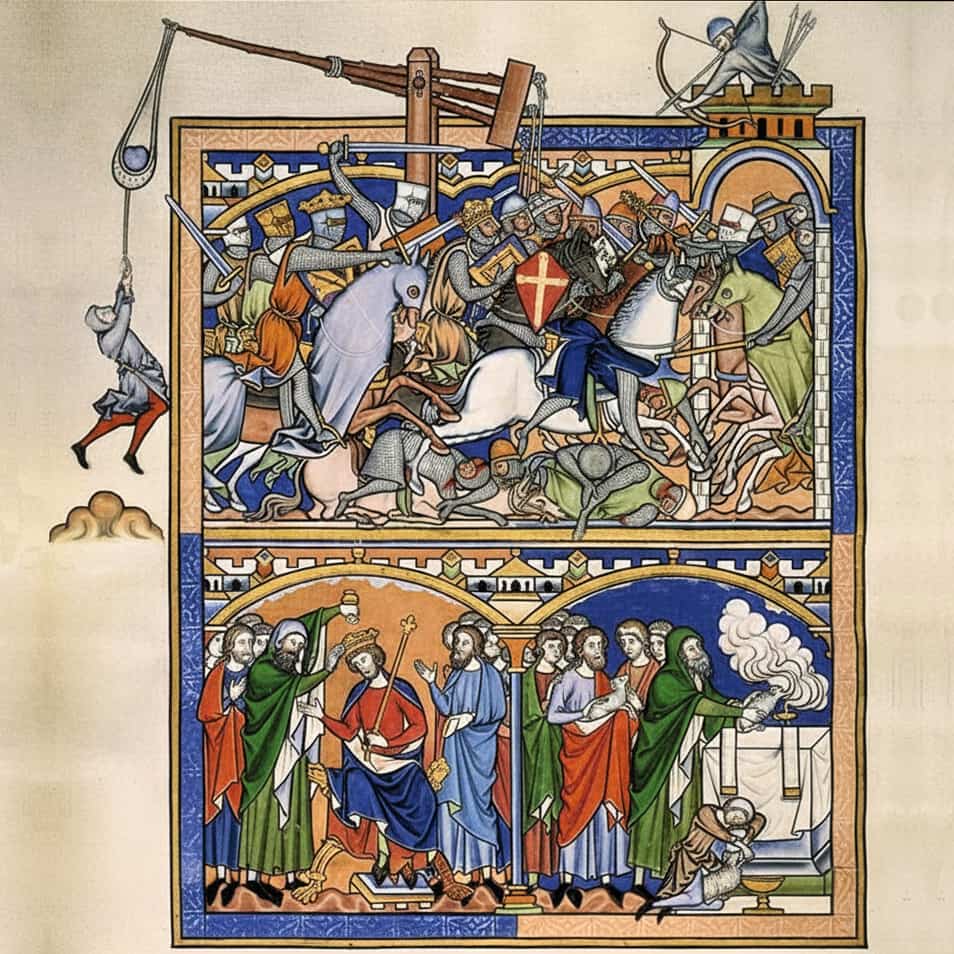
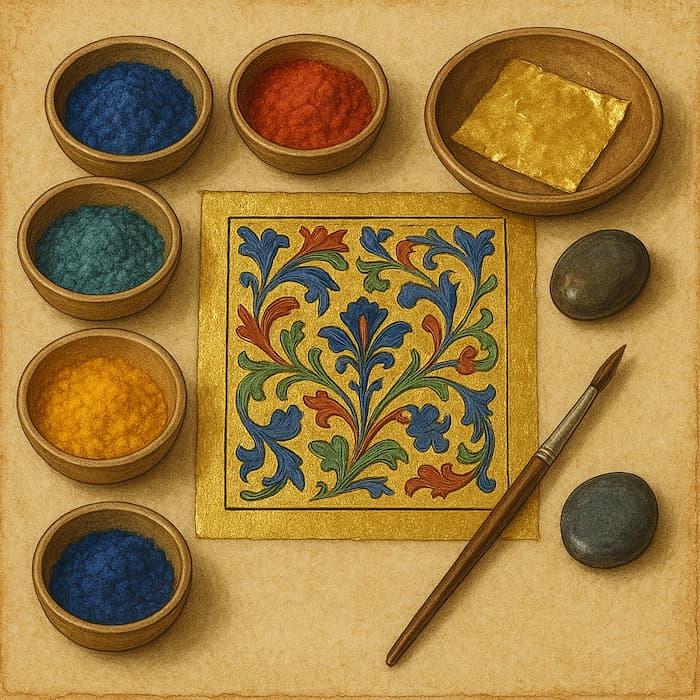
No, the Middle Ages were not gray. Workshops painted with ultramarine (Asian lapis lazuli), vermilion (cinnabar), minium, azurite, verdigris or orpiment, and highlighted with gold in...
In Edo Japan, you didn't just admire a blade: you tested it. The results, tameshigiri , on straw bales, bamboo, or even the corpses of condemned men, could be inscribed on silk: tameshi-mei...
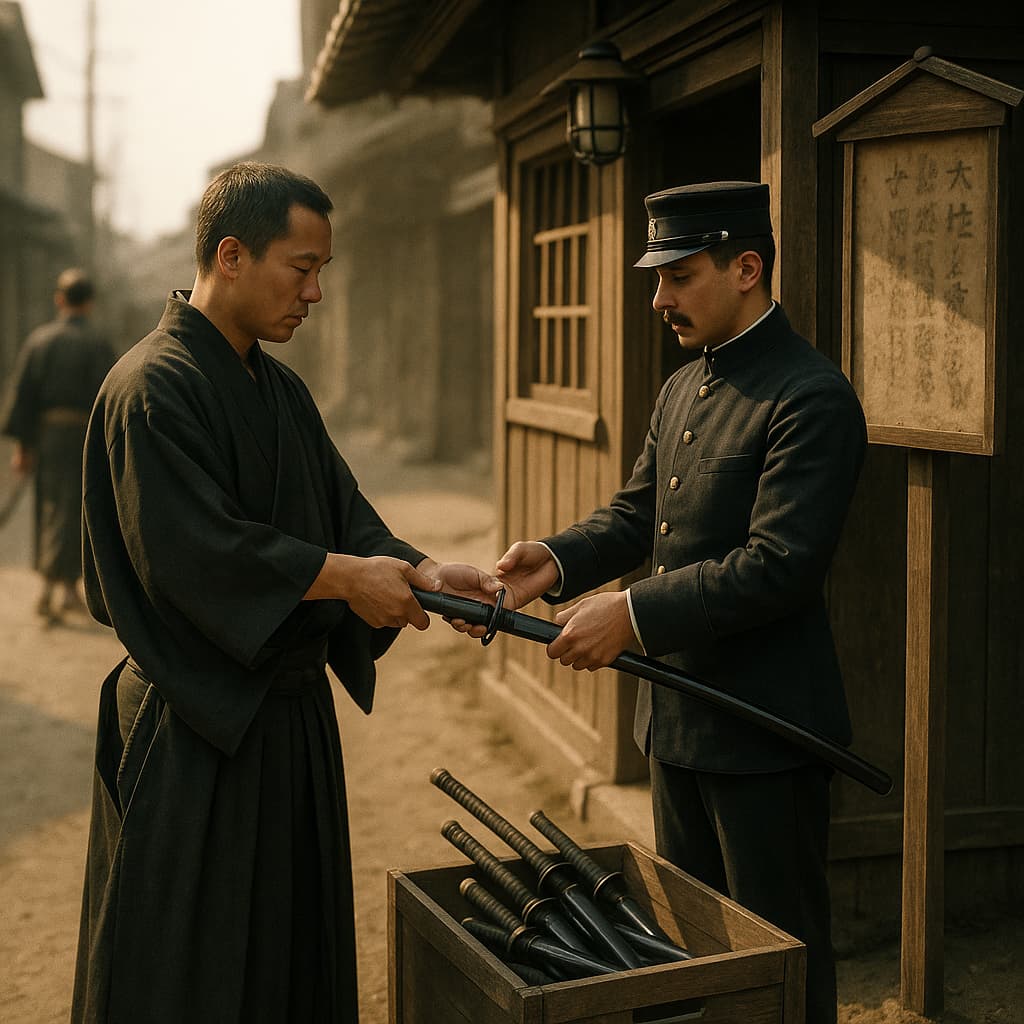
The Haitōrei of March 28, 1876 (Dajōkan, procl. no. 38) prohibits the public carrying of swords, except by the military, police and wearers of large uniforms. Entitled "大礼服並軍人警察官吏等制服着用ノ外帯刀禁止ノ件", the edict was part of the policy of...
In Edo Japan, wearing "two swords" ( daishō ) was not just a habit: it was a statutory right. After 1629 (two swords required on duty), a 1683 regulation reserved the daishō for samurai and...
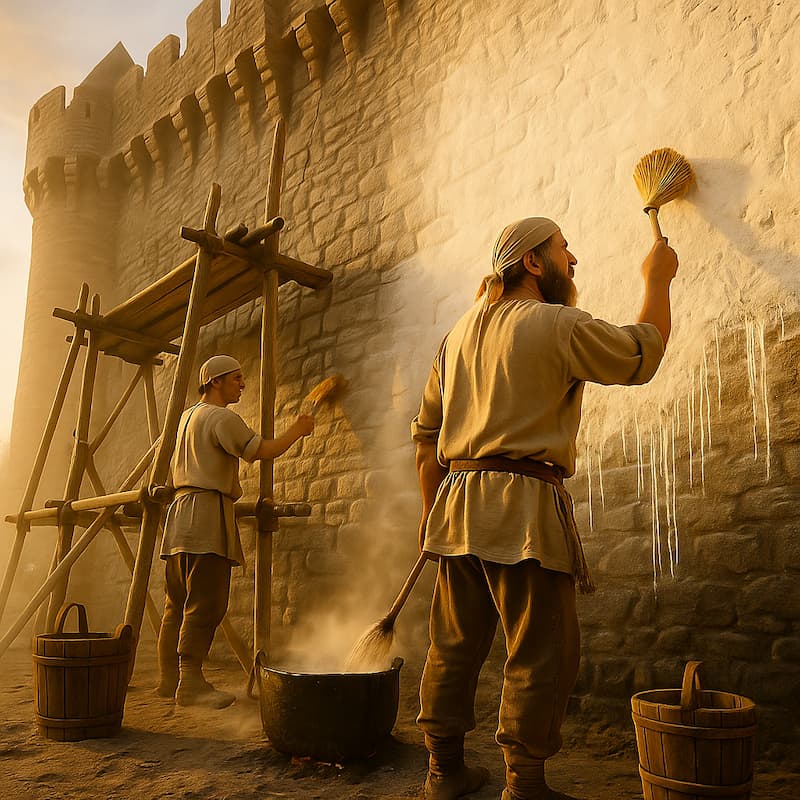
The Middle Ages didn't like grey stone: facades were frequently rendered and whitewashed. Lime, which was breathable, fungicidal and inexpensive, protected the masonry, brightened up the volumes and sometimes served as a coloured background...
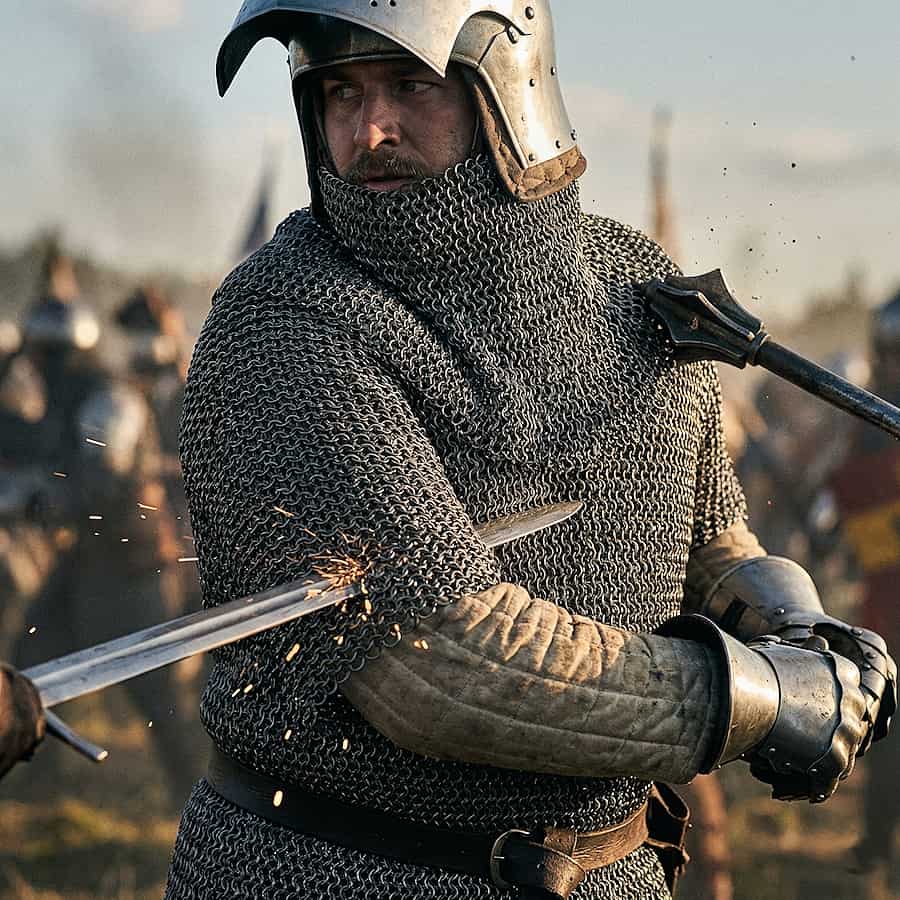
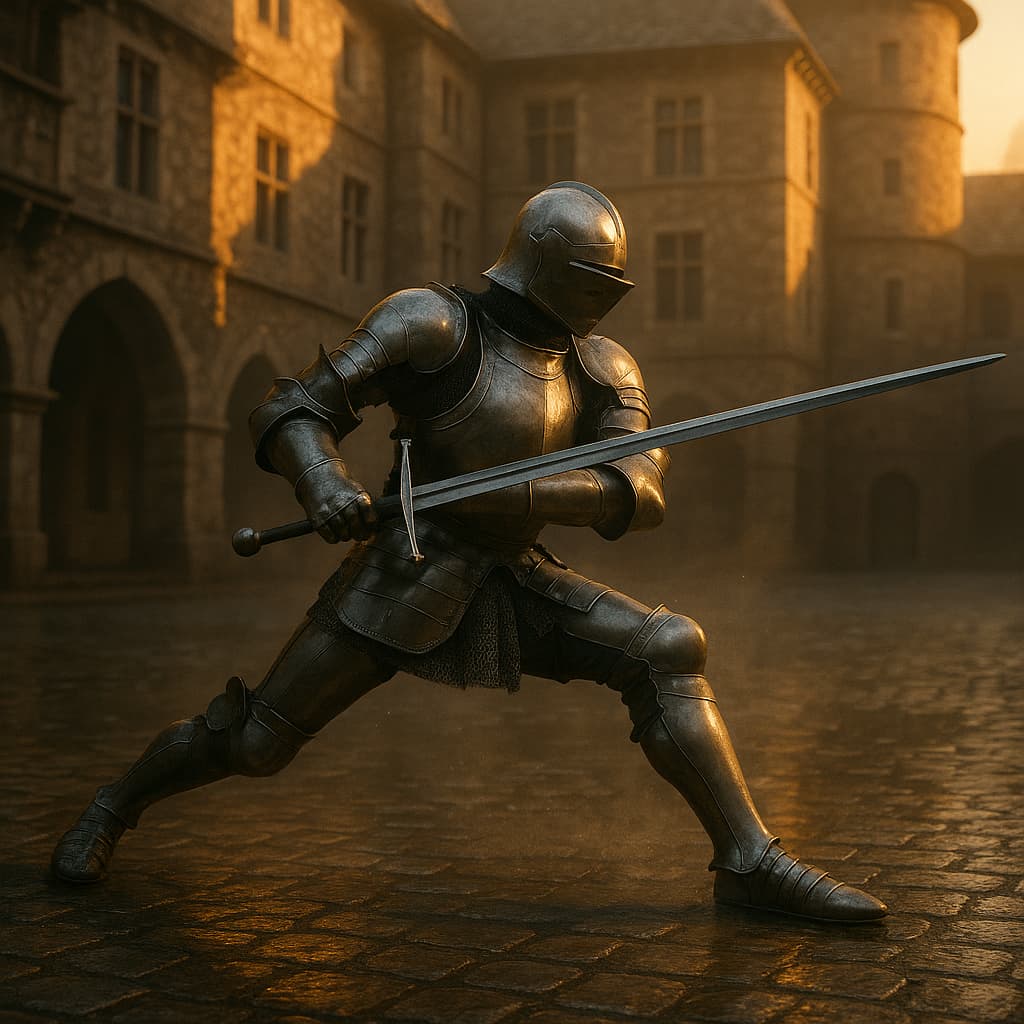
The image of the "knight-canet" is tenacious, but misleading. War armor from the end of the XVᵉ century weighs an average of 20 to 25 kg , the equivalent of a modern sack, evenly distributed over the torso, the...
Before the XVᵉ century, the tachi sword was carried suspended, cutting downwards: a legacy of horseback combat. By the Muromachi period, the uchigatana/katana had become the norm: it was slipped sharp upwards into the obi,...
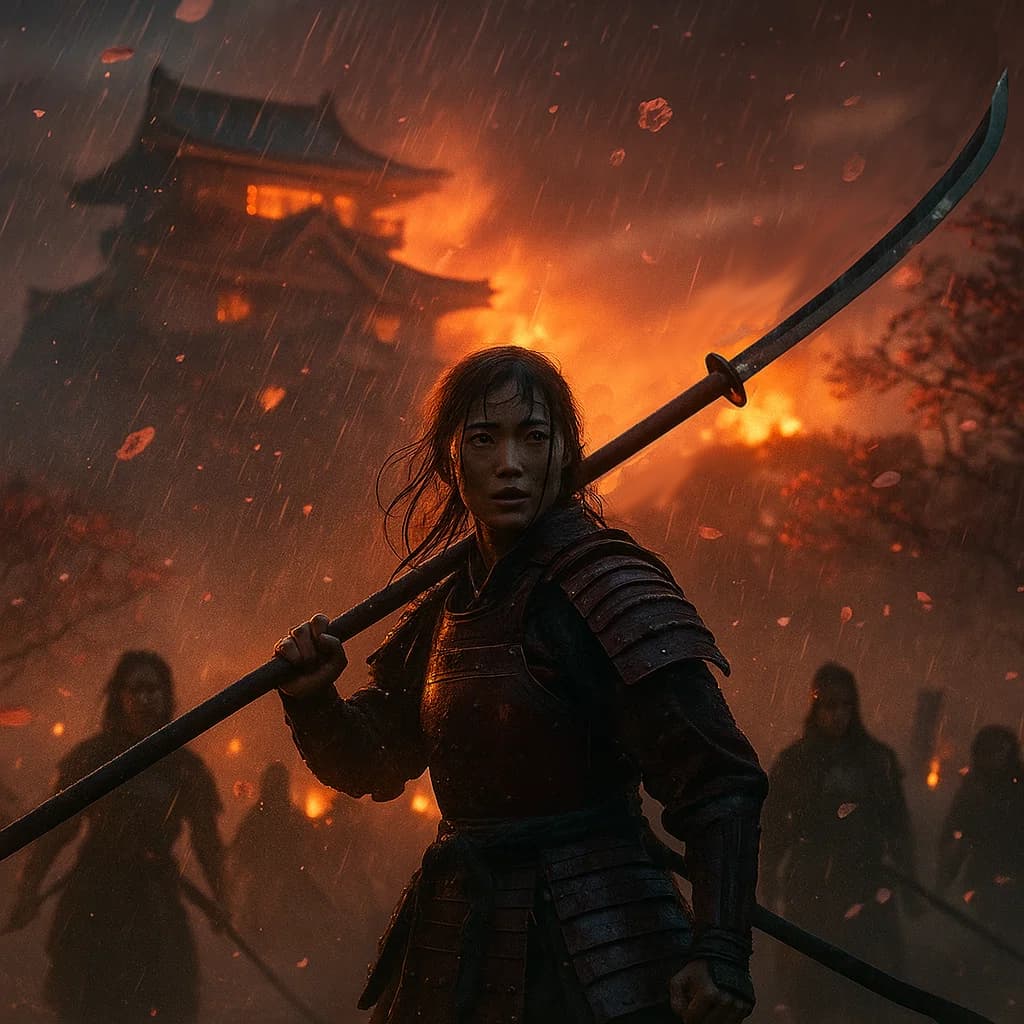
October 1868. As the imperial army encircles Tsuruga-jō castle, some thirty young women from the warrior nobility of Aizu organize themselves around the spirited 21-year-old Nakano Takeko. Named Joshitai ("...
Around 1550, Portuguese caravels sailing from Goa to Nagasaki landed ovoid ingots of Indian wootz. The Japanese dubbed them nanban-tetsu - "steel of the Southern Barbarians". Richer in phosphorus than...
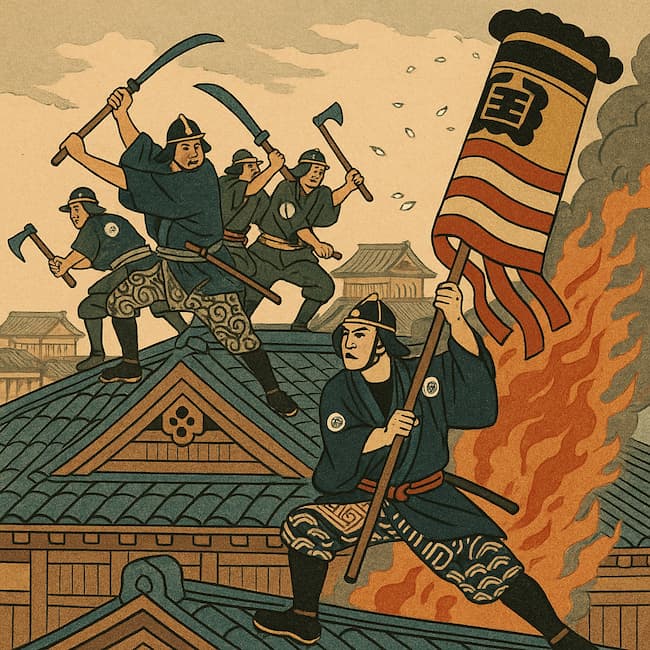
In 17thᵉ century Edo, protecting the shōgun was more important than saving houses: buke hikeshi , brigades made up of low-ranking samurai, climbed onto roofs in squads to... demolish them! Armed...
On April 13, 1612, on the island of Ganryu, two giants of feudal Japan clash: Miyamoto Musashi, the master of the wandering duel, against Sasaki Kojirō, nicknamed "The Demon of the West". Musashi arrives voluntarily in...
In the heart of the 12th century, the Knights Templar defied Romanesque canons: in 1185, they consecrated London's Temple Church, a circular nave copied from the Holy Sepulchre in Jerusalem. This rotunda, one of the very first...
Before joining the hordes of walkers, each The Walking Dead extra had to graduate from the dreaded "Zombie School". Two to three days of auditions held in Senoia, Georgia, allowed...
There was more to the chivalric diet than rare roasts. Isotope signatures from the skeletons of medieval warriors and noblemen show a high intake of marine proteins: salted herring,...
In the XIIIᵉ century, the Knights Templar of Bologna managed 83 hectares of vineyards. Recent cores have yielded preserved vine pollen; its DNA, amplified by NGS sequencing, matches Albana , a white grape variety from...
Did you know that a simple vacuum can change practice? The "Teikō" molded polypropylene bokken is hollow: it embeds only a thin grooved wall that encloses... air! The result: just 490 g, or almost...
The hi ( bō-hi ) makes a groove on the blade where stresses are lowest: it removes metal without weakening the cutting edge. Inertia measurements show that a katana can lose 10 to 20% of its mass...
PLA (polylactic acid) is obtained by fermenting corn or cane sugar; its synthesis consumes up to 65% less energy than an equivalent petrochemical plastic, and emits no toxic fumes...
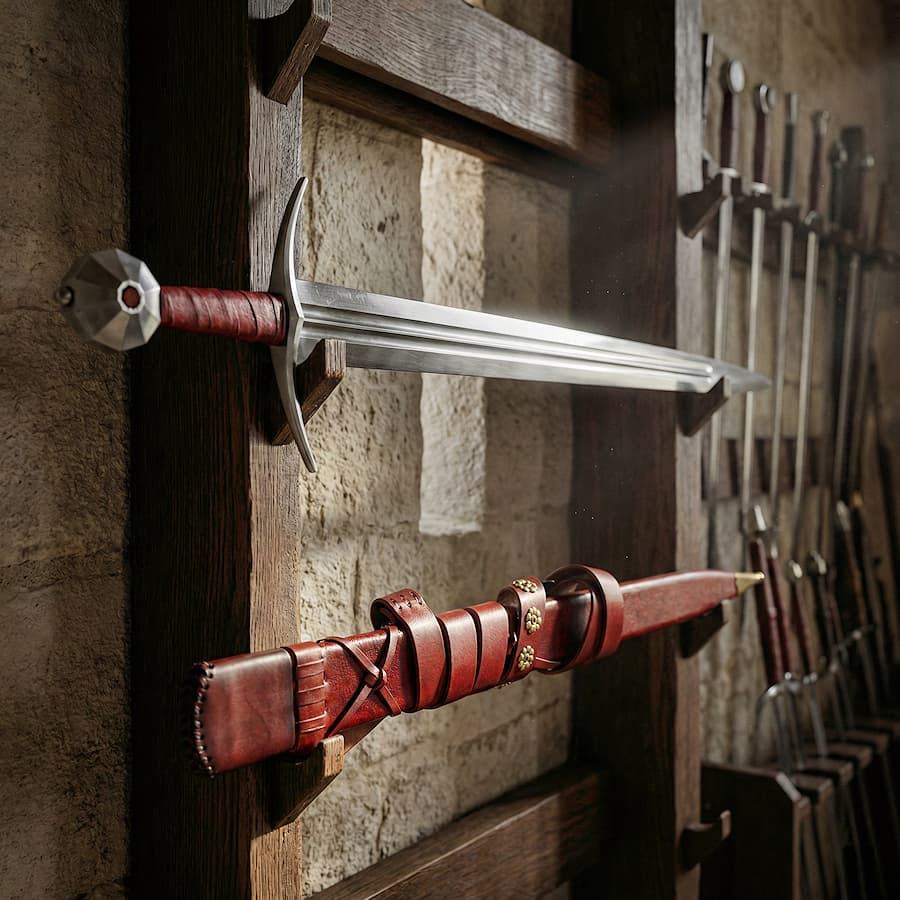
The longitudinal groove seen on many Gothic swords is called a fuller. Forged with a hammer, it transforms the blade into a veritable I-beam, saving 20 to 35% in weight...
In the spring of 1218, at the height of the Fifth Crusade, the engineers of the Temple settled on the narrow peninsula of Atlit to build Château Pèlerin . The sea rock is cut like a quarry: the stone is...
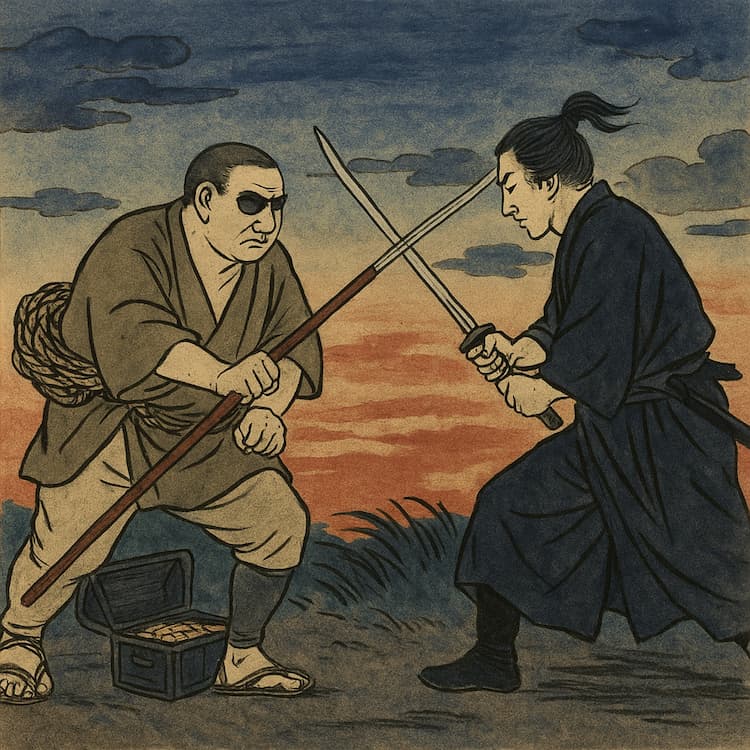
In the spring of 1964, the episode Zatoichi and the Chest of Gold offered viewers a discreet shock: the fearsome ronin Jushirō who challenges Zatoichi is played by Tomisaburō Wakayama... the older brother of Shintarō Katsu . The...
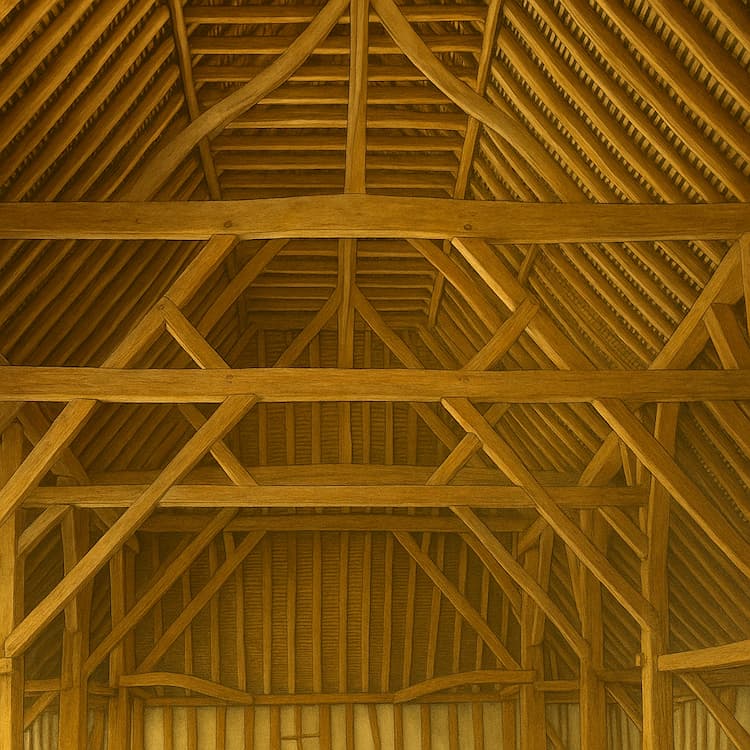
In the heart of Essex (England), the barley barn at Cressing Temple is intriguing archaeologists: its beams were felled around 1220, as revealed by dendrochronological analysis (reading of wood rings)....
In the XVᵉ century, the transition from the tachi to the katana marked a turning point in Japanese warrior weaponry. Worn sharp downwards and attached to a silk belt ( sashigawa ), the tachi, more curved and...
A katana is only held to its handle (tsuka) by a tiny bamboo mekugi. This peg, carved from smoked bamboo for greater density, compresses slightly and provides a perfect hold, but must be...
In all, over 150 New Zealand sites were used as backdrops for the trilogy, from the green hills of Matamata (Hobbiton), to the Ngauruhoe volcano in Tongariro National Park, now known as Mount Doom in Mordor. On the...
When Quentin Tarantino wanted to bring together Japanese swordplay and spaghetti westerns, he literally took his team on a journey! Tokyo: the silhouette of the Bride glides over the Rainbow Bridge before the...
In 1125, Hugues, the powerful Count of Champagne, renounced his lands and donned the white chlamydia: this spectacular gesture elevated the Order of the Temple to the rank of a veritable "badge of honor" for the aristocracy....
The famous "two riders on one horse" seal is just one of the official faces of the Order: it symbolizes both the humility of the brothers, who are supposed to share their mounts and fortunes, and their solidarity in battle....
In the heart of the chapel at Montesiepi, Tuscany, lies a real sword carved into the rock, a striking echo of the Excalibur myth. In 2001, chemist Luigi Garlaschelli (University of Pavia) took...
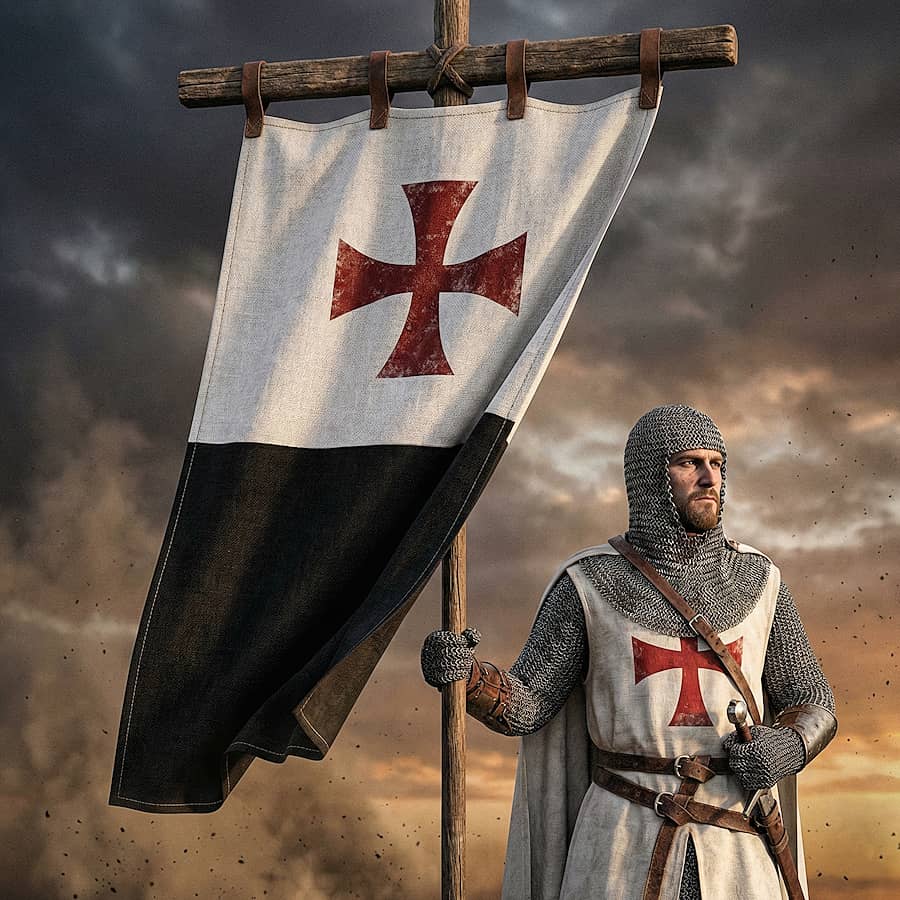
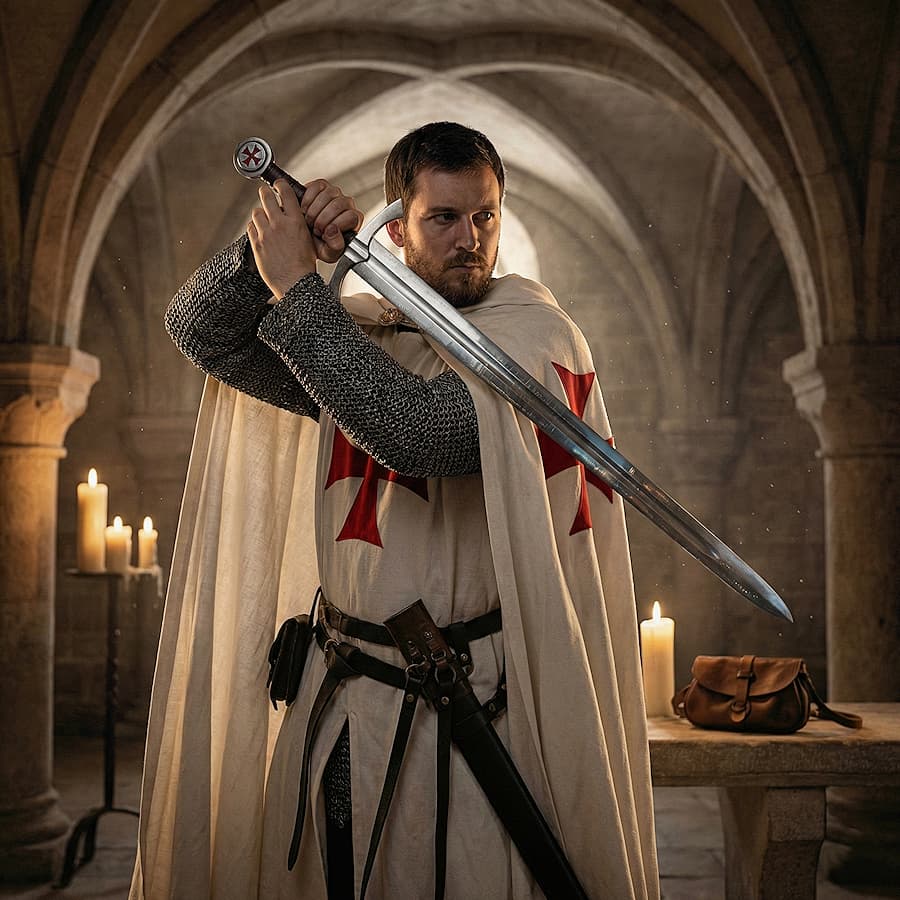
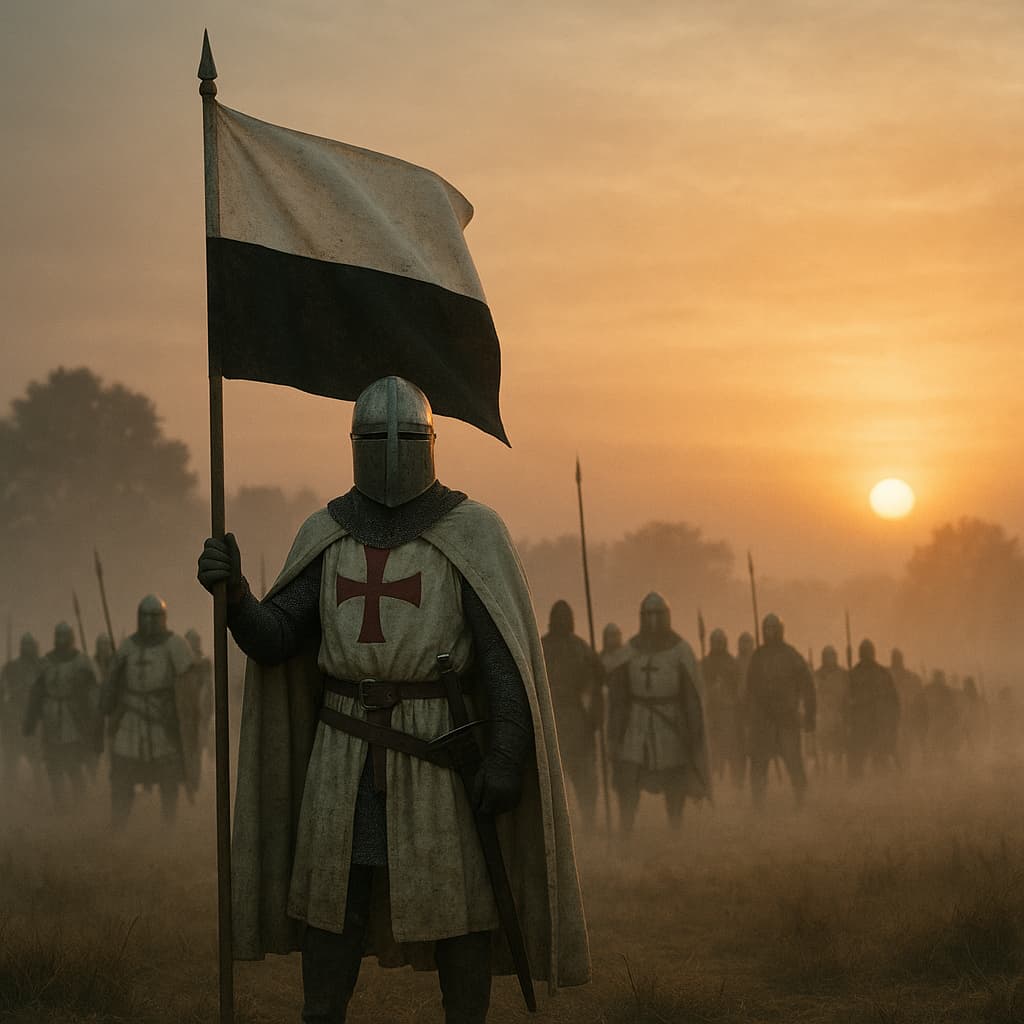
In battle, the Knights Templar advanced behind a two-tone standard: white at the top, black at the bottom, sometimes adorned with a red cross pattee. Called Beaucéant , it symbolized the Templar duality: "gentle to the...
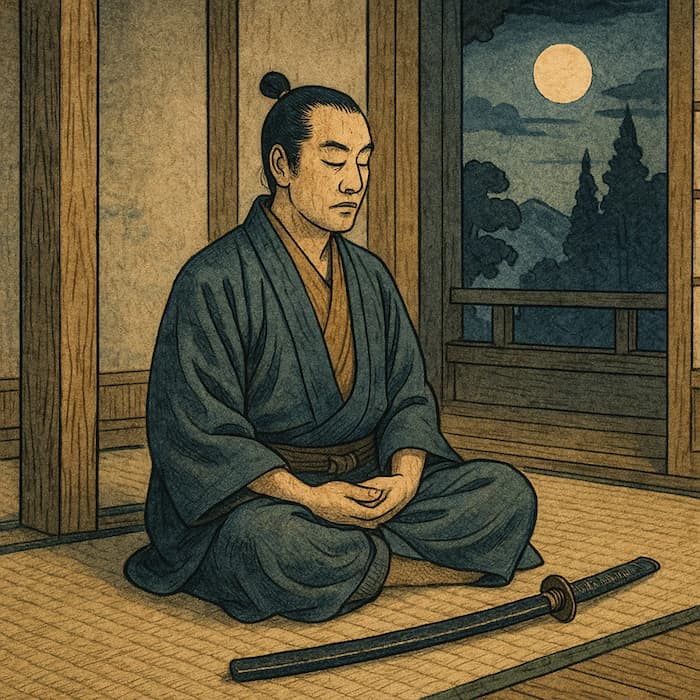
According to tradition, the young samurai Hayashizaki Jinsuke Minamoto no Shigenobu (1542-1621) prayed and meditated for a hundred days at the Hayashizaki Myōjin shrine to avenge his murdered father. At the end of this retreat, he...
In 2021, off the coast of the Templar fortress of Atlit (Israel), divers unearthed a medieval sword measuring almost a metre long, which had been trapped in the sand for over eight centuries. Rather than remove the limestone gangue, the...
In Japan, engraving a dragon ( ryū ) on the blade or mount of a katana has never been a simple ornament. According to Shinto tradition, it is an invocation to Ryūjin (龍神), the dragon-god of seas and storms,...
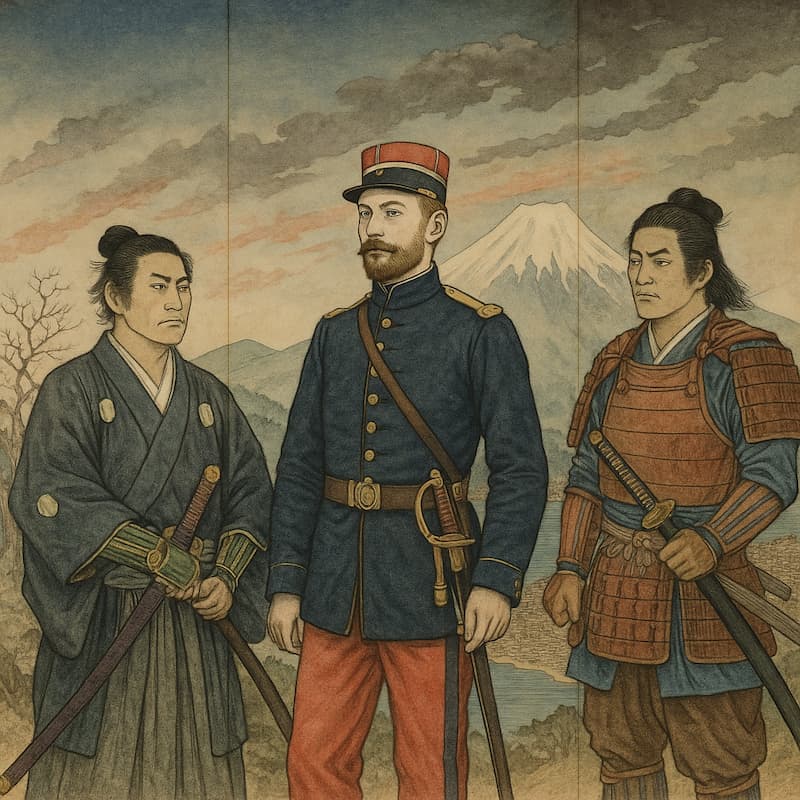
In 1867, Belfort artilleryman Jules Brunet (1838-1911) arrived in Japan with the French military mission. When the Boshin War broke out (1868-1869) between shogun supporters and imperial forces, Brunet...
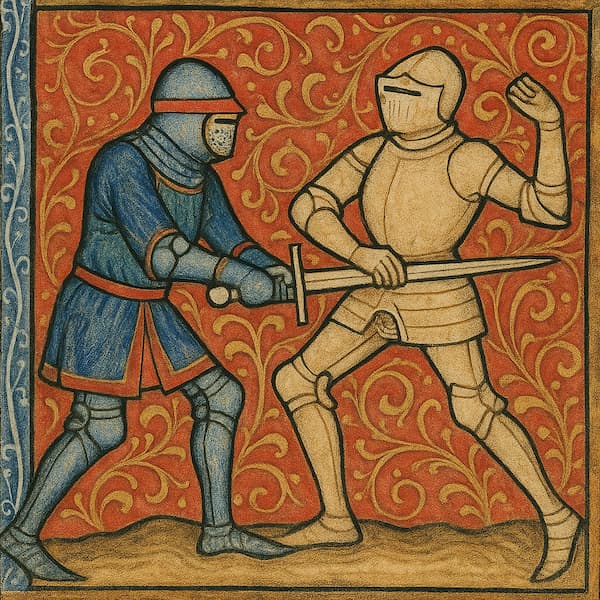
At the heart of the Hundred Years' War, knights no longer swore by sharpness alone. To neutralize the new plate armors, blacksmiths designed the type XV chivalric sword (typology...
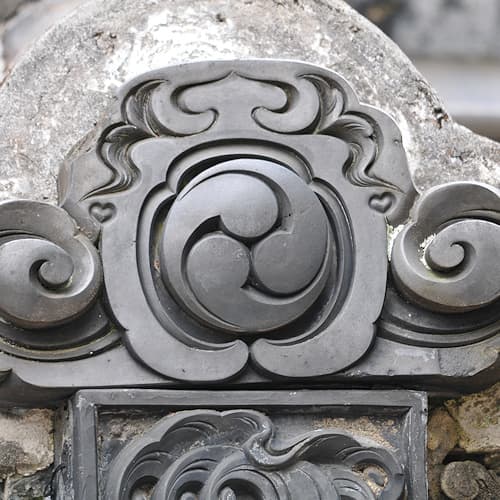
In Japan, the tomoe, that coiled comma, becomes a true emblem when it multiplies by three to form the mitsudomoe. Associated as early as the Xᵉ century with the god Hachiman, protector of warriors, the triple swirl...
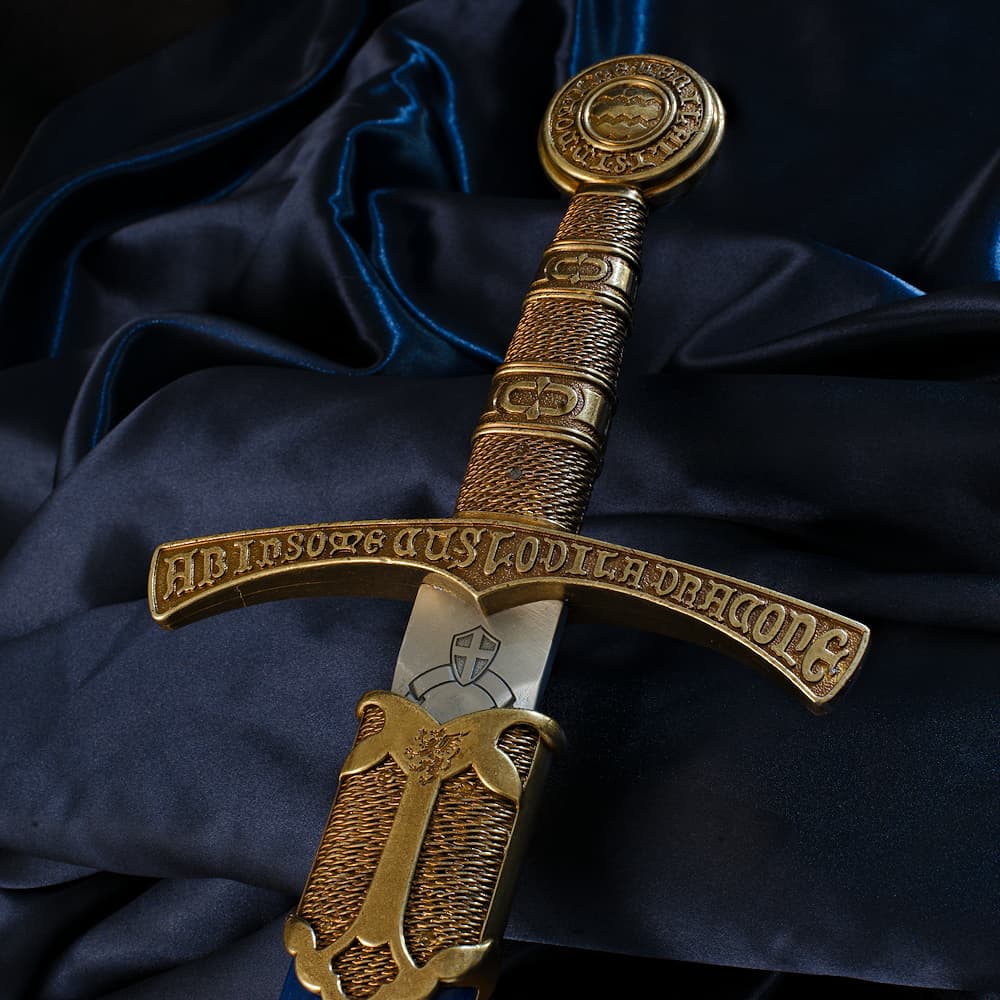
Ab insomni non custodita dracone ("unguarded by the sleepless dragon") is the mysterious motto of the powerful House of Este, which ruled Ferrara and Modena between the XIIᵉ and XIXᵉ centuries. It refers to the myth...
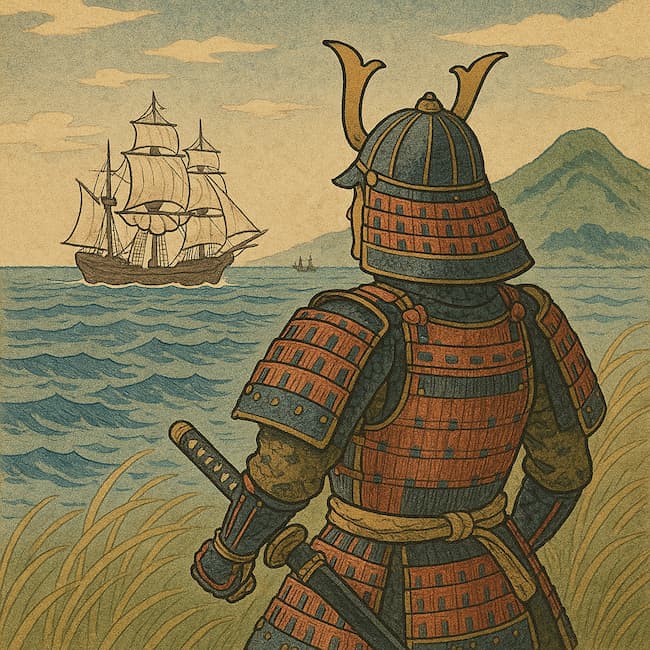
In 1635, under the reign of the Tokugawa Iemitsu shogun, Japan entered an era of extreme isolation known as sakoku, literally "closed country". This policy prohibited the Japanese from leaving the...
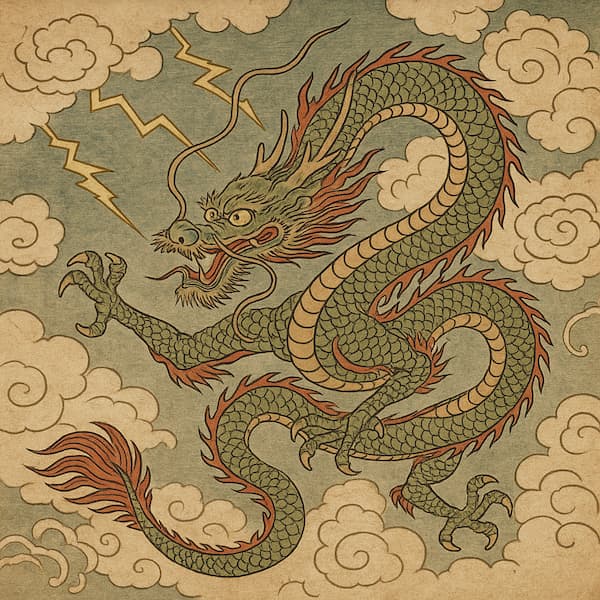
Unlike the fire-breathing dragons of the European Middle Ages, the Asian dragon is a celestial creature, wingless but capable of flight, often linked to water and weather. In imperial China, dragons were...
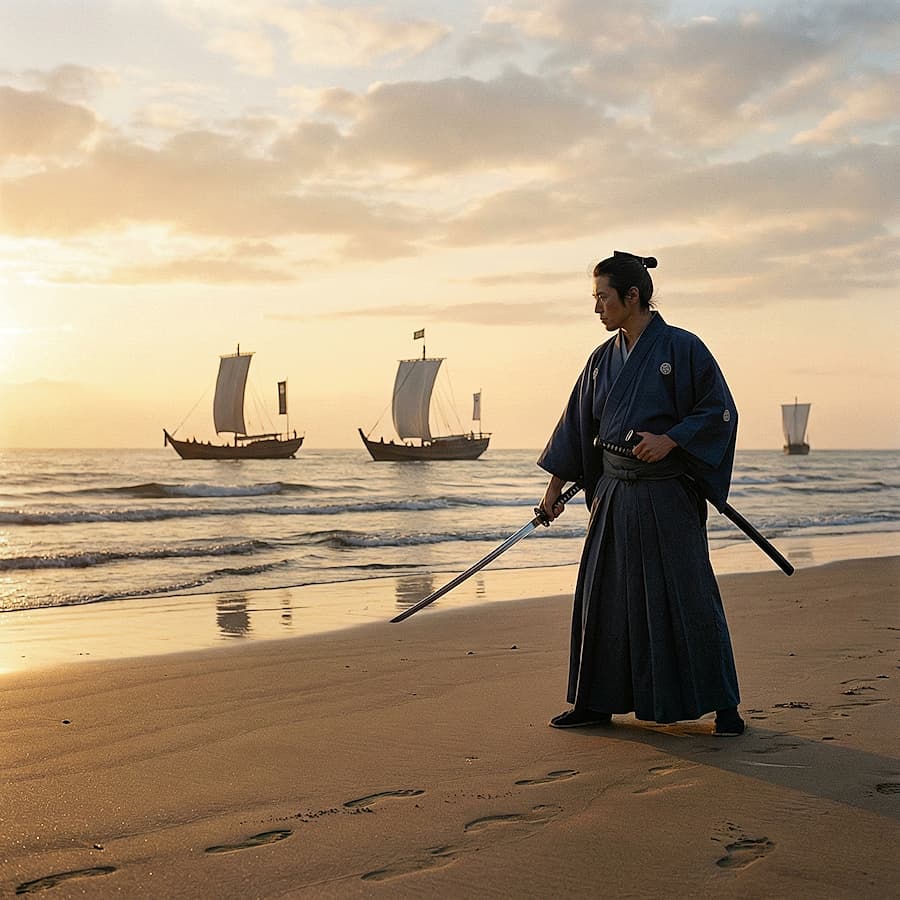
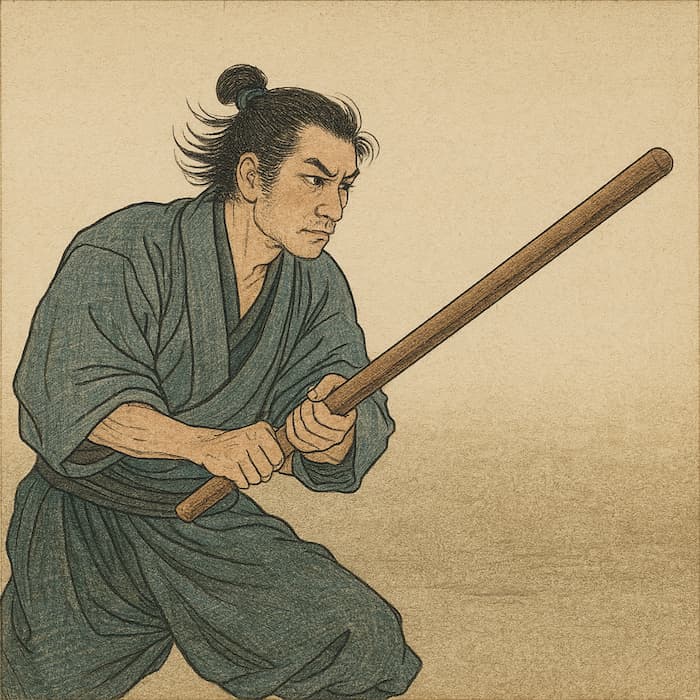
On the morning of April 13, 1612, legendary swordsman Miyamoto Musashi landed on the island of Ganryū-jima to face his formidable rival Sasaki Kojiro . On the boat leading up to the duel, Musashi hastily fashioned a long...
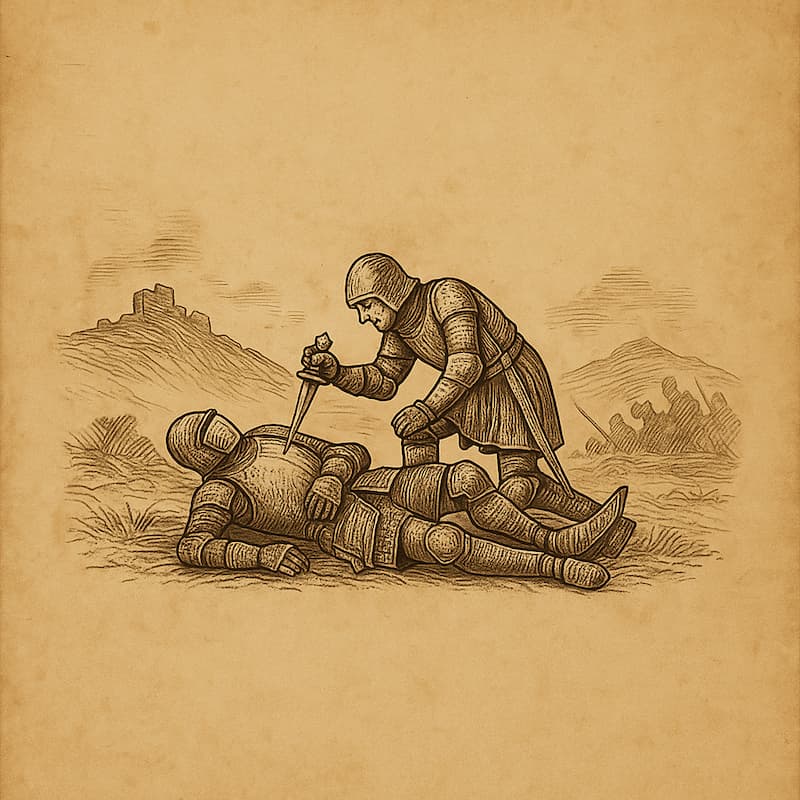
At the heart of the Crusades, every knight wore a fine dagger on his belt, called "misericorde", from the Latin misericordia, meaning "act of mercy". Its triangular blade, as long and narrow as a needle, slid...
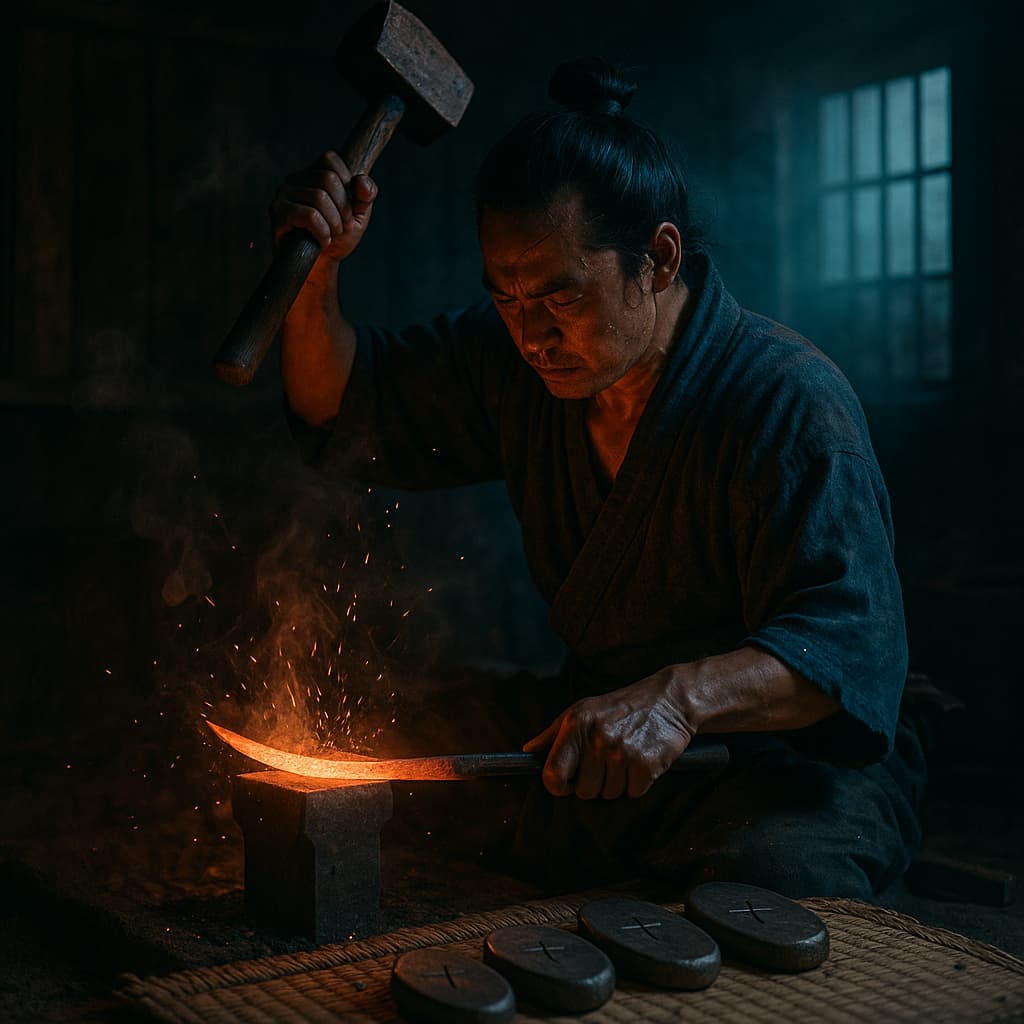
In Japan, the master blacksmith repeats up to 16 bends to transform tamahagane (65,536 layers), a high-carbon steel, into the supple, sharp blade of a katana. Each bend removes impurities,...
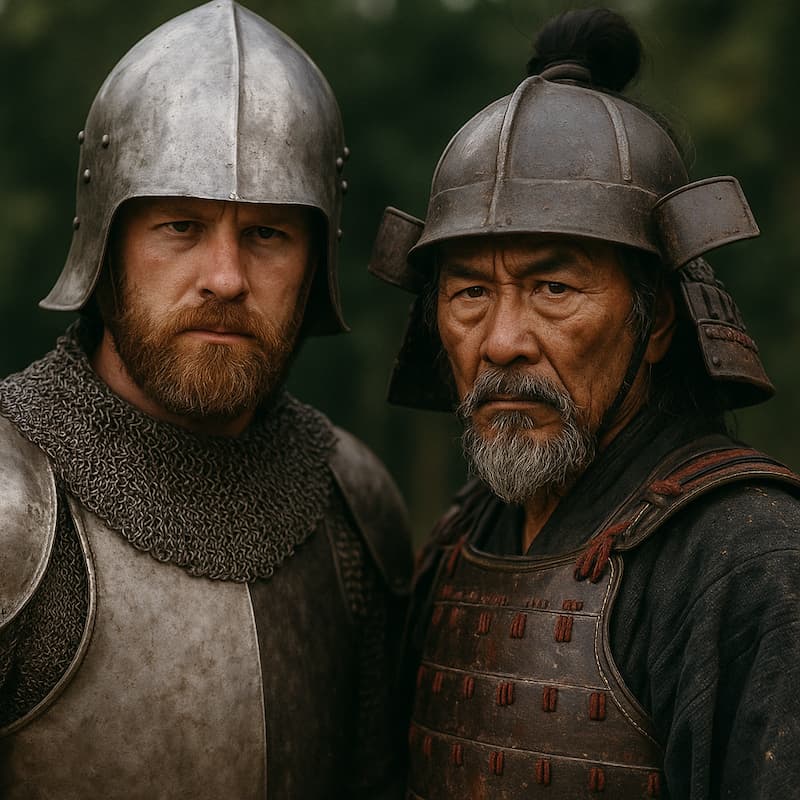
For centuries, the figures of the Western knight and the Japanese samurai have been erected as symbols of honor and moral rectitude, embodying supposedly unshakeable ethical codes. However, a...